

Advanced Technologies and Practical Applications of LED Display Bars in Modern Visual Solutions
LED display bars have become an indispensable component in modern visual communication technologies, offering vibrant, high-contrast imagery in a compact and versatile form factor. As a professional with extensive experience in LED and LCD manufacturing, I will explore the technical specifications, manufacturing considerations, and practical use cases of LED display bars, emphasizing their significance in diverse industries.
At its core, an LED display bar consists of an array of light-emitting diodes configured linearly or in a rectangular compact shape, designed to deliver high-brightness illumination suitable for various environments. Unlike traditional LED panels, which are often large and multidimensional, the display bar offers the advantage of slim profiles and ease of integration into devices or architectural elements. These bars utilize surface-mounted device (SMD) LEDs commonly in SMD 3528, 5050, or 2835 packages, characterized by their luminous efficacy, color consistency, and longevity.
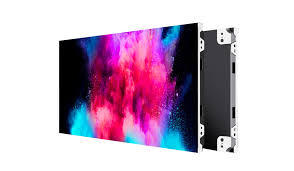
From a technical perspective, critical parameters define the performance and suitability of LED display bars:
1. Pixel Pitch: The distance between the centers of adjacent LEDs directly influences the resolution and image sharpness. Common LED display bars feature pixel pitches ranging from 1.5mm to 10mm. A smaller pitch (e.g., 1.5mm) enables finer detail rendering suitable for close-range viewing, found in indoor advertising or vehicle dashboards.
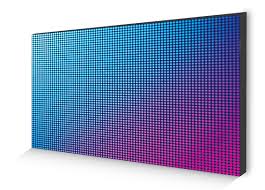
2. Brightness and Viewing Angle: Typical brightness levels for LED display bars range from 500 to 2000 nits, adaptable to indoor or semi-outdoor use. A wide viewing angle, often 120° horizontally and vertically, ensures visibility from multiple perspectives, crucial for public signage and control room monitoring.
3. Color Rendering and Calibration: Advanced LED display bars employ three primary colors—red, green, and blue—to produce a wide color gamut. Precision color calibration via software algorithms guarantees uniform brightness and chromaticity across the bar, which is essential for brand consistency in advertising or technical data visualization.
4. Thermal Management: Efficient heat dissipation through aluminum housings and thermal interface materials is vital to maintaining LED longevity and consistent brightness. Many display bars integrate passive or active cooling solutions, depending on power consumption and environmental conditions.
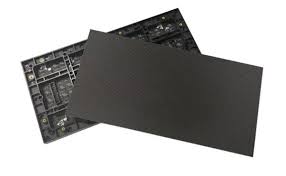
The manufacturing process of LED display bars integrates meticulous quality control standards aligned with international certifications such as ISO 9001 and RoHS compliance. Automated pick-and-place machines position the SMD LEDs onto printed circuit boards (PCBs), followed by soldering, encapsulation with protective resin to withstand moisture and dust, and rigorous functional testing. The final encapsulation often includes anti-glare coatings and reinforced glass fronts for mechanical protection.
Applications of LED display bars span a wide array of scenarios. In the retail sector, these bars are embedded into shelf edges or signage strips, providing dynamic pricing and promotional content. Transportation systems incorporate LED bars in vehicle dashboards or platform indicators due to their durability and visibility under variable lighting. Architectural lighting designs favor LED display bars for their sleek profiles and ability to integrate visually with structural elements.
Furthermore, recent advancements have pushed the capabilities of LED display bars toward immersive effects by integrating addressable LEDs controlled via digital protocols like DMX512 or SPI interfaces. This innovation allows for complex color patterns, animations, and synchronization with audio inputs, particularly popular in entertainment and event staging.
Industry case studies demonstrate the practical benefits of LED display bars. For example, a European public transport authority upgraded their platform information system by installing IP65-rated LED bars with pixel pitches of 4mm. This upgrade increased visibility during daylight and adverse weather conditions while lowering maintenance costs due to robust housing and energy-efficient drivers.
In summary, LED display bars represent a fusion of precision engineering, innovative materials, and intelligent control systems. They address the growing demand for compact, high-quality visual indicators across sectors. The integration of cutting-edge manufacturing processes and strict adherence to global standards ensures that these components deliver outstanding performance and reliability. As the demand for smarter and more adaptive visual solutions continues to grow, LED display bars stand out as a practical, scalable choice that balances aesthetic appeal with technical excellence.
Professional engineers and designers seeking to incorporate LED display bars into their projects should consider selecting components compliant with industry standards such as IEC 62471 for photobiological safety, and ensure compatibility with modern control systems for seamless integration and future-proofing of their installations.













