

Advances and Best Practices in LED Display Manufacturing for Superior Visual Performance
The LED display industry has experienced remarkable technological advancements over the past decade, driven by evolving applications in advertising, broadcasting, sports, and public information systems. As a professional LED display engineer with over 15 years of experience, I have witnessed firsthand the continuous evolution in manufacturing processes, material innovation, and quality control measures that have collectively elevated the performance and reliability of LED screens on a global scale.
At its core, LED display manufacturing integrates several critical parameters to ensure superior brightness, color accuracy, energy efficiency, and durability. These parameters include pixel pitch, LED chip type, refresh rate, contrast ratio, and ingress protection (IP) rating. Understanding and optimizing these aspects is fundamental for manufacturers aiming to meet stringent industry standards such as IEC 62676-1 for video surveillance displays and UL 8800 for electronic displays.
Pixel Pitch and Resolution
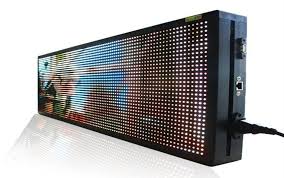
Pixel pitch, defined as the distance between the centers of two adjacent pixels, directly influences the image sharpness and viewing distance of the LED screen. For instance, fine-pitch LED displays with pixel pitches ranging from 0.7 mm to 2.5 mm are widely used in indoor environments where close viewing distances necessitate high-resolution images. Conversely, outdoor LED screens typically feature larger pixel pitches (e.g., 6 mm to 20 mm) designed for viewing from greater distances while offering enhanced brightness exceeding 5,000 nits to combat ambient sunlight.
LED Chip Technology
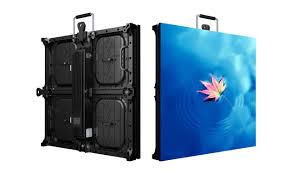
The choice of LED chips significantly impacts display quality and lifespan. Advances in Gallium Nitride (GaN) and Silicon Carbide (SiC) semiconductors have led to improved luminous efficacy and thermal management. SMD (Surface-Mounted Device) LEDs dominate indoor display manufacturing due to their compact size and ability to produce vibrant colors, whereas COB (Chip on Board) technology is gaining traction for creating higher-density pixel arrays with improved heat dissipation.
Refresh Rate and Color Fidelity
High refresh rates are essential to eliminate flicker and ghosting, particularly for live broadcasting applications and dynamic advertisements. Industry standards recommend a minimum refresh rate of 1920 Hz for indoor LED panels, ensuring smooth video playback and reducing viewer eye strain. Additionally, implementing advanced color calibration processes and 14-bit grayscale capability enables displays to render over 4000 color shades per primary color channel, vastly enhancing color fidelity.
Energy Efficiency and Thermal Management
Energy consumption remains a critical consideration in LED display design. Utilizing high-quality driver ICs with pulse-width modulation (PWM) dimming, combined with efficient LED chips, reduces power draw without compromising brightness. Effective thermal management, including aluminum substrates and heat sinks, prolongs device longevity and maintains consistent luminance levels, preventing thermal degradation.
Durability and Environmental Resistance
Outdoor LED displays require robust mechanical design and environmental sealing to withstand harsh weather conditions. Achieving an IP65 or higher rating ensures protection against dust ingress and water jets, a necessity for public signage and stadium displays. Furthermore, employing corrosion-resistant materials such as anodized aluminum and tempered glass front panels enhances durability and reduces maintenance costs.
Quality Control and Industry Standards
Ensuring consistent manufacturing quality necessitates rigorous inspection protocols including automated optical inspection (AOI), photometric measurement for brightness uniformity, and electroluminescence testing. Adherence to quality management systems such as ISO 9001 and compliance with international standards like FCC part 15 for electromagnetic compatibility reinforces product reliability and safety in diverse operational environments.
Case Study: Deploying a Fine-Pitch LED Video Wall in a Broadcast Studio
A recent project involved deploying a 1.2 mm pixel pitch LED video wall for a leading international news broadcaster. The display had to deliver ultra-high resolution with seamless color gradation at close viewing distances. Through precise calibration and advanced color management software integration, combined with a refresh rate exceeding 3840 Hz, the video wall provided vivid, flicker-free images. Additionally, a modular design facilitated easy maintenance and minimized downtime, underscoring best practices in both engineering and operational efficiency.
In summary, the continuous refinement in LED display manufacturing techniques, material science innovations, and adherence to stringent industry benchmarks have collectively enhanced the visual performance, reliability, and energy efficiency of modern LED screens. Manufacturers and engineers who invest in these aspects stand to deliver products that meet the exacting demands of international markets and diverse application scenarios.













