

Advanced Technologies and Best Practices in LED Display Manufacturing for Superior Visual Performance
The LED display industry has undergone remarkable transformation over the past decade, driven by advancements in micro-LED technologies, improved manufacturing processes, and stricter quality standards. As an engineer with extensive experience in LED display design and manufacturing, I will outline critical parameters, industry techniques, and standards that optimize display performance, durability, and efficiency, providing valuable insights for professionals and enterprises involved in large-scale LED screen deployment.
Achieving high-quality LED screens necessitates precision in multiple technical domains, including pixel pitch, brightness uniformity, color calibration, thermal management, and power efficiency. Pixel pitch, defined as the center-to-center distance between adjacent LEDs, profoundly affects resolution and viewing distance. For example, P1.25mm micro-LED panels achieve ultra-high resolutions capable of 4K and beyond at close-up viewing, suitable for control rooms and broadcasting. Conversely, large-format outdoor displays typically use pixel pitches between P6mm and P20mm, balancing viewing distance and cost.
One crucial industry parameter is brightness level, where outdoor LED displays require luminance exceeding 5,000 nits to withstand intense sunlight and maintain visibility. Indoor displays generally operate at 800 to 1,200 nits to reduce eye strain and power consumption. Advances in LED chip efficiency and driver IC design have enabled even higher brightness with improved reliability. For example, adoption of the TI LM3477 driver ICs reduces flicker and allows fine-tuned pulse-width modulation (PWM) dimming, ensuring smooth gradation without color distortion.
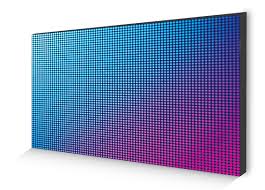
Color accuracy and uniformity remain cornerstones of professional displays, particularly for broadcast and medical imaging. Implementation of 14-bit color depth drivers facilitates the rendering of over 4.3 billion colors, while automated factory calibration systems employing spectroradiometers ensure delta-E values below 2, adhering to industry standards like ISO 12647. Additionally, sophisticated gamma correction algorithms and temperature compensation circuits maintain consistent color under varying ambient environments.
Thermal management is another critical challenge, as LED junction temperatures directly impact lifespan and output stability. Utilizing high thermal conductivity substrates such as aluminum nitride (AlN) and copper-clad polyimide (CCP) layers improves heat dissipation. Incorporation of intelligent fans, heat pipes, or liquid cooling in high-brightness outdoor cabinets further mitigates overheating risks. According to the IEC 62368-1 safety standards, proper thermal design reduces catastrophic failures and extends useful display life to over 100,000 hours under normal operating conditions.
Manufacturing advances include chip-on-board (COB) technology, which increases pixel density and reduces dead space between LEDs, enhancing contrast ratio and viewing experience. Surface mount technology (SMT) with automated optical inspection (AOI) ensures placement accuracy within ±0.02 mm, critical for large seamless displays where any misalignment can degrade image integrity. Besides hardware, software integration, such as real-time diagnostics and intelligent fault detection systems, streamlines maintenance and reduces downtime.
In terms of environmental compliance, modern LED manufacturers routinely incorporate RoHS-compliant materials to minimize hazardous substances and ensure recyclability. Furthermore, certified IP65 or higher ingress protection ratings guarantee water and dust resistance in outdoor environments, crucial for public installations. Industry case studies have demonstrated that well-engineered LED modules with these specifications maintain peak performance through harsh weather, achieving uptime ratios above 99.99%.
Supply chain traceability and component quality control are increasingly vital. Leading manufacturers adhere to ISO 9001 and IATF 16949 standards, providing rigorous inspection at every production stage, from LED binning—classifying chips by luminance and chromaticity—to final burn-in testing. Such discipline significantly reduces failure rates below 0.1%, increasing customer satisfaction and minimizing warranty claims.
In conclusion, the continued evolution of LED display manufacturing rests on holistic optimization across materials, electronics, thermal engineering, and software control. Researchers and engineers must remain vigilant to emerging technologies such as micro-LED and mini-LED, which promise higher brightness, lower power consumption, and ultra-thin form factors. By embracing international standards and refined production methodologies, manufacturers can deliver LED displays that meet demanding professional and consumer expectations worldwide.













