

Advanced Principles and Best Practices in LED LCD Screen Manufacturing
In the rapidly evolving field of display technology, LED LCD screens continue to dominate both consumer electronics and professional-grade applications due to their superior brightness, color accuracy, and energy efficiency. As an engineer with extensive experience in LED display manufacturing, this article delves into the critical technical parameters, industry standards, and manufacturing practices essential for producing high-quality LED LCD screens on a global scale.
Fundamental Structure and Technology of LED LCD Screens
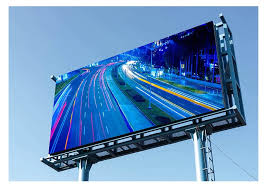
LED LCD screens combine Liquid Crystal Display (LCD) technology with Light Emitting Diode (LED) backlighting. The LCD panel controls light modulation via liquid crystals and color filters, whereas the LED backlight provides consistent illumination. Unlike traditional Cold Cathode Fluorescent Lamp (CCFL) backlights, LED backlighting offers higher luminance, longer lifespan, lower power consumption, and improved color gamut.
Key specifications include:
- Resolution: Ranges commonly from Full HD (1920x1080) to 4K UHD (3840x2160) for high-end devices. The pixel density directly influences image sharpness and viewing experience.
- Brightness: Typical LED LCD screens deliver luminance levels between 250 to 1000 cd/m², depending on the application (indoor vs. outdoor). Specialized HDR displays can reach brightness above 1000 cd/m² to achieve superior contrast.
- Color Gamut: Coverage of the sRGB color space is standard, while premium displays often support DCI-P3 or Adobe RGB for enhanced color fidelity.
- Refresh Rate and Response Time: Refresh rates generally range from 60 Hz to 144 Hz or higher for gaming and professional use, with response times optimized under 5 ms to reduce motion blur.
Manufacturing Process and Quality Control
Successful LED LCD manufacturing demands rigorous process control across multiple stages: glass substrate preparation, thin-film transistor (TFT) array fabrication, color filter application, cell assembly, backlight module integration, and final calibration. Precision in lamination and sealing ensures panel durability and prevents moisture ingress.
State-of-the-art fabrication facilities employ inline Automated Optical Inspection (AOI) systems and Electro-Optical Testing (EOT) to detect defects such as dead pixels, mura, and uneven luminance. Manufacturers adhere to the IEC 61747 series for display panel testing, guaranteeing compliance with international quality benchmarks.
Challenges and Solutions in LED Backlighting
Uniformity of LED backlighting is crucial to prevent hotspots and shading. Techniques like local dimming, edge-lit versus direct-lit arrangements, and the use of quantum dot enhancement layers (QDEF) contribute significantly to uniform brightness and color consistency.
Advancements in Mini LED and Micro LED backlighting further improve contrast ratios and energy efficiency, marking a shift towards next-generation displays. Mini LED incorporates thousands of small LEDs as backlight sources, enabling precise local dimming zones surpassing conventional LED arrays.
Thermal Management Considerations
Effective thermal dissipation is vital for maintaining LED longevity and stable optical performance. Heat sinks, thermal interface materials (TIM), and ventilation design are integrated thoughtfully to avoid performance degradation and color shift caused by temperature fluctuations.
Environmental and Energy Efficiency Standards
In alignment with global initiatives, manufacturers comply with directives such as ENERGY STAR, RoHS, and WEEE to minimize environmental impact. The use of LED backlighting instead of CCFL drastically reduces hazardous mercury content and power consumption, facilitating greener products.
Industry Case Study: High-End Professional Monitors
Leading brands in the professional market, such as Eizo and NEC, apply stringent color calibration using Integrated Colorimeters and factory pre-calibrations adhering to standards like DICOM for medical imaging and Rec. 709 for video production. Such high precision requires advanced LCD panels with wide color gamut support and uniform LED backlighting achieved through optimized diffuser plates and light guide designs.
Future Trends and Developments
Emerging technologies such as OLED integration with LED LCD panels, miniaturized LEDs for higher pixel densities, and flexible display substrates are revolutionizing the landscape. Additionally, AI-driven manufacturing solutions using machine learning improve yield rates and defect detection efficiency.
In conclusion, mastering the intricate balance of optical performance, manufacturing precision, and environmental sustainability is crucial for producing cutting-edge LED LCD screens. Engineers and manufacturers globally rely on standardized testing protocols, advanced material science, and evolving lighting technologies to meet the demands of increasingly sophisticated applications.













