

Fine Pitch LED Touchscreen Technology and Its Industry Applications
In the evolving landscape of visual display technologies, fine pitch LED touchscreens have emerged as a groundbreaking solution, seamlessly combining high-resolution LED panels with responsive touchscreen capabilities. This integration addresses the increasing demand for immersive, interactive displays across diverse sectors such as retail, corporate, healthcare, and entertainment.
Understanding Fine Pitch LED Technology
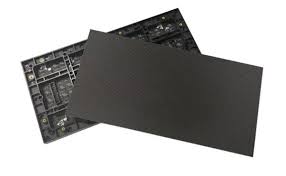
Fine pitch LED refers to LED display panels with very small pixel pitches—typically 1.5 mm or less. Pixel pitch, the distance between the centers of adjacent pixels, critically determines the display's resolution and viewing distance. A smaller pixel pitch results in higher pixel density, leading to sharper and more detailed images.
Fine pitch LED panels commonly employ micro-LED technology, enabling display resolutions that can compete with traditional LCD and OLED screens but with superior brightness, color accuracy, and contrast ratios. Typical fine pitch LED displays achieve resolutions up to 4K and even 8K (7680 × 4320 pixels) in larger configurations, offering unparalleled visual performance.
Touchscreen Integration: Technical Challenges and Solutions
Integrating touchscreen functionality into fine pitch LED panels presents several technical challenges:
1. Sensor Precision: The touchscreen sensors must be sensitive enough to detect touch inputs accurately without interfering with the LED pixels’ light output. Capacitive touch sensors designed with ultra-thin, transparent conducting layers (often Indium Tin Oxide, ITO) are widely used to maintain display clarity and touch responsiveness.
2. Heat Management: LEDs generate heat during operation, which can degrade touchscreen sensor sensitivity if not properly managed. Advanced heat dissipation designs including heat sinks, thermally conductive adhesives, and ventilation channels are essential to maintain optimal functioning.
3. Electromagnetic Interference (EMI): The dense LED driving circuits and touch sensor pulses can cause EMI that disrupts signal integrity. Shielding and careful PCB design using multilayer boards with ground planes ensure minimal interference and enhanced reliability.
4. Calibration and Software Integration: Fine pitch LED touchscreens require precision calibration to align touch coordinates with displayed pixels intermediately. Software algorithms facilitate multi-touch recognition, palm rejection, and gesture controls, enhancing user experience.
Performance Parameters and Industry Standards
To evaluate fine pitch LED touchscreens, several parameters are crucial:
- Pixel Pitch (mm): Ranges from 0.7 mm to 1.5 mm for fine pitch displays. Smaller pitches provide higher resolution but require advanced production techniques.
- Brightness (nits): Typically between 800 and 1500 nits for indoor applications, ensuring excellent visibility even under ambient light conditions.
- Contrast Ratio: High contrast ratios (>3000:1) are mandatory for vivid image reproduction.
- Refresh Rate: Rates of 120 Hz or higher ensure smooth video playback and responsive touch interaction.
- Touchpoints: Supports multi-touch capability, often exceeding 10 simultaneous touchpoints for enhanced interactivity.
Industry standards such as ISO 9241-411, which pertains to usability of input devices and touchscreens, and IEC 62368-1, concerning the safety aspects of electronic display equipment, guide the manufacturing and quality assurance processes.
Applications Driving Market Growth
The fusion of fine pitch LED with capacitive or infrared touch technologies is revolutionizing multiple sectors:
- Retail and Advertising: Interactive digital signage with fine pitch LED displays enables vibrant, high-resolution advertising with intuitive touch interaction, significantly boosting customer engagement.
- Corporate Collaboration Spaces: Large interactive video walls and conference room displays facilitate dynamic presentations, real-time data manipulation, and seamless collaboration.
- Healthcare: Medical imaging and telemedicine benefit from high-detail displays combined with precise touch input for diagnosis and patient records management.
- Education and Entertainment: Interactive lecture halls, museums, and gaming arenas use these displays to deliver rich multimedia content with direct user interaction.
Case Study
A flagship project in commercial real estate involved equipping the lobby of a global financial firm with a 1.2 mm pixel pitch fine pitch LED touchscreen wall measuring 3 x 2 meters. This installation delivered ultra-high-definition maps and interactive financial dashboards, accessible through multi-touch gestures. The system incorporated custom-designed cooling units and EMI shielding, maintaining performance in a high-density tech environment. The client reported a 40% increase in visitor engagement and improved internal communications.
Future Trends and Innovations
Research is ongoing to reduce pixel pitch below 0.5 mm, introduce microLED arrays with integrated sensing capabilities, and deploy AI-based calibration algorithms to optimize touch accuracy dynamically. The move toward flexible, curved fine pitch LED touchscreens is also gaining traction, promising new form factors and user experiences.
Conclusion
Fine pitch LED touchscreens represent a convergence of display clarity and interactive technology, propelling forward the capabilities of digital signage, collaboration tools, and information visualization. Mastery over the delicate balance of LED performance and sensitive touch functionality is key for engineers and manufacturers. Adherence to industry standards and rigorous design principles ensures that these advanced displays deliver both aesthetic excellence and operational reliability, meeting the exacting demands of international markets.













