

Advanced LED Display Technology: Practical Applications, Advantages, Challenges, and Emerging Trends
LED display technology has undergone tremendous evolution over the past decade, becoming a cornerstone in digital visualization across diverse industries. With expertise rooted in LED and LCD manufacturing principles, this article explores the practical applications, technical advantages, common challenges, and emerging trends of LED display systems.
Practical Applications of LED Displays
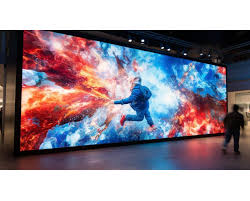
LED displays are ubiquitous, ranging from massive outdoor billboard installations to fine-pitch indoor video walls. In retail, LED displays enable dynamic advertisement with vivid color depth and customizable content scheduling, boosting consumer engagement. In transportation hubs such as airports and train stations, LED panels provide real-time scheduling and information with high visibility even under direct sunlight—thanks to brightness levels that can exceed 5,000 nits.
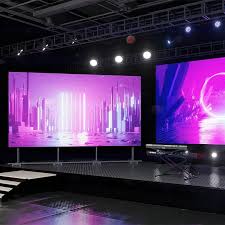
In the stadium and entertainment sectors, large form-factor LED displays deliver immersive experiences. The flexibility of modular LED panels allows seamless scalability to fit various spatial requirements, integrating both full-color and monochrome segments as needed. Medical imaging has also adopted fine-pitch LED technology, offering exceptional pixel density (less than 1mm pixel pitch) for detailed imaging crucial in surgical and diagnostic environments.
Advantages of LED Display Technology
Compared to traditional LCD and projection systems, LED displays offer superior brightness, better contrast ratios up to 100,000:1, and impeccable color fidelity due to precise control of individual diodes. Reliability is enhanced by the solid-state nature of LEDs, resulting in longer operational lifespans exceeding 100,000 hours under optimal thermal management conditions.
Energy efficiency is another critical advantage, as LEDs consume less power relative to brightness output, adhering to stringent industry energy standards such as ENERGY STAR. Maintenance costs are reduced by robust, easy-to-replace modules and real-time diagnostic systems embedded in advanced controllers as per international standards like IEC 62368-1 and UL 8750.
Common Challenges in LED Display Deployment
Despite their benefits, LED displays pose challenges during manufacturing and operation. One prevalent issue is heat dissipation; inadequate thermal management can degrade LED lifespan and color uniformity. Engineers follow rigorous thermal design principles, using heat sinks, active cooling, and high thermal conductivity substrates (often aluminum-based) to mitigate these risks.
Another challenge involves pixel calibration to avoid color shifts and dead pixels. Industry leading firms apply software-driven uniformity correction algorithms and employ automated optical inspection (AOI) in production to ensure quality control.
Environmental exposure can also affect LED panels, particularly in outdoor settings where moisture ingress (addressed by IP65 or higher ratings) and UV degradation must be considered. The adoption of conformal coatings and ruggedized enclosures protects against these elements.
Emerging Trends in LED Display Technology
The LED display industry continues to innovate towards higher resolution and smarter features. Mini-LED and Micro-LED technologies are gaining traction, promising pixel pitches as low as 0.3mm, superior brightness control, and ultra-high dynamic range (HDR) capabilities. These advancements enable near bezel-less video walls with unprecedented image sharpness.
Integration of AI-driven content adaptation and predictive analytics is becoming mainstream, allowing real-time adjustment based on ambient lighting, audience demographics, and environmental conditions. Furthermore, flexible and transparent LED displays are expanding design possibilities in automotive HUDs, augmented reality devices, and architectural glass facades.
Sustainability is another fast-evolving focus. Manufacturers are developing eco-friendly materials with lower heavy metal content, and optimizing manufacturing processes to reduce carbon footprints, aligning with international environmental frameworks like RoHS (Restriction of Hazardous Substances) and WEEE (Waste Electrical and Electronic Equipment Directive).
In conclusion, LED display technology represents a blend of sophisticated engineering, practical versatility, and continuous innovation. Understanding the technical parameters—brightness, pixel pitch, contrast ratio, thermal management, and IP rating—helps in selecting the right LED solution meeting performance and durability standards. Keeping abreast of emerging trends such as Micro-LED and AI integration positions industry professionals to fully exploit the capabilities of next-generation display systems.
Authoritative References:
- International Electrotechnical Commission (IEC) Standards: IEC 62368-1
- Underwriters Laboratories (UL): UL 8750 Standard for LED Equipment
- ENERGY STAR Program for Energy Efficiency
- RoHS and WEEE Environmental Compliance Directives
- Display Industry Reports: IHS Markit, Display Supply Chain Consultants (DSCC)
These standards and reports inform the current best practices and technological benchmarks imperative for LED display engineers and manufacturers worldwide.













