

Advanced Manufacturing Techniques and Quality Standards in LED LCD Display Production
LED LCD displays have become integral components in a broad spectrum of applications, ranging from consumer electronics to industrial instrumentation and digital signage. With rapid technological advancements and heightened market expectations, manufacturing these displays demands meticulous engineering practices, rigorous quality standards, and cutting-edge production techniques. This article delves into the essential technical parameters, process insights, and international standards governing LED LCD manufacturing, drawing from industry experiences and authoritative sources to provide a comprehensive understanding of the field.
Fundamental Structure and Materials
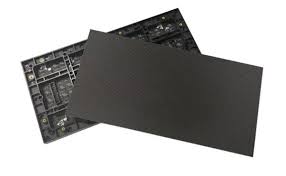
At the core, LED LCD displays operate by backlighting an LCD panel with an array of LEDs, delivering enhanced brightness, energy efficiency, and color fidelity compared to traditional CCFL backlighting. The LCD panel itself comprises multiple layers—including polarizers, color filters, liquid crystal layers, and glass substrates—each requiring precise assembly under controlled cleanroom environments (ISO Class 5 or better as per IEST-RP-CC012.1).
The choice of LEDs—commonly surface-mount device (SMD) types like 2835 or 5050 package sizes—directly influences brightness (measured in nits), color gamut (e.g., %NTSC or %DCI-P3), and power consumption. Typical LED LCD backlight units achieve brightness levels between 300 nits (standard office displays) to beyond 1000 nits (outdoor or HDR applications). Uniformity in luminance is critical, with industry benchmarks requiring greater than 85% uniformity to avoid visual artifacts.
Manufacturing Process and Technological Innovations
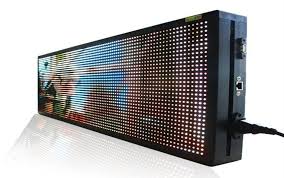
Production begins with the fabrication of TFT (Thin-Film Transistor) LCD substrates using advanced semiconductor deposition and etching techniques. The TFT array’s pixel density, measured in pixels per inch (PPI), ranges typically from 100 PPI in large commercial displays to over 400 PPI in high-definition smartphone panels.
Subsequent steps include alignment of liquid crystal molecules via precise rubbing techniques on the alignment layers, sealing the cell, and injection of liquid crystals. Backlighting modules are assembled and integrated, utilizing techniques such as laser direct structuring (LDS) and automated optical inspection (AOI) for defect detection. Modern manufacturing lines adopt Industry 4.0 principles, employing AI-powered real-time monitoring to minimize yield loss and improve throughput.
Quality Control and Testing Standards
Ensuring reliability and longevity requires strict adherence to standards such as IEC 60747 for semiconductor devices and ISO 13485 for quality management systems. Testing parameters include:
- Contrast Ratio: Typically greater than 1000:1 for indoor displays, higher for high-dynamic-range (HDR) panels. This ensures sharp differentiation between light and dark areas.
- Response Time: Generally under 10 ms for consumer displays, crucial for gaming and video applications to reduce motion blur.
- Color Accuracy: Measured in Delta E (ΔE) values, with ΔE below 2 considered excellent color reproduction.
- Thermal Management: LED lifespan and performance depend on efficient heat dissipation; designs commonly incorporate aluminum heat sinks and thermal interface materials meeting ASTM E1461 standards for thermal conductivity.
Environmental and stress testing—including thermal cycling (per JEDEC JESD22-A104), vibration, humidity resistance (IEC 60068), and electrostatic discharge (ESD IEC 61000-4-2)—ensure durability in diverse operational conditions.
Case Study: Implementing High-Brightness LED LCDs for Outdoor Displays
An international signage manufacturer improved their product’s outdoor visibility by transitioning from CCFL to LED backlighting with 1200-nit luminance. Leveraging LED arrays with binning accuracy within 3% reduced color inconsistencies. The adoption of narrow viewing angle enhancement films and anti-reflective coatings (ASTM D1044 standards) yielded a 30% improvement in daylight readability. Continuous AOI and ultrasonic cleaning methods reduced panel defects by 15%, significantly improving yield rates.
Future Directions and Industry Trends
Emerging trends include mini-LED and micro-LED integration, offering pixel-level brightness control and superior contrast ratios approaching those of OLED technology. Challenges remain in scaling production and managing costs, but rapid progress in deposition and bonding technologies—such as wafer-level transfer—promises accelerated adoption.
Sustainability in material sourcing and recycling is becoming paramount, driven by regulations such as the EU’s RoHS directive and WEEE compliance. Manufacturers increasingly use eco-friendly substrates and implement closed-loop recycling for glass and LEDs, aligning with corporate social responsibility goals.
Conclusion
Manufacturing high-quality LED LCD displays requires an intricate balance of advanced materials, sophisticated assembly techniques, and stringent quality control measures. By understanding the critical parameters and leveraging innovations in automation and AI, producers can deliver displays with exceptional performance, reliability, and environmental sustainability. Continuous adherence to industry standards and focus on precision engineering will remain essential to meeting evolving global demands.













