

Advanced Technologies and Best Practices in LED LCD Screen Manufacturing
The LED LCD screen manufacturing industry has undergone significant advancements in recent years, driven by technological innovation, evolving market demands, and the pursuit of higher efficiency and enhanced visual performance. As a professional LED display engineer with extensive experience in this domain, I aim to provide an authoritative analysis of the critical aspects of LED LCD screen manufacturing, emphasizing key technical parameters, modern production processes, quality control standards, and emerging trends that define the current global landscape.
Understanding LED LCD Technology
LED LCDs (Light-Emitting Diode Liquid Crystal Displays) combine the properties of LED backlighting with LCD panel technology to produce high-contrast, energy-efficient displays widely used in consumer electronics, commercial signage, and medical devices. Unlike traditional CCFL (Cold Cathode Fluorescent Lamp) backlighting, LED backlighting enhances brightness uniformity, reduces power consumption, and enables thinner form factors — critical competitive advantages in today’s market.
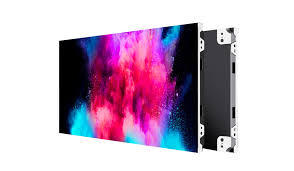
Key technical parameters for LED LCD panels include:
- Resolution: Ranges from Full HD (1920x1080) to 4K UHD (3840x2160) and beyond, impacting image sharpness and detail fidelity.
- Brightness: Typically measured in nits (cd/m²), with standard displays ranging from 300 to 800 nits, while specialized models can exceed 1000 nits for outdoor or HDR use.
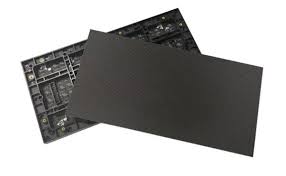
- Contrast Ratio: A vital metric representing the luminance difference between the darkest black and brightest white. Typical LED LCDs achieve ratios from 1000:1 to 5000:1 or more.
- Response Time: Measured in milliseconds (ms), faster response time minimizes motion blur, essential in high-refresh-rate displays for gaming and video playback.
- Color Gamut and Accuracy: Coverage of color spaces such as sRGB, AdobeRGB, and DCI-P3 determines the vibrancy and color fidelity, where high-end panels target over 90% DCI-P3 coverage for professional applications.
Manufacturing Processes and Quality Control
Modern LED LCD manufacturing involves multi-step processes including:
1. Glass Substrate Preparation and Cleaning: Ultra-clean environments control particulate contamination that can cause defects.
2. Thin Film Transistor (TFT) Array Fabrication: Active matrix TFTs control the addressable pixels, using technologies like amorphous silicon (a-Si) or low-temperature polysilicon (LTPS) for higher mobility and efficiency.
3. Liquid Crystal Alignment Layer Coating: The uniform alignment of liquid crystal molecules is critical for consistent optical performance.
4. Backlight Assembly: Incorporating LED arrays with light guides and diffusers ensures uniform illumination across the panel's surface.
5. Polarizer Attachment and Sealing: Polarizers filter incoming light to enhance contrast. High-quality, durable adhesives prevent moisture ingress, which can degrade performance.
6. Module Assembly and Driver Integration: Integration of timing controllers (TCON) and driver ICs (integrated circuits) facilitate pixel addressing and signal processing.
7. Final Inspection and Testing: Automated optical inspection (AOI), colorimetry, luminance mapping, and functional tests confirm compliance with industry standards (e.g., ISO 9241-307 for display ergonomics).
Quality control standards such as International Electrotechnical Commission (IEC) 60950-1 for electronic safety and DisplayHDR certification for high dynamic range performance ensure product reliability and user safety. Incorporating Six Sigma methodologies further streamlines defect reduction and consistency.
Innovations and Industry Trends
Emerging LED LCD trends focus on:
- Mini-LED and Micro-LED Backlighting: Increasing the number of backlight zones from hundreds to thousands enhances contrast and local dimming precision, pushing performance closer to OLED displays while maintaining LCD longevity.
- Quantum Dot Enhancement Films (QDEF): Quantum dot layers significantly improve color saturation and brightness by converting blue LED light into pure red and green wavelengths.
- Flexible and Transparent LCDs: Advances in flexible substrates and transparent electrodes are paving the way for novel form factors, including foldable laptops and head-up automotive displays.
- Sustainability Measures: Material recycling, use of non-toxic components, and energy-efficient manufacturing techniques respond to global regulations and environmental concerns.
Practical Considerations for Manufacturers and OEMs
Achieving competitive advantage requires balancing cost and performance. For instance, selecting LTPS TFT technology increases panel resolution and integration density but raises production costs. Meanwhile, the integration of smart backlight control algorithms reduces power consumption in portable devices.
Supply chain resilience is another crucial factor. The global semiconductor shortage highlighted vulnerabilities; thus, diversifying suppliers and adopting flexible manufacturing lines are now best practices.
In conclusion, LED LCD manufacturing merges precision engineering, advanced materials science, and rigorous quality control to deliver displays that meet diverse application demands. Expertise in managing layered fabrication processes, maintaining stringent standards, and embracing innovation underpins success in this rapidly evolving industry. By adhering to authoritative standards and leveraging technological breakthroughs, manufacturers can continue to push the boundaries of display performance and reliability.
References:
- International Electrotechnical Commission (IEC) 60950-1 Safety Standard
- VESA DisplayHDR Certification Program – Video Electronics Standards Association
- “LED Backlighting Principles and Technologies”, Journal of Display Technology, IEEE
- Six Sigma Quality Control in Display Manufacturing, Society for Information Display (SID) Conference Papers
- Case Study: Quantum Dot Integration for Enhanced Color in LED LCD Displays, Samsung Display Industry Report, 2023













