

Advances and Best Practices in LED LCD Screen Manufacturing: Technical Insights and Industry Standards
The LED LCD display sector plays a pivotal role in modern electronics, governing the visual performance in everything from smartphones and televisions to automotive displays and large-scale advertising panels. As a professional LED display engineer with extensive industry experience, this article distills critical technical parameters, manufacturing processes, and quality benchmarks that define contemporary LED LCD screen production.
Fundamental Structure and Technology
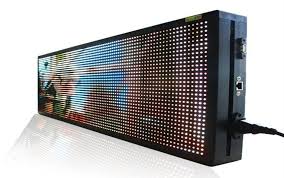
LED LCD screens are fundamentally LCD (liquid crystal display) panels backlit by LED (light-emitting diode) arrays. This combination has supplanted traditional CCFL (cold cathode fluorescent lamp) backlighting due to superior energy efficiency, longer lifespan, and enhanced color fidelity. The basic construction includes ultra-thin glass substrates sandwiching liquid crystal material, covered with polarizers and color filters arranged via thin-film transistors (TFT). The backlight unit (BLU) typically employs edge-lit or direct-lit LED configurations, influencing uniformity and brightness levels.
Technical standards, such as ISO 13406-2, guide the acceptable pixel defect criteria, ensuring consumer-grade quality. Display resolution parameters commonly adhere to standards like Full HD (1920x1080), 4K UHD (3840x2160), or higher, depending on application. Color gamut coverage is frequently measured against the NTSC or Adobe RGB standards, with advanced LED LCDs targeting over 90% NTSC for vibrant image reproduction.
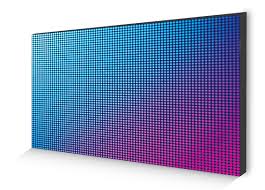
Manufacturing Process and Quality Control
The production of LED LCD screens entails multiple precise steps:
1. Substrate Preparation: High-quality glass substrates undergo cleaning, coating, and cutting with sub-millimeter tolerance. Effective cleaning prevents particle contamination, critical for display integrity.
2. Thin-Film Transistor (TFT) Fabrication: TFT arrays are deposited via photolithography and chemical vapor deposition, forming pixel electrodes that control liquid crystals' orientation.
3. Liquid Crystal Alignment: This phase involves curing alignment layers to ensure liquid crystals respond predictably to voltage changes, crucial for viewing angle and contrast ratio.
4. Backlight Integration: LED arrays are meticulously aligned and affixed using optical films such as diffusers and prisms to homogenize brightness. Edge-lit backlighting maximizes thin profile designs but requires enhanced light-guide plates to reduce light leakage and hotspots.
5. Assembly and Encapsulation: The panels undergo lamination and sealing to protect against moisture ingress, employing desiccants within the cell to preserve longevity.
6. Testing and Calibration: Automated optical inspection (AOI) identifies pixel defects. Color calibration meters adjust white balance and gamma curves to industry standards like DICOM for medical displays or BT.709 for broadcast content.
Statistical process control (SPC) and Six Sigma methodologies are standard in ensuring manufacturing yield rates exceed 95% for consumer-grade panels, balancing cost and reliability.
Key Performance Parameters
- Brightness and Contrast Ratio: Typical LED LCDs range from 300 to 1000 nits brightness, with contrast ratios from 1000:1 to over 5000:1 using local dimming techniques. Advanced mini-LED and micro-LED backlights are pushing these values higher.
- Response Time: Critical for gaming and high-frame-rate video, modern panels achieve response times under 5ms gray-to-gray transitions.
- Viewing Angle: Achieved through multi-domain vertical alignment (MVA) or in-plane switching (IPS) technologies, viewing angles of up to 178° horizontally and vertically are standard.
- Color Accuracy: Professional-grade displays incorporate 10-bit color depth and wide color gamut support, meeting standards such as Rec. 2020 and DCI-P3.
Emerging Trends and Innovations
The LED LCD industry sees consistent innovation, with mini-LED and micro-LED backlights providing localized dimming zones enhancing contrast dramatically while reducing power consumption. Quantum dot enhancement films (QDEF) are widely adopted for improving color purity without compromising brightness.
Environmentally conscious manufacturing has led to the adoption of lead-free soldering, low-volatile organic compound (VOC) materials, and energy-efficient LED drivers compliant with international standards such as RoHS and Energy Star.
Moreover, integration of adaptive refresh rate technology and flicker-free backlighting affords improved user comfort and extended device lifespan, especially notable in mobile devices.
Industry Case Studies
Leading manufacturers like Samsung Display and LG Display have demonstrated innovations fulfilling diverse market demands. For instance, LG’s WOLED TV panels utilize white OLED backlighting combined with color filters, enhancing uniformity and improving viewing angles beyond traditional LED LCDs.
In automotive displays, suppliers integrate ruggedized LED LCD panels conforming to ISO 16750 environmental standards, ensuring operational stability under extreme temperatures and vibrations.
Conclusion
Mastering LED LCD manufacturing requires a comprehensive understanding of materials science, optical engineering, and process control. Continuous alignment with international standards and adoption of emerging technologies ensures screens with superior performance, energy efficiency, and durability. As global demand intensifies, manufacturers must balance cost optimization with advancing user expectations for resolution, color fidelity, and form factor innovation.
This article has outlined core technical insights and quality practices essential to professionals engaged in LED LCD manufacturing, with a focus on elevating product excellence and maintaining stringent industry benchmarks.













