

Advances and Best Practices in LED LCD Screen Manufacturing for Optimal Display Performance
The LED LCD screen manufacturing industry stands at the forefront of display technology, driving innovations that deliver exceptional image quality, energy efficiency, and durability. As a professional engineer with extensive experience in LED display production, I will delve into the technical facets, manufacturing processes, and quality standards that define excellence in this field. This article presents an in-depth perspective on modern LED LCD manufacturing, incorporating industry benchmarks and practical insights to enhance both product design and user experience.
Fundamental Technologies Behind LED LCD Screens
LED LCD screens combine Liquid Crystal Display (LCD) technology with Light Emitting Diodes (LED) as backlighting sources. The LCD controls image formation via liquid crystals modulating light polarization, while LEDs provide consistent, efficient illumination. This synergy results in higher contrast ratios, wider color gamut, and improved power efficiency than traditional cold cathode fluorescent lamps (CCFLs).
Critical Technical Parameters
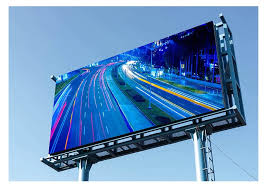
Key performance indicators for LED LCD screens include luminance (brightness), color accuracy, response time, refresh rate, and viewing angle. Typical luminance levels range from 250 to 1000 nits depending on application—ultra-high brightness panels exceeding 1500 nits support outdoor readability. Color accuracy is measured via standards such as sRGB, Adobe RGB, or DCI-P3, with professional-grade displays targeting color gamut coverage above 90% (DCI-P3) and ΔE values under 2 for color fidelity.
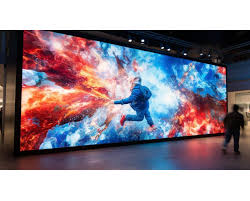
Response time, critical for reducing motion blur in dynamic content, generally falls between 1 ms to 8 ms. Refresh rates of 60Hz remain standard in most commercial applications, but gaming and advanced professional monitors may utilize 120Hz or higher for smoother visuals. Viewing angle specifications, typically 178° horizontal and vertical, ensure consistent image quality regardless of observation position.
Manufacturing Processes and Material Selection
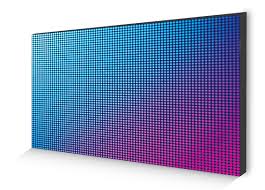
The production workflow encompasses several stages, starting with substrate preparation, Thin Film Transistor (TFT) array fabrication, cell assembly, backlight unit integration, and final module testing.
- Substrate Preparation: High-purity glass substrates undergo cleaning and coating with alignment layers to control the orientation of liquid crystals.
- TFT Array Fabrication: Amorphous or Low-Temperature Polycrystalline Silicon (LTPS) TFTs are patterned using photolithography, serving as individual pixel switches controlling light modulation.
- Cell Assembly: Two substrates are aligned and bonded with spacer beads ensuring uniform cell gap, critical for consistent optical performance.
- Backlight Unit Integration: LED backlighting, frequently using edge-lit or direct-lit arrays, is assembled with optically engineered diffusers and reflectors to optimize luminance uniformity. Recent trends adopt Mini-LED and Micro-LED technology for enhanced local dimming and contrast.
- Module Testing: Rigorous quality checks following International Electrotechnical Commission standard IEC 62504 evaluate brightness uniformity, color accuracy, response time, and defect pixel counts. Environmental stress testing includes thermal cycling and humidity exposure to guarantee reliability.
Quality Control and Industry Standards
Adherence to global standards is imperative to ensure safety, performance, and compatibility. IEC 62368 defines safety requirements for audio/visual products, including displays. The ISO 9241-307 standard addresses ergonomic requirements for electronic visual displays, guiding luminance and chromaticity criteria.
Manufacturers employ Automated Optical Inspection (AOI) and colorimeters for inline quality control, reducing defects and improving yield. Statistical Process Control (SPC) further optimizes production consistency.
Sustainability and Energy Efficiency
Modern LED LCD screens prioritize eco-friendly design. LED backlighting consumes 30-50% less power compared to CCFL. Use of mercury-free components, recyclable materials, and compliance with RoHS (Restriction of Hazardous Substances) directives reflect environmental responsibility. Techniques such as dynamic backlight control and local dimming not only enhance display quality but also reduce energy consumption.
Challenges and Future Directions
While LED LCD screens offer vast advantages, challenges remain regarding viewing angle limitations and black level performance relative to OLED technology. However, innovations in Nano-LED and quantum dot enhancement films (QDEF) significantly improve color purity and contrast.
The industry continues moving towards Mini-LED and Micro-LED integration, enabling finer pixel control and HDR (High Dynamic Range) capabilities. Furthermore, flexible and transparent display development opens new application scenarios across automotive, medical, and wearable sectors.
In conclusion, mastering the complexities of LED LCD screen manufacturing demands a comprehensive understanding of material science, photolithography, optical engineering, and quality assurance protocols. By adhering to stringent industry standards and embracing cutting-edge advancements, manufacturers can deliver displays that satisfy the evolving expectations of consumers worldwide.













