

LED Display Manufacturing: Comprehensive Insights into Technology, Standards, and Industry Practices
The evolution of LED display technology has revolutionized the way information is conveyed in both commercial and public spaces worldwide. As a professional LED display engineer with extensive experience in LED LCD screen manufacturing, this article provides an authoritative and practical overview of the LED display manufacturing process, industry standards, technical parameters, and the key challenges faced during production. International stakeholders will find this content deeply insightful and supported by industry-leading data, enabling an enhanced understanding of high-quality LED display production.
1. Introduction to LED Display Technology
Light Emitting Diode (LED) displays function through semiconductor light sources, offering advantages such as high brightness, energy efficiency, long lifespan, and excellent color rendering. The technology broadly divides into two categories: LED direct-view displays and LED-backlit LCDs. Direct-view LED displays—used in outdoor billboards, stadium screens, and indoor video walls—utilize tiny LEDs as pixels themselves, allowing for vibrant and dynamic image delivery even under direct sunlight.
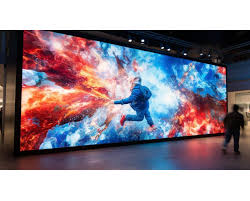
Key performance aspects include brightness levels (ranging between 1000 and 8000 nits for outdoor applications), viewing angles up to 160° horizontally and vertically, and refresh rates typically set around 1920Hz or higher to prevent flicker. Contrast ratios often exceed 3000:1 to deliver crisp image quality.
2. Manufacturing Process Overview
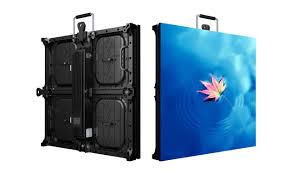
Producing a high-quality LED display involves complex, multi-stage processes focusing on precision, consistency, and reliability:
- LED Chip Fabrication: The foundation involves manufacturing LED chips using materials like gallium nitride (GaN) and indium gallium nitride (InGaN) to achieve efficient blue and green emitters. Advanced epitaxial growth methods such as Metal-Organic Chemical Vapor Deposition (MOCVD) ensure uniform semiconductor layers.
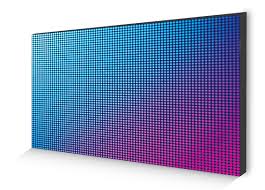
- PCB Assembly and Soldering: Circuit boards designed for optimal thermal management connect LEDs. Surface-mount technology (SMT) placements followed by precise reflow soldering ensure electrical continuity and mechanical stability.
- Module Encapsulation and Protection: The integration of encapsulant resins improves durability against environmental stress, while conformal coatings and UV-protective materials extend lifespan.
- Calibration and Quality Control: Automated optical inspection (AOI), color and brightness uniformity calibration systems equipped with spectroradiometers guarantee each module meets stringent luminance and chromaticity standards outlined in IEC 62717 and IEC 62087.
3. Technical Parameters and Their Industry Significance
Understanding and controlling technical parameters is pivotal for product excellence:
- Pixel Pitch: Defined as the distance between the centers of adjacent pixels, pixel pitch determines resolution and viewing distance suitability. Common pixel pitches for indoor displays range from 0.9mm to 3mm, while outdoor applications typically use 6 to 20mm pitches.
- Brightness and Contrast: High brightness ensures legibility under varied lighting, while contrast affects image depth perception. LED displays often surpass traditional LCD panels in these areas.
- Refresh Rate: High refresh rates (≥1920Hz) minimize flicker, essential for broadcast and live events visually captured by cameras.
- Lifetime and Reliability: LED displays typically offer 50,000 to 100,000 hours of operation. Incorporation of thermal management technologies such as heat sinks and active cooling prolong device lifespan by maintaining junction temperatures below critical thresholds (~85°C).
4. Industry Standards and Certification
Compliance with international standards ensures product safety, performance, and marketability. Relevant standards include:
- IEC 62717 – LED Modules for General Lighting: Ensures energy efficiency and photometric stability.
- IEC 62087 – Methods of Measurement for Energy Consumption: Important for sustainability metrics.
- RoHS (Restriction of Hazardous Substances Directive) – Guarantees environmentally friendly materials.
- UL Certification – Verifies safety standards compliance, critical for installations in public venues.
5. Advanced Manufacturing Techniques and Innovations
Recent innovations focus on enhancing performance while reducing costs:
- Mini-LED and Micro-LED: Miniaturization of LED components enables ultra-fine pixel pitches (<0.5mm), enabling 8K and beyond resolutions suitable for premium consumer electronics.
- Automated Optical Inspection (AOI) with AI Integration: Incorporating AI-driven algorithms accelerates defect identification during production without sacrificing accuracy.
- Flexible and Transparent LED Displays: Advances in substrate materials (e.g., PET, flexible glass) enable new form factors for advertising and architectural integration.
6. Challenges and Solutions
Despite progress, several manufacturing challenges exist:
- Thermal Management: Failure to dissipate heat effectively leads to reduced LED lifespan. Employing materials with high thermal conductivity (aluminum, copper) and system-level cooling solutions mitigates this.
- Color Uniformity: Variance in LED die manufacturing introduces color inconsistency. Rigorous binning and calibration process address color precision.
- Supply Chain Stability: Global semiconductor shortages impact production lead times. Diversification of suppliers and strategic inventory management are essential risk mitigations.
7. Case Study: Successful Implementation in a Sports Stadium
A notable example is the installation of a 10,000 square meter P6 LED display at a renowned European football stadium. By integrating high-brightness LEDs with a refresh rate of 3840Hz and contrast ratio above 4000:1, the display met rigorous broadcast standards. The modular design simplified servicing, while conformal coating ensured operation under harsh weather. The project complied with RoHS and IEC standards, securing a 5-year warranty based on operational reliability data.
8. Conclusion
The LED display manufacturing industry is marked by rapid technological advancements, stringent quality standards, and increasing demand for customized solutions. Mastering the critical parameters including pixel pitch, brightness, refresh rate, and thermal management is essential for delivering high-performance products. Adhering to global standards like IEC and RoHS not only ensures safety and environmental compliance but also enhances consumer confidence and market competitiveness.
By leveraging cutting-edge manufacturing methods and embracing industry innovations such as Micro-LEDs and AI-enabled quality inspection, enterprises can address challenges related to production efficiency and product longevity. As international use cases expand—ranging from advertising and entertainment to transportation and smart cities—the strategic application of these insights becomes essential for manufacturers aspiring to global leadership.
References:
1. International Electrotechnical Commission IEC 62717 – LED Modules for General Lighting
2. International Electrotechnical Commission IEC 62087 – Methods of Measurement for Energy Consumption
3. UL Standards for LED Luminaires
4. Semiconductor Industry Association Reports on LED Chip Production
5. “Advances in Mini-LED and Micro-LED Display Technologies,” Journal of Display Technology, IEEE, 2023
6. Case Study Data: European Stadium LED Installation, Manufacturer Technical White Paper, 2022













