

Advanced LED Display Technologies and Manufacturing Processes for High-Performance Screens
In the rapidly evolving landscape of display technology, LED (Light Emitting Diode) displays have emerged as the cornerstone for high-resolution, energy-efficient, and vibrant visual solutions. As a seasoned LED display engineer with comprehensive expertise in design, manufacturing, and application, this article provides an authoritative deep dive into LED display technologies and manufacturing processes, focusing on technical parameters, industry standards, and production best practices that guarantee performance, reliability, and longevity.
Fundamentals of LED Display Technology
LED displays utilize arrays of light-emitting diodes as pixels to compose the image seen on the screen. Unlike traditional LCDs that rely on backlighting, LED displays can be either self-emissive (microLED, OLED) or utilize LEDs as backlights in LCDs. The self-emissive LED technology offers superior contrast ratios, faster response times, and unmatched color accuracy.
Types of LED Displays
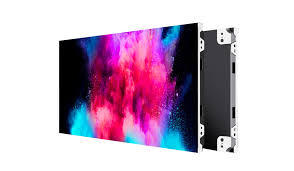
1. Direct View LED (DV-LED):
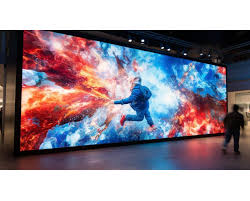
This technology consists of densely packed LEDs directly forming the image without additional layers such as LCD panels. Ideal for large-format digital signage, DV-LEDs offer pixel pitches from as low as 0.6mm (for indoor fine pitch displays) to over 10mm (for outdoor displays). The typical brightness levels range from 800 nits indoor to over 5000 nits outdoor. According to the IEC 62087 standard for measuring video equipment power consumption, these displays emphasize energy efficiency while maintaining high luminance.
2. LED-backlit LCDs:
This hybrid design uses LEDs as backlighting sources behind an LCD panel. This architecture improves brightness uniformity, energy efficiency, and allows thinner panel design compared to CCFL backlights.
3. MicroLED Displays:
A novel technology integrating millions of microscopic LEDs to form each pixel, microLED displays achieve unprecedented pixel density (>3000 PPI), enabling 4K and 8K resolutions on small and large displays alike. MicroLEDs offer long lifespans (>100,000 hours), wide color gamut (over 90% NTSC), peak brightness exceeding 2000 nits, and exceptional power efficiency.
4. OLED Displays:
Organic LEDs, a self-emitting technology using carbon-based compounds, provide exceptional contrast ratios (>1,000,000:1), deep blacks, and wide viewing angles. However, their manufacturing involves complex organic layer deposition and encapsulation processes to prevent degradation.
Critical Performance Parameters and Industry Standards
- Pixel Pitch: Determines resolution and viewing distance. Fine pixel pitches (<1mm) suit indoor applications such as control rooms, while larger pitches (>4mm) are appropriate for outdoor billboards.
- Refresh Rate: High refresh rates (≥ 1920Hz) are critical for flicker-free video playback, especially important in broadcast environments per SMPTE standards.
- Brightness and Contrast: Outdoor displays commonly target brightness levels >5000 nits for daylight visibility. Contrast ratio, especially in OLED and microLEDs, significantly enhances image depth.
- Color Gamut and Accuracy: Conformance to color standards like sRGB, Adobe RGB, or Rec. 2020 ensures color fidelity, critical in professional applications.
- Viewing Angle: Achieving wide viewing angles (>160° horizontal and vertical) avoids color shift and brightness loss across viewing positions.
Manufacturing Processes and Quality Control
The fabrication of LED displays involves multistage, high-precision processes:
1. LED Chip Fabrication:
Semiconductor wafers, typically GaN or InGaN for blue/green LEDs and AlGaInP for red LEDs, undergo epitaxial growth, photolithography, etching, metallization, and singulation. Control of epitaxial layer thickness and doping significantly impacts LED lifespan and efficiency.
2. Mounting and Module Assembly:
LED dies are mounted on PCBs using Surface Mount Technology (SMT) or flip-chip techniques, ensuring precise alignment and thermal management. Modules are encapsulated, often with silicone or epoxy to enhance durability and moisture resistance.
3. Calibration and Binning:
LED binning classifies LEDs by luminous flux, color temperature, and voltage for uniformity. Advanced calibration systems use colorimeters and spectrometers to map each pixel's output, correcting discrepancies for seamless image quality.
4. Panel Integration and Testing:
Modules are assembled into panels with frame structures providing mechanical stability. Testing includes temperature cycling (per IEC 60068-2), vibration, and UV exposure to validate durability under diverse environmental conditions.
Thermal Management
Effective heat dissipation is crucial; poor thermal design accelerates LED degradation and color shift. Use of aluminum PCBs with high thermal conductivity (>2 W/mK), heat sinks, and active cooling techniques (fans or liquid cooling) maintain junction temperatures below 85°C, prolonging LED life to over 100,000 hours.
Emerging Trends and Innovations
- Smart LED Displays: Integration of AI-based calibration and content optimization enhances user experience and maintenance predictive analytics.
- Flexible and Transparent LED Displays: Utilizing flexible substrates (polyimide films) and transparent materials offers novel form factors and applications in automotive and architectural glass.
- Miniaturization and Chip-on-Board (COB) Technologies: Reduce pixel pitch and improve uniformity by placing LED dies directly onto substrates.
Economic and Environmental Considerations
Advanced LED manufacturing techniques increasingly focus on reducing lifecycle environmental impact, emphasizing energy-efficient processes, use of recyclable materials, and compliance with RoHS and REACH regulations.
Conclusion
Expertise in LED display design and manufacturing requires comprehensive knowledge of semiconductor physics, optical engineering, thermal dynamics, and quality management systems. Industry adherence to global standards such as IEC, SMPTE, and JEDEC ensures that LED displays meet stringent performance and safety criteria. With continuous innovation in materials and integration technologies, LED displays will continue to dominate both consumer and professional visual markets, delivering unparalleled brightness, color, and durability for years to come.
References:
- International Electrotechnical Commission (IEC) Standards 62087, 60068
- Society of Motion Picture and Television Engineers (SMPTE) Guidelines
- JEDEC Semiconductor Standards
- “LED Technology and Applications,” Journal of Display Technology, IEEE, 2023
- Rohm Semiconductor Technical Whitepapers, 2024













