

Advances and Best Practices in LED LCD Screen Manufacturing for Superior Display Performance
In the rapidly evolving field of display technology, the manufacturing of LED LCD screens has undergone significant innovations, driven by the demand for higher image quality, energy efficiency, and durability. As a professional LED display engineer with extensive industry experience, this article delves into the critical manufacturing parameters, technological advancements, and quality assurance strategies that shape the LED LCD screen production landscape today.
LED LCD (Light Emitting Diode Liquid Crystal Display) technology combines the advantages of efficient LED backlighting with the precise color control and flexibility of LCD panels. Unlike traditional CCFL (Cold Cathode Fluorescent Lamp) backlighting, LEDs provide superior luminance uniformity, faster response times, and reduced power consumption, making them ideal for applications ranging from smartphones to large video walls.
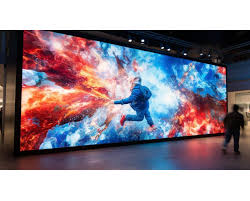
Manufacturing Process and Technical Parameters
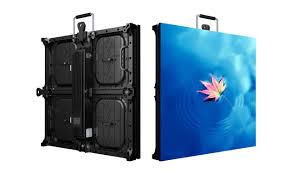
The manufacturing of LED LCD screens encompasses multiple stages, including substrate preparation, thin-film transistor (TFT) array creation, color filter application, LED backlight assembly, and final optical integration.
- Substrate and TFT Array: The base for most LED LCD panels is a glass substrate, typically containing amorphous silicon (a-Si) or low-temperature polysilicon (LTPS) thin-film transistors to control individual pixels. LTPS offers higher electron mobility and better resolution, favored in high-end displays like 4K smartphones and VR devices.
- Color Filters and Polarizers: Precise deposition of red, green, and blue (RGB) color filters ensures accurate color reproduction. Advanced photoalignment techniques have improved the uniformity and reduced defects in polarizer layers, critical for contrast ratio optimization. Typical LCD panels achieve contrast ratios ranging from 1000:1 to over 5000:1 in advanced models.
- LED Backlighting: The integration of LEDs as backlight sources is pivotal. Two primary configurations prevail: edge-lit and direct-lit. Edge-lit designs position LEDs along the panel’s perimeter, using light guides to distribute brightness, enabling thinner displays but sometimes compromising uniformity. Direct-lit designs position LEDs directly behind the panel for superior brightness uniformity and local dimming capabilities.
Key LED characteristics include luminous flux, color temperature, and color rendering index (CRI). For professional displays, LEDs achieving over 1000 lumens with a CRI above 90 are preferred to render colors accurately. Furthermore, LED driving current and pulse-width modulation (PWM) frequency must be optimized to minimize flicker and extend lifespan, typically exceeding 50,000 hours under controlled operating conditions.
- Optical Enhancements: Additional layers such as diffuser films, prism sheets, and quantum dot enhancement films (QDEF) are widely used. Quantum dots help achieve wider color gamuts such as DCI-P3 and Rec. 2020 standards, crucial for HDR content. Industry data shows QDEF incorporation can improve color volume by approximately 30%.
Quality Control and Industry Standards
Adherence to international standards ensures reliable performance and safety. Key references include:
- IEC 62368-1: Governs safety requirements for electronic displays.
- ISO 9241-302/303: Specifies visual ergonomics for display quality.
- DisplayHDR Certification: Validates HDR performance in LCD displays.
Manufacturers also employ rigorous quality assurance measures such as automated optical inspection (AOI) and electroluminescence (EL) testing to detect pixel defects, backlight uniformity issues, and color inconsistencies at early stages. Statistical process control (SPC) tools monitor production parameters, ensuring yields above 90%.
Challenges and Emerging Trends
One notable challenge in LED LCD manufacturing is the tradeoff between panel thinness and thermal management. Higher brightness LEDs generate heat, requiring advanced heat dissipation materials and design solutions like graphite sheets or micro heat pipes to maintain operating temperatures below 60°C, thereby prolonging panel lifespan.
Innovations like Mini-LED and Micro-LED backlighting offer improved local dimming zones and contrast but necessitate extremely precise automated placement and soldering technologies. Additionally, flexible LED LCDs are gaining traction, demanding novel substrate materials like polyimide films and bendable encapsulants, which influence mechanical durability and optical performance.
Conclusion
Manufacturing high-quality LED LCD screens requires deep expertise in materials science, precision engineering, and process integration. By leveraging advanced TFT technologies, optimized LED backlighting, and stringent quality control aligned with global standards, manufacturers can deliver displays with exceptional brightness, color accuracy, and durability.
Ongoing developments including quantum dot enhancements, Mini-LED backlighting, and flexible substrates promise to further elevate LCD performance, meeting the demands of next-generation applications across consumer electronics, automotive displays, and digital signage industries.
To maintain industry leadership, continuous innovation, process refinement, and adherence to internationally recognized standards remain indispensable.













