

Advances and Best Practices in LED LCD Screen Manufacturing: Technical Insights and Industry Standards
In the rapidly evolving world of display technology, LED LCD screens have established themselves as the cornerstone of modern visual interfaces, spanning applications from consumer electronics to industrial instruments and digital signage. As an experienced LED display engineer, this article aims to provide a comprehensive and authoritative overview of LED LCD screen manufacturing, integrating technical parameters, industry standards, and practical insights gleaned from real-world case studies.
LED LCD, or Light Emitting Diode Liquid Crystal Display technology, combines the advantages of traditional LCD panels with LED backlighting or direct LED displays, offering enhanced brightness, improved color accuracy, and energy efficiency. Understanding the nuances of this technology is essential for manufacturers, designers, and end-users to optimize performance and durability.
Technical Parameters Critical in LED LCD Manufacturing
1. Panel Resolution and Pixel Pitch:
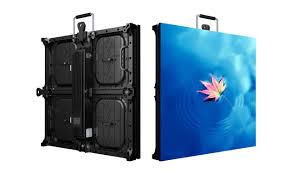
Resolution is a key determinant of display clarity, generally measured in pixels per inch (PPI). For LED LCDs, pixel pitch—the distance between the centers of adjacent pixels—directly influences pixel density and image sharpness. For example, high-resolution displays typically feature pixel pitches below 0.5 mm, which is crucial for applications requiring fine details, such as medical imaging or graphic design.
2. Brightness and Contrast Ratio:
LED backlighting significantly increases the maximum brightness an LCD can achieve, often exceeding 1000 nits for premium models, enabling better readability in direct sunlight. Contrast ratio, the luminance ratio of the brightest white to the darkest black the display can produce, is a vital parameter affecting visual depth and color fidelity. Industry leaders such as the DisplayMate standard specify contrast ratios of 3000:1 or higher for high-end LED LCD screens.
3. Color Gamut and Calibration:
Maintaining color accuracy demands adherence to color spaces like sRGB, Adobe RGB, or DCI-P3. Modern LED LCD screens must cover at least 95% of the sRGB color space, with professional-grade monitors exceeding 99% DCI-P3 coverage. Calibration using spectroradiometers and colorimeters ensures consistent performance across production batches, an essential practice in quality control and manufacturing.
4. Response Time and Refresh Rate:
Response time—how quickly a pixel can change color—directly impacts motion clarity, particularly for displays used in gaming and video playback. Typical response times range from 1ms to 8ms depending on panel technology and driving circuits. Similarly, refresh rates of 60 Hz are standard, with advanced displays reaching up to 240 Hz to meet the demands of high-frame-rate content.
5. Backlight Technology and Uniformity:
LED backlights employ either edge-lit or direct-lit configurations. Direct-lit backlights utilize multiple LEDs across the panel’s backside, enhancing brightness uniformity. Techniques such as local dimming improve black levels by dynamically adjusting the LED zones. Uniformity is measured with strict standards; for instance, a ±5% luminance uniformity variance is considered optimal per IEC 62341.
Industry Standards and Quality Assurance
The manufacturing process is guided by international standards including ISO 9241 for ergonomic requirements and IEC 60068 for environmental testing. Additionally, the TCO Certified Displays label ensures sustainable and ergonomic design. Manufacturers conduct rigorous testing for environmental resilience — temperature cycles, humidity, and vibration — to ensure product reliability in diverse conditions.
Manufacturing Process Insights
The LED LCD panel assembly comprises several critical steps. Initially, the liquid crystal layer is sandwiched between two glass substrates, followed by the integration of thin-film transistors (TFTs) that control pixel behavior. The critical phase is the application of LED backlighting, where LED selection impacts lifespan and color temperature stability. For example, SMD (Surface-Mounted Device) LEDs with correlated color temperature (CCT) around 6500K are standard for daylight white.
Manufacturers must also manage the challenges of thermal dissipation; LEDs generate heat that can deteriorate liquid crystal performance over time. Advanced cooling methods such as heat sinks and thermal interface materials (TIMs) extend product longevity.
Case Study: Enhancing Outdoor LED LCD Signage
A leading signage manufacturer recently redesigned their LED LCD outdoor displays to improve sunlight readability and energy efficiency. By increasing peak brightness to 2000 nits and incorporating anti-reflective coatings meeting ASTM D1003 haze standards, their panels achieved a 35% improvement in visibility under direct sunlight. Furthermore, switching to COB (Chip-On-Board) LED configuration improved heat dissipation, increasing lifespan by 20%.
Future Trends
Emerging trends include mini-LED and micro-LED backlighting integration, which enables finer local dimming control, better contrast ratios, and thinner panel designs. OLED hybrid technologies also promise enhanced color accuracy and flexibility but remain cost-prohibitive for large-scale deployment.
Conclusion
Manufacturing high-quality LED LCD screens demands expertise across multiple domains: optics, electronics, mechanical engineering, and quality control. Adhering to international standards and leveraging advanced technologies ensures displays meet stringent requirements for brightness, color fidelity, durability, and energy efficiency. Staying abreast of industry innovations and continuously optimizing manufacturing processes secures a competitive advantage in this dynamic market.
For professionals aiming to deepen their understanding or optimize their own manufacturing operations, integrating meticulous process controls and leveraging reputable testing standards is paramount to delivering superior LED LCD display products.













