

Advanced Techniques and Best Practices in LED LCD Screen Manufacturing
In the ever-evolving landscape of display technology, LED LCD screen manufacturing continues to play a pivotal role in delivering high-performance visual solutions across industries. With the demand for higher resolution, greater energy efficiency, and superior color accuracy intensifying, manufacturers must integrate advanced techniques and adhere to stringent technical standards to remain competitive.
Understanding the LED LCD Structure and Operation
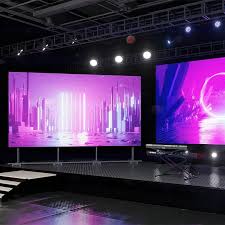
LED LCD displays combine liquid crystal technology with LED backlighting. The liquid crystal shuttering modulates light passing through pixel elements, while an array of LEDs provides the necessary illumination. Key parameters such as backlight uniformity, luminance levels, contrast ratio, and color gamut must be meticulously controlled during production to ensure optimal display quality.
Critical Manufacturing Considerations
1. Backlight Configuration:
Manufacturers use either edge-lit or direct-lit LED configurations. Direct-lit LED panels offer superior uniformity and contrast ratios (often exceeding 5000:1), while edge-lit designs enable thinner displays but can struggle with brightness consistency. Innovations such as mini-LED and micro-LED backlighting are revolutionizing uniformity and HDR performance, offering localized dimming zones and extended color gamuts (up to 100% DCI-P3 coverage).
2. Panel Alignment and Pixel Precision:
Critical to LCD quality is the precise alignment of the liquid crystal layer, color filters, and thin-film transistor (TFT) substrates. Tolerances must often be kept within micrometers, ensuring that pixel aperture ratios maximize light transmission while minimizing crosstalk and color distortion. Advanced photolithography and laser machining techniques have become standard, enhancing the manufacturing yield and display consistency.
3. Material and Component Quality:
High-grade Indium Tin Oxide (ITO) coatings on glass substrates are required to achieve adequate electrical conductivity without compromising light transmittance. The choice of liquid crystal compounds directly affects response time and temperature resilience, with modern formulations enabling refresh rates beyond 120 Hz and operational lifespans exceeding 50,000 hours (as per JEITA standards).
4. Environmental Controls and Testing:
Manufacturing environments adhere to stringent cleanroom standards (ISO Class 5 or better) to prevent particulate contamination, which can cause pixel defects or mura (uneven brightness). Accelerated aging tests and thermal cycling simulate real-world operational stresses, guaranteeing product reliability under diverse conditions.
Quality Standards and Industry Benchmarks
Adherence to International Electrotechnical Commission (IEC) standards—such as IEC 62368-1 for safety and IEC 62471 for photobiological safety—is mandatory. Moreover, manufacturers increasingly comply with TÜV Rheinland certifications for blue light emission and flicker-free performance, enhancing user comfort and reducing eye strain.
Case Study: Scaling Up HDR Capability with Mini-LED Technology
A leading display manufacturer integrated mini-LED backlighting consisting of over 10,000 dimmable zones within a 65-inch panel. This approach delivered peak brightness exceeding 1,000 nits, contrast ratios over 1,000,000:1, and superior local dimming control, aligning with HDR10+ standards. The result was a quantum leap in image depth and realism, meeting market demand for premium content consumption devices.
Future Trends and Technological Innovations
The push towards higher dynamic ranges, wider color gamuts, and flexible form factors will drive further integration of micro-LED arrays and quantum dot enhancement films (QDEF). These innovations enhance color purity and brightness efficiency while reducing production costs in the long term.
In addition, AI-driven manufacturing lines employing machine vision and real-time defect analysis are beginning to transform quality assurance protocols, minimizing human error and maximizing throughput.
Conclusion
LED LCD screen manufacturing requires a balance of precision engineering, materials science, and rigorous quality control. By adhering to internationally recognized standards and embracing cutting-edge technologies such as mini-LED and micro-LED, manufacturers can produce displays that meet the sophisticated requirements of today's consumers and professional markets. Continuous innovation not only improves display performance but also propels the industry towards more sustainable and user-centric solutions.













