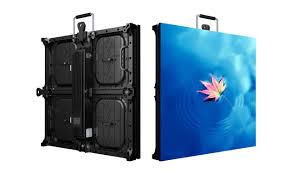
Interactive LED Technology: Advancements, Applications, and Technical Insights
Interactive LED technology has rapidly evolved as a transformative force in the display industry, blending dynamic visual output with user engagement capabilities. Rooted in LED (Light Emitting Diode) fundamentals, interactive LED displays uniquely incorporate touch-sensitive and sensor-driven features that respond to user inputs, revolutionizing how content is consumed and interacted with across commercial, educational, and entertainment sectors.
At its core, an interactive LED display combines high-quality LED panels with embedded touch sensors or external interactive devices. The LED panels themselves are constructed from arrays of microscopic LEDs that emit light when electrical current passes through semiconductors. These displays typically boast pixel pitches ranging from 0.7 mm to 10 mm, accommodating both fine-resolution indoor uses and larger, more visible outdoor installations.
From a technical perspective, the interactivity is often achieved through capacitive touch technology, infrared sensors, or camera-based motion detection systems. Capacitive touch screens, prevalent in many interactive LED setups, detect changes in an electrostatic field caused by a finger’s conductive properties. Infrared frameworks utilize bordering LED arrays that create a grid of IR light beams; interrupting these beams triggers user input detection. More sophisticated systems employ computer vision techniques, enabling gesture recognition and multi-point interaction.
Crucial to the quality of interactive LED displays is the refresh rate, which ranges from 120 Hz to upwards of 3840 Hz. Higher refresh rates reduce flicker and improve touch response times, which is essential for real-time interaction. Furthermore, color accuracy and brightness levels are significant performance parameters; indoor interactive LEDs often achieve brightness levels of 800 to 1500 nits, whereas outdoor models exceed 5000 nits to maintain visibility under direct sunlight. The use of high-quality phosphor or quantum dot-enhanced LEDs enhances color gamut and longevity, aligning with standards like IEC 62471 for photobiological safety.
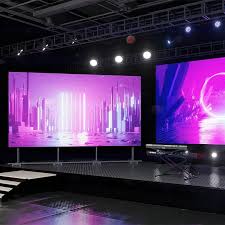
The applications of interactive LED technology are diverse and continuously expanding. Retail environments utilize interactive LED walls and kiosks to captivate customers by delivering personalized content, product information, and engaging shopping experiences. Museums and educational institutions employ these displays to facilitate immersive learning through tactile interaction and dynamic visualization. Corporate and event venues adopt interactive LED screens for presentations and live audience engagement, integrating touch or gesture controls to foster participation and information exchange.
In addition to traditional capacitive or IR touch methodologies, emerging interactive LED displays are integrating AI-powered sensors and haptic feedback mechanisms. This fusion enriches user engagement by delivering context-aware responsiveness and physical sensations, thus improving the overall interactive experience. Moreover, software platforms supporting interactive LED solutions are becoming more intuitive, allowing seamless content management through cloud-based systems or integrated CMS (Content Management Systems) that support multi-user collaboration.
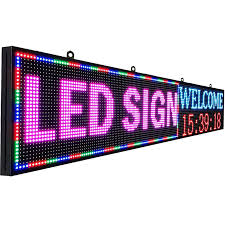
Manufacturing interactive LED displays involves meticulous process control over PCB (Printed Circuit Board) assembly, die bonding, and lamination techniques to ensure uniformity and durability. Challenges include managing heat dissipation, minimizing latency in touch responsiveness, and ensuring environmental robustness (waterproof ratings typically adhere to IP65/IP67 standards for outdoor units). High-density LED modules require precision placement, often automated via SMT (Surface Mounted Technology) to achieve optimal pixel alignment and color uniformity.
Industry-leading providers such as Samsung, LG, and Unilumin have contributed to setting benchmarks in interactive LED technology by incorporating these advancements while maintaining compliance with global standards such as IEC 61000-4-2 for electrostatic discharge immunity and RoHS (Restriction of Hazardous Substances). Case studies from commercial deployments illustrate a 30-40% increase in customer engagement and interaction times, highlighting the tangible business value of investing in interactive LED solutions.
In summary, interactive LED technology stands at the intersection of advanced display engineering and human-computer interaction, driving innovation through high-resolution displays with responsive interfaces. Its future trajectory points towards deeper integration with AI, IoT ecosystems, and immersive experiences, securing its role as a cornerstone technology in digital communication and engagement landscapes worldwide.