

Advancements and Technical Insights in LED Display Manufacturing: An Engineer’s Perspective
The LED display industry has undergone remarkable advancements over the past decade, driven by continuous innovation in materials, manufacturing processes, and design architectures. As a seasoned LED display engineer, with extensive experience in large-scale production environments and technical development, I provide an in-depth overview of the critical factors defining modern LED displays, combining practical insights, industry standards, and technical parameters essential for engineers, designers, and decision-makers in related fields.
1. Core Technology and Material Evolution
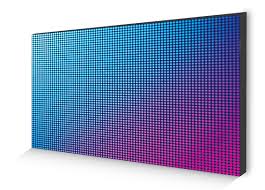
LED displays primarily utilize Light Emitting Diode technology that involves semiconductor diodes emitting light when electrically biased in the forward direction. Over the years, the transition from traditional discrete LEDs to mini- and micro-LED architectures has drastically transformed display quality, energy efficiency, and system integration.
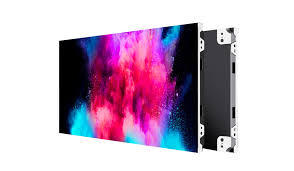
- Mini-LED and Micro-LED: Mini-LEDs typically range from 100 to 200 microns in size, whereas micro-LEDs can be as small as a few microns. These smaller LEDs enable higher pixel densities, superior contrast ratios, and improved color accuracy. According to Society for Information Display (SID) standards, displays employing micro-LEDs achieve color gamuts upwards of 95% DCI-P3, and contrast ratios exceeding 1,000,000:1 due to localized dimming capabilities.
- Material Enhancement: Gallium Nitride (GaN) has become the standard substrate for blue and green LEDs, owing to its efficiency and longevity. Red LEDs increasingly adopt AlGaInP compounds to optimize wavelength emission around 620–630 nm with superior brightness and power efficiency.
2. Manufacturing Process Innovations
Precision manufacturing and automation are at the heart of high-quality LED display production. The major steps include epitaxial growth, wafer processing, LED chip fabrication, phosphor application, and final assembly. Key advancements include:
- Epitaxial Layer Deposition: Metal-organic chemical vapor deposition (MOCVD) systems have refined epitaxial layer uniformity, which directly affects luminous efficacy and device lifespan. Uniformity better than ±3% across 6-inch wafers is now commonplace in leading fabs.
- Flip-Chip and Transfer Printing: Especially crucial in micro-LED mass production, flip-chip bonding and transfer printing techniques enable integration of millions of tiny LEDs onto driving backplanes with micron-level positional accuracy. Automated pick-and-place robots coupled with in-line real-time vision inspection are industry benchmarks.
- Phosphor Layering and Encapsulation: To achieve accurate white balance or specific color profiles, phosphor materials are strategically deposited. Encapsulation materials such as silicone gels maximize light extraction efficiency (LEE) and protect against moisture and environmental degradation, increasing Mean Time Between Failures (MTBF) to over 50,000 hours under typical operating conditions.
3. Technical Parameters and Standards
Achieving a reliable, high-performing LED display requires adherence to international standards and a detailed understanding of key performance metrics:
- Pixel Pitch: This is critical for resolution and viewing distance. Indoor applications demand pixel pitches as small as 0.7 mm (for 4K UHD displays), while outdoor displays typically have pixel pitches from 2 mm to 10 mm depending on viewing distance and ambient lighting.
- Brightness: For indoor displays, luminance of 800 to 1,500 cd/m² ensures clear visibility without excessive power consumption. Outdoor displays often exceed 5,000 cd/m² to overcome sunlight glare, with high-end installations reaching up to 8,000 cd/m².
- Refresh Rate and Gray Scale: To avoid flickers in video content, a minimum refresh rate of 1,920 Hz is industry standard. Gray scale depth typically reaches 16-bit levels using pulse width modulation (PWM) and dynamic current control, allowing ultra-smooth gradients and realistic color reproduction.
- Viewing Angle: A wide viewing angle of at least 160 degrees horizontally and vertically is essential to guarantee image integrity even off-axis, a requirement defined under IEC 62717.
4. Quality Assurance and Long-Term Reliability
Reliability tests integral to the manufacturing process include:
- Thermal Cycling: Since LEDs are highly sensitive to temperature, accelerated thermal cycling between -40°C and +85°C ensures no structural or optical degradation.
- Humidity and Moisture Resistance: IP65 or higher ratings are targeted, ensuring LED displays withstand exposure to rain, dust, and humidity, especially for outdoor applications.
- Electrostatic Discharge (ESD) Protection: Sensitive wafer-level chips undergo stringent ESD testing during assembly to mitigate latent defects.
5. Challenges and Future Trends
Despite widespread adoption, challenges persist such as yield rates in micro-LED mass transfer exceeding 85% still demand improvement, impacting cost. Novel techniques like intelligent defect mapping and machine learning-assisted pick-and-place are improving production efficiency.
Future trends encompass flexible and transparent LED displays enabled by novel substrates such as polyethylene naphthalate (PEN) and OLED hybrid integration. Furthermore, advancements in Quantum Dot-enhanced LEDs (QLEDs) promise even wider color gamuts and improved luminous efficacy, crucial for next-generation display solutions, including AR/VR devices.
Conclusion
The LED display manufacturing landscape is a blend of intricate semiconductor physics, sophisticated manufacturing methodologies, and stringent quality controls. Successful engineering requires a deep understanding of materials science, electrical engineering, and system integration underpinned by adherence to international standards such as IEC 62717, JEDEC JESD22 for reliability, and SID display metrics. From pixel pitch precision to phosphor materials and encapsulation, each parameter contributes fundamentally to performance, cost, and longevity. With steady innovations, the future LED displays will continue to push boundaries in resolution, efficiency, and applications.
References:
- Society for Information Display (SID) – “Micro-LED Displays: Technology and Applications,” SID Symposium Digest, 2023
- IEC 62717: LED Modules for General Lighting – Performance Requirements, International Electrotechnical Commission
- JEDEC JESD22 Series – Reliability Test Methods for Semiconductor Devices
- S. Nakamura et al., “Advances in GaN-based LED Technology,” IEEE Journal of Selected Topics in Quantum Electronics, 2022













