

Advanced LED Display Technologies and Manufacturing Practices for Superior Visual Performance
In the rapidly evolving field of LED display manufacturing, achieving superior visual performance requires a confluence of cutting-edge technology, precise engineering, and rigorous quality control. As an experienced LED display engineer, I draw upon industry standards such as IEC 62368-1 for safety and ISO 9241-307 for visual ergonomics, alongside extensive practical knowledge, to outline the essential factors that define high-quality LED displays.
Display Panel Composition and LED Quality
The foundation of any LED display is the quality of its individual light-emitting diodes. Modern LED manufacturing utilizes semiconductor materials like InGaN (Indium Gallium Nitride) for blue and green LEDs, and AlGaInP (Aluminium Gallium Indium Phosphide) for red LEDs. These semiconductor compositions ensure efficient wavelength emission and color purity. Efficient binning and sorting processes categorize LEDs based on luminous flux, forward voltage, and chromaticity coordinates, enabling consistent color uniformity and brightness across the panel.
Pixel Pitch and Resolution Optimization
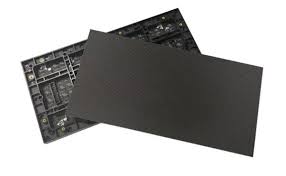
Pixel pitch—the center-to-center distance between adjacent LEDs—is a critical parameter influencing resolution and viewing distance. Typical pixel pitches for high-definition indoor applications range from 0.9 mm to 1.9 mm, offering excellent image clarity at close viewing distances. Outdoor LED displays, due to wider viewing ranges, generally have pixel pitches between 4 mm and 16 mm. Precise control over pixel pitch directly affects the perceived sharpness, with smaller pitches providing smoother images but at higher manufacturing complexity and cost.
Driving Circuitry and Refresh Rate
LED display modules rely on sophisticated driving ICs such as the MBI5124 or the more advanced ICN2038B for high refresh rate capabilities. Refresh rates exceeding 3840 Hz are recommended to eliminate flicker and ensure smooth motion rendering, especially important in broadcasting and live event environments. PWM (Pulse Width Modulation) control methods manage brightness levels while reducing energy consumption and mitigating color shifts under varying luminance.
Thermal Management and Reliability
Thermal dissipation constitutes a paramount aspect of LED display longevity. High-power LEDs generate substantial heat; inadequate thermal design leads to accelerated luminescence degradation and failure. Best practices involve the use of aluminum PCBs, integrated heat sinks, and active cooling mechanisms in large-scale panels. Thermal simulations coupled with real-world testing ensure that junction temperatures remain below manufacturer-specified limits, typically 85°C, thereby securing device reliability.
Optical Design and Viewing Angles
A well-engineered LED module incorporates precise lensing and diffusion layers to optimize light distribution. Typical viewing angles are designed to reach 140° horizontally and 120° vertically, allowing wide-area visibility without color distortion. Anti-reflective coatings and surface texturing reduce glare, enhancing contrast ratios that are often in the range of 3000:1 for premium indoor boards and up to 10000:1 for advanced outdoor displays under direct sunlight.
Manufacturing Quality Control and Testing Procedures
Advanced LED display manufacturing involves a multi-stage quality assurance protocol. Initial electrical testing verifies voltage, forward current, and spectral output; this is followed by in-line optical inspections to detect uniformity issues and dead pixels. Environmental stress tests including thermal cycling, humidity exposure (per IEC 60529 IP65/IP67 ratings), and mechanical vibration assessments replicate field conditions. These measures ensure that the final product meets global standards, including RoHS and CE certification.
Emerging Trends: Mini LEDs and MicroLED Integration
Current trends push the frontier towards Mini LED and MicroLED technologies, combining millions of microscopic LEDs to provide remarkable contrast, color accuracy, and energy efficiency unmatched by conventional LED LCD displays. These innovations employ sophisticated manufacturing techniques such as mass transfer and laser bonding, signaling the next stage of display evolution with superior pixel control and reduced power consumption.
In conclusion, the manufacture of high-performance LED displays is a multidisciplinary endeavor that integrates semiconductor physics, electrical engineering, materials science, and rigorous testing protocols. By adhering to industry standards, leveraging the latest component technologies, and applying meticulous engineering practices, manufacturers can deliver visually stunning and reliable LED displays suitable for diverse applications ranging from indoor signage to large-scale outdoor advertising and broadcast environments.













