

Advances in LED Display Manufacturing: Enhancing Quality and Performance
The LED display industry has experienced significant growth and innovation over the past decade, driven by advancements in technology and increasing demand across various sectors such as advertising, entertainment, sports, and corporate communications. As a professional LED display engineer with years of experience, it is essential to understand the critical technical parameters, manufacturing processes, and quality control measures that ensure the delivery of high-performance LED screens.
Introduction
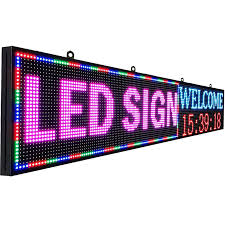
LED displays, known for their superior brightness, contrast, and energy efficiency, are integral to modern visual communication. Their manufacturing process requires careful coordination of component selection, panel assembly, calibration, and rigorous testing. This article explores the state-of-the-art manufacturing techniques, design considerations, and quality assurance standards that define today’s LED display industry.
Main Body
1. Technical Specifications and Components
High-quality LED displays depend on precise technical parameters. A typical LED module consists of light-emitting diodes (LEDs), a printed circuit board (PCB), driver ICs, and a control system. The key specifications include:
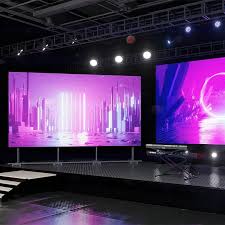
- Pixel Pitch: The distance between the centers of two adjacent pixels, usually measured in millimeters. Smaller pixel pitch (e.g., 1.2 mm to 3 mm) means higher resolution and better image clarity, which is critical for indoor displays. Outdoor displays often utilize larger pixel pitches from 4 mm to 10 mm for better visibility at distance.
- Brightness: Measured in nits (cd/m²), during manufacturing, outdoor LED panels typically achieve brightness levels above 5,000 nits to ensure visibility under direct sunlight, while indoor panels optimize around 800 to 1,500 nits for comfort and energy efficiency.
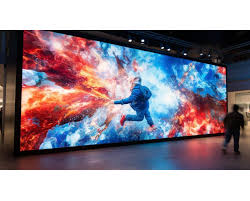
- Refresh Rate: The frequency at which the display updates its image, usually 1,920 Hz or higher, ensures flicker-free and smooth video playback, essential for broadcast-quality signage.
2. Manufacturing Processes
The LED display manufacturing process integrates various stages, all playing a vital role to maintain product integrity and longevity:
- Chip Preparation and Soldering: Surface-mount technology (SMT) is widely used for placing LEDs on PCBs with micron-level precision. Rigorous quality control during soldering reduces dead pixels and increases durability.
- Module Assembly: Modules typically come in standard sizes (e.g., 320 mm x 160 mm or 256 mm x 128 mm) for scalability. Automated optical inspection systems verify LED placement and functionality.
- Cabinet Assembly: Multiple modules are integrated into cabinets with structural supports, heat dissipation mechanisms, and waterproofing elements, conforming to IP65 or higher ratings for outdoor units.
- Calibration and Testing: Post-assembly calibration adjusts color uniformity and brightness through software-based gamma correction, ensuring seamless images across the display surface. Comprehensive testing includes environmental stress tests such as thermal cycling and moisture resistance as per IEC 60068 standards.
3. Industry Standards and Quality Assurance
To guarantee reliability and performance, manufacturers adhere to international standards such as:
- IEC 62368-1: Safety requirements for audio, video, information, and communication technology equipment, ensuring electrical safety and electromagnetic compatibility.
- RoHS Compliance: Restriction of Hazardous Substances ensures that displays meet environmental protection standards by limiting toxic elements like lead and mercury.
- ISO 9001 Quality Management: Effective process management improves product consistency and customer satisfaction.
4. Innovations and Future Trends
Recent advancements include Micro-LED and Mini-LED technologies, delivering finer pixel pitches and higher contrast ratios, suitable for ultra-high-definition applications. Flexible and transparent LED displays are expanding design possibilities in retail and architecture. Moreover, AI-driven maintenance algorithms predict device failures, thus minimizing downtime.
Conclusion
The manufacturing of LED displays is a complex, multi-faceted process that combines precision engineering, rigorous quality control, and adherence to international standards. Mastery of technical parameters such as pixel pitch, brightness, and refresh rate, alongside advanced manufacturing techniques and robust quality management, allows industry professionals to produce reliable, high-performance LED screens suitable for a wide range of applications. As technology advances, the sector continues to evolve, integrating innovations that enhance display capabilities, durability, and energy efficiency, ultimately providing superior visual experiences worldwide.













