

Advancements and Best Practices in LED LCD Screen Manufacturing: A Professional Engineer's Perspective
The LED LCD screen industry has experienced remarkable advancements in recent years, driven by increased demand for higher resolution, better color accuracy, and improved energy efficiency. As a professional LED display engineer with extensive experience in the design and manufacturing of LED LCD screens, this article delves into the technical aspects, manufacturing processes, quality standards, and emerging trends that define the modern LED LCD display sector.
At its core, an LED LCD (Light Emitting Diode Liquid Crystal Display) screen combines liquid crystal technology with LED backlighting to achieve superior brightness, contrast, and energy efficiency. Unlike traditional CCFL (Cold Cathode Fluorescent Lamp) backlights, LEDs provide localized dimming, extended lifespan, and reduced power consumption, enabling higher dynamic contrast ratios upwards of 1,000,000:1 according to the International Electrotechnical Commission (IEC 62504).
One critical technical parameter in the manufacturing process is pixel density, typically measured in pixels per inch (PPI). High-end LED LCD panels for professional applications now commonly reach 300 PPI and beyond, facilitating ultra-high-definition (UHD) resolutions such as 4K (3840x2160) and even 8K (7680x4320). Achieving such resolutions demands precision in the photolithography process used for the thin-film transistor (TFT) array fabrication, which controls individual pixel activation.
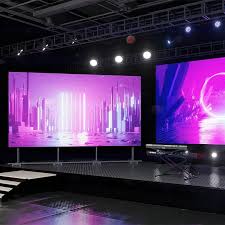
Another spotlight is on color gamut and accuracy. Modern LED LCDs employ Wide Color Gamut (WCG) technology, often covering over 90% of the DCI-P3 color space, complying with standards like ISO 12647 for color reproduction. This ensures vivid and true-to-life visuals necessary in medical imaging, broadcasting, and graphic design applications. Engineers achieve this through specialized quantum dot enhancement films (QDEF) or laser phosphor backlights, optimizing spectral output without compromising longevity.
Thermal management remains a pivotal challenge in enhancing LED LCD durability and performance. Since LEDs generate heat during operation, effective heat dissipation mechanisms including integrated heat sinks, thermal interface materials (TIM), and convection-optimized chassis designs are essential. Adhering to JEDEC standards such as JESD51 for thermal characterization helps engineers evaluate and optimize the thermal profile of displays ensuring operational stability and reducing failure rates.
The manufacturing process incorporates rigorous quality control protocols. Inline inspection systems utilize machine vision technology to identify pixel defects such as dead or stuck pixels, calibration inconsistencies, and uniformity defects. Industry standards like ISO 9241 for ergonomic display quality and MIL-STD-810 for environmental testing guide the testing regimen, ensuring displays withstand physical shocks, vibration, humidity, and temperature extremes — critical for outdoor or industrial applications.
Moreover, manufacturing efficiency has been enhanced through automation and Industry 4.0 practices. Real-time data acquisition and AI-driven analytics optimize yield and reduce waste in panel assembly lines. For example, predictive maintenance algorithms forewarn equipment failures, minimizing downtime.
Emerging trends in LED LCD technology include the integration of mini-LED and micro-LED backlighting, which offer finer backlight control with thousands of dimming zones, significantly improving local contrast and HDR (High Dynamic Range) performance. These innovations support form factors ranging from large public displays to ultra-thin mobiles, enhancing viewer experience with lower latency and wider viewing angles based on In-Plane Switching (IPS) or Advanced Multi-Domain Vertical Alignment (AMVA) panel technologies.
In conclusion, the manufacturing of LED LCD screens hinges on a deep understanding of materials science, electronic engineering, and precision manufacturing techniques. Constant innovations in pixel structure, backlighting methods, thermal management, and quality control set the stage for next-generation displays that meet evolving user demands across industries. Industry standards and best practices serve as critical benchmarks, ensuring products are reliable, visually superior, and energy-efficient.
For industry professionals, staying abreast of emerging materials like quantum dots, micro-LED innovations, and AI integration in manufacturing workflows is essential. These trends promise to reshape the LED LCD landscape, pushing forward the boundaries of display technology.













