

Advanced Insights into LED Display Manufacturing: Technical Parameters and Industry Best Practices
The evolution of LED (Light Emitting Diode) display technology has significantly transformed visual communication across commercial, industrial, and consumer applications worldwide. As a seasoned LED display engineer, this article aims to provide an authoritative, comprehensive overview of LED display manufacturing, focusing on technical parameters, industry standards, and practical engineering considerations to optimize performance and reliability.
Understanding LED Display Components and Architecture
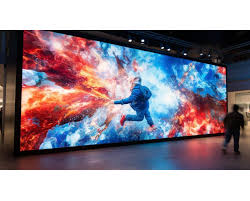
An LED display fundamentally comprises light-emitting diodes arranged systematically in a matrix to form visuals. The core components include the LED chip, driver ICs, printed circuit board (PCB), power supply, and housing enclosures. Each part plays a crucial role in the display’s overall functionality and quality.
High-quality LED chips typically use Gallium Nitride (GaN) semiconductors, offering outstanding luminance and energy efficiency. Chip sizes vary but commonly range between 0.2mm and 1.0mm depending on pixel pitch needs. Micro LEDs, featuring pixel pitches below 100 microns, represent cutting-edge miniaturization, enabling exceptional resolution for niche applications such as augmented reality.
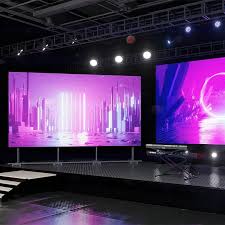
Driver ICs control pulse-width modulation (PWM) for color calibration and brightness control. Standard driver ICs include the MBI5026 or ICN2038 families, facilitating precise grayscale control and refresh rates. Refresh rates of 1920 Hz or above are preferred to eliminate flickering, notably critical for broadcast and live event environments.
Pixel Pitch and Resolution Considerations
Pixel pitch, the distance from the center of one LED pixel to the next, fundamentally determines the display’s resolution and viewing distance. Typical indoor displays utilize pixel pitches from 1.2mm to 4.0mm, balancing visual acuity with cost-effectiveness. Outdoor large-format displays adopt pitches from 4.8mm up to 25mm to accommodate long-distance viewing and environmental durability.
Industry standards, such as the Digital Signage Federation (DSF) guidelines, emphasize pixel pitch optimization tailored to user distance—to maintain at least 30 pixels per degree of visual angle for crisp images. For example, a 2.5mm pixel pitch display provides optimal clarity at viewing distances of approximately 2.5m to 10m.
Brightness, Contrast, and Color Accuracy
Brightness levels are a critical performance metric, especially for outdoor and direct sunlight environments. High-grade outdoor LED displays must achieve luminance levels exceeding 5,000 nits to ensure legibility under intense ambient light, complying with IEC 62087 standards for luminance measurement. Indoor displays typically maintain brightness between 800 to 1,200 nits to prevent eye strain while preserving vivid image quality.
Contrast ratio, defined as the luminance of the brightest color (white) to the darkest (black), is another key factor affecting image depth perception. High contrast ratios above 3,000:1 are achievable with fine pitch LED components combined with selective masking techniques and advanced calibration algorithms.
Color reproduction in modern LED displays is generally expressed in terms of color gamut coverage, typically covering up to 95% of the Rec. 709 standard or higher. Calibration utilizing colorimeters and sophisticated software ensures uniform color temperature (usually 6,500 Kelvin) and minimizes deviations across the panel.
Thermal Management and Reliability Engineering
Thermal management remains an engineering challenge in LED display manufacturing because high brightness output generates significant heat, which can shorten component lifespan and reduce performance. Employing high-quality aluminum PCBs with efficient heat sinks and thermal interface materials ensures rapid heat dissipation.
The industry standard operating temperature for most LED modules spans from -20°C to +50°C, verified under rigorous MIL-STD-810G environmental testing protocols to assure durability in diverse climates. Incorporating active cooling solutions, such as quiet fans or liquid cooling, is becoming increasingly prevalent in high-power applications.
Manufacturing Precision and Quality Assurance
Modern LED displays require exacting manufacturing precision throughout assembly, testing, and calibration phases. Automated pick-and-place machinery achieves high-accuracy positioning with tolerances within ±10 microns for LED placement, essential for consistent pixel alignment and color uniformity.
Comprehensive testing protocols include electroluminescence (EL) testing, thermal cycling, and photometric measurements to detect dead pixels, color inconsistencies, or connection failures early. Advanced repair techniques such as pixel-level rework and module replacement enhance yield rates and reduce lifecycle costs.
Future Trends and Innovations
The industry is witnessing rapid innovation in flexible and transparent LED displays, enabling seamless integration into architecture and vehicle glass. Additionally, advancements in mini- and micro-LED display manufacturing promise improved contrast and efficiency, challenging incumbent OLED solutions for premium visualization applications.
Furthermore, integration of AI-enabled calibration systems leverages machine learning algorithms to dynamically adjust brightness and color parameters in response to ambient conditions, maximizing both performance and energy efficiency.
In conclusion, mastering LED display manufacturing demands a confluence of material science, precision engineering, and compliance with international standards such as IEC 61347 and ANSI/IES RP-27. By adopting stringent quality controls and leveraging emerging technologies, manufacturers can deliver LED displays that achieve high brightness, superior color fidelity, durability, and flexible application across global markets.













