

Advanced Technologies and Best Practices in LED Display Manufacturing for 2024
The LED display industry has witnessed significant advancements in technology and manufacturing processes over recent years, positioning it as a key player in visual communication across advertising, entertainment, transportation, and industrial sectors. As of 2024, designing and producing high-performance LED displays requires a comprehensive understanding of materials science, optical engineering, and automated manufacturing technologies. This article aims to provide a professional overview of the latest innovations and best practices in LED display manufacturing, supported by authoritative standards and technical parameters.
Introduction
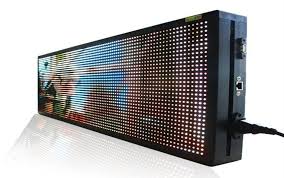
Light Emitting Diode (LED) displays are pivotal in delivering vibrant, energy-efficient, and scalable visual content. Their applications range from indoor signage to large-scale outdoor advertising panels and high-resolution video walls. The manufacturing process of LED displays involves assembling thousands to millions of tiny LEDs into modules, panels, and eventually integrated display systems, each step needing rigorous quality control to ensure reliability and performance.
Materials and LED Technology
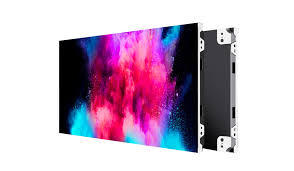
The foundation of any LED display lies in its LEDs, commonly classified into surface-mounted devices (SMD) and discrete (DIP) LEDs. SMD LEDs, such as SMD 3528 and 5050 packages, dominate indoor displays due to their compact size and superior color mixing. For outdoor environments requiring high brightness and robustness, DIP LEDs remain popular. A recent trend involves Mini-LED and Micro-LED technologies, which offer enhanced brightness, contrast, and longevity. For instance, Micro-LED panels utilize microscopic LEDs directly deposited onto substrates, providing pixel-level control with unparalleled color accuracy and energy efficiency.
Key LED parameters include luminance, typically measured in nits (cd/m²). Indoor displays generally range from 800 to 1500 nits, while outdoor displays require brightness levels exceeding 5000 nits to combat sunlight. The color gamut is often defined by the CIE 1931 standard, with premium displays targeting wide coverage of Rec. 709 or Rec. 2020 for vivid color reproduction.
Manufacturing Techniques and Automation
LED display manufacturing integrates surface mount technology (SMT), pick-and-place machines, and reflow soldering, ensuring precise placement and solder joints. Automated Optical Inspection (AOI) systems verify LED placement accuracy, brightness consistency, and detect solder defects at early stages, improving yield and reducing rework costs.
Thermal management remains a critical challenge. High LED densities elevate heat generation, potentially degrading performance. Incorporating heat sinks, thermally conductive substrates like aluminum or ceramics, and active cooling mechanisms ensures longevity and stable color output. Conformed to IPC-A-610 Class 2 or Class 3 standards for electronics assembly, rigorous thermal simulation and testing are imperative.
Quality Control and Industry Standards
The longevity and reliability of an LED display are measured in Mean Time Between Failures (MTBF), often targeted at 50,000 to 100,000 hours for premium products. Consistent performance is ensured via testing standards such as IEC 62087 for energy measurement, and IEC 60529 (IP rating) for ingress protection. Displays intended for outdoor use typically achieve IP65 or higher, guaranteeing protection against dust and water.
Color calibration across LED modules is critical for uniform image quality. Spectroradiometers and colorimeters are used in production lines to achieve precise White Point and Gamma curves consistent with standards like ANSI C78.377 for LED colorimetry.
Case Studies and Industry Insights
Leading manufacturers such as Samsung, Leyard, and Unilumin, have integrated Micro-LED and Mini-LED into commercial products, setting benchmarks in resolution and energy consumption. For example, the use of Micro-LED in fine-pitch video walls enables pixel pitches below 1 mm, pushing visual clarity to new heights suitable for command center displays.
Research from the International Electrotechnical Commission (IEC) and the Video Electronics Standards Association (VESA) further advocate for standardized interfaces and universal control protocols to enhance interoperability and reduce production complexity.
Conclusion
The manufacturing of LED displays in 2024 embodies a convergence of advanced LED materials, automated production techniques, rigorous quality control, and adherence to international standards. These factors collectively ensure displays are brighter, more energy-efficient, and visually stunning, meeting the demands of diverse global applications. Staying abreast of emerging technologies like Micro-LED and continuous improvement in thermal management and color calibration will define the competitive edge for manufacturers. A deep technical understanding combined with practical manufacturing expertise is essential for delivering reliable, high-quality LED display solutions in the modern marketplace.













