

MIP LED Technology: Advancements, Applications, and Technical Insights in Modern LED Displays
The evolution of LED display technology has been marked by continual innovations aimed at enhancing brightness, energy efficiency, and visual performance. One of the most significant advancements in this field is the development of MIP LED technology. Standing for Micro Indoor Pixel, MIP LED represents a cutting-edge approach that optimizes pixel density, uniformity, and color accuracy, specifically tailored for indoor high-resolution LED displays.
Understanding MIP LED Technology
MIP LED panels are designed with a focus on micro-pitch capabilities, typically ranging between 0.9mm to 1.5mm pixel pitch. This ultra-fine pitch allows for unparalleled pixel density, which is critical for indoor environments that demand high visual fidelity such as corporate boardrooms, broadcast studios, control rooms, and retail environments. The micro-pitch design inherently offers superior image sharpness and smoothness, making it suitable for applications where viewers are positioned close to the screen.
From a technical perspective, MIP LED combines traditional LED components with advanced driver ICs and calibration systems to ensure consistency in luminance and chromaticity across the display. The LED diodes used are often SMD (Surface Mount Device) LEDs configured in a tight matrix, which enhances pixel uniformity and reduces visual artifacts common in lower-resolution LED displays.
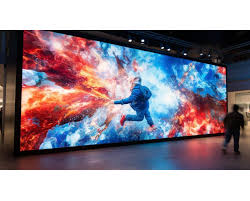
Key Technical Parameters and Performance Metrics
- Pixel Pitch: Ranges from 0.9mm to 1.5mm in standard MIP LED panels, enabling resolutions up to 4K or higher for large format screens.
- Brightness: Typical indoor brightness levels vary between 800 to 1200 nits, ensuring visibility under various indoor lighting conditions without compromising color saturation.
- Contrast Ratio: MIP LEDs deliver high contrast ratios, often exceeding 3000:1, contributing to deeper blacks and more vivid images.
- Refresh Rate: High refresh rates of 3840Hz or more are standard, making these displays ideal for live broadcasting and video playback without flicker or latency issues.
- Viewing Angle: Wide viewing angles of up to 160° horizontal and vertical ensure color fidelity and brightness are maintained even at extreme viewing positions.
- Power Efficiency: Modern MIP LED modules integrate low-power ICs and optimized PCB layouts, providing energy savings of up to 30% compared to previous generation LEDs.
Industry Applications and Case Studies
One of the most demanding sectors adopting MIP LED technology is the broadcast industry, where visual clarity and color accuracy are paramount. For instance, the BBC and CNN have integrated MIP LED video walls in their studios to enhance on-air visual effects, providing seamless 8K content display with enriched color depth. The technology’s high refresh rates eliminate flickering under studio cameras, a critical requirement for professional broadcasts.
Control rooms for utilities and public safety also benefit significantly from MIP LED displays. The ultra-fine pitch enables detailed rendering of maps, data visualizations, and real-time analytics, helping operators make informed decisions quickly. For example, Siemens upgraded their energy grid monitoring centers with MIP LED walls, resulting in improved situational awareness and operational efficiency.
Retail environments and museums adopt MIP LED technology for digital signage and interactive exhibits due to its vibrant colors and consistent brightness. Leading brands such as Samsung and LG integrate MIP LED panels within their premium indoor display portfolios, offering seamless integration with content management systems that support dynamic advertising and immersive experiences.
Manufacturing Challenges and Quality Control
Producing MIP LED panels demands exceptional precision and robust quality control processes. Manufacturing complexity rises with smaller pixel pitches, requiring cleanroom assembly environments to prevent contamination that could cause pixel defects. Calibration is critical; each LED module undergoes stringent Bin sorting and color calibration using spectroradiometers to maintain Delta E values below 2—ensuring color consistency across extensive display arrays.
Thermal management also poses challenges due to high-density LED placement. Manufacturers employ advanced heat dissipation solutions such as aluminum backplanes, multi-layer PCBs, and active cooling systems to maintain optimal operating temperatures, thereby extending the display lifespan beyond 100,000 hours under continuous use conditions.
Standards and Compliance
MIP LED displays adhere to widely recognized industry standards like IEC 62087 for energy consumption, and IEC 60950/62368 for electrical safety. Additionally, color gamut performance aligns with ITU-R BT.709 and BT.2020 standards, particularly important for broadcast-grade applications ensuring compatibility with HDR content workflows.
Environmental certifications such as RoHS and REACH compliance ensure MIP LED products meet global environmental regulations, facilitating international deployment without regulatory hurdles.
The Future Outlook of MIP LED
Looking ahead, MIP LED technology is poised to evolve further with innovations such as mini-LED and micro-LED hybrid structures, offering even higher contrast ratios and brightness capabilities. Integration with AI-based calibration systems is expected to automate real-time image optimization, adapting to ambient lighting conditions dynamically.
Moreover, with the rapid growth of VR/AR platforms and immersive digital signage, MIP LED technology’s ultra-high pixel density and color precision will play a vital role in creating visually compelling experiences. The continuous push for thinner, lighter, and more energy-efficient panels will enhance installation flexibility, thereby expanding application scopes globally.
Conclusion
MIP LED technology stands as a hallmark of the modern LED display industry, marrying high resolution, brightness, and color accuracy in a compact form factor. Its adoption across diverse sectors underscores its versatility and performance advantages. For engineers, designers, and decision-makers looking to deploy indoor LED displays that meet stringent quality and performance criteria, MIP LED offers a reliable, future-proof solution aligned with global standards and industry best practices.
By adhering to meticulous manufacturing protocols and leveraging sophisticated calibration methods, MIP LED displays achieve unmatched visual experiences that drive innovation and engagement across professional and consumer domains alike.













