

Advanced LED Display Technology: Applications, Advantages, Challenges, and Emerging Trends
In the fast-evolving landscape of digital visualization, LED display technology has emerged as a cornerstone, revolutionizing how information and entertainment are presented globally. As a professional LED display engineer with extensive industry experience, I will explore the practical applications, inherent advantages, common challenges, and the latest trends shaping the future of LED display systems.
Practical Applications of LED Displays
LED displays are ubiquitous across diverse sectors due to their versatility and superior visual performance. In outdoor advertising, large-scale LED billboards dominate cityscapes, offering high brightness levels exceeding 5,000 nits to maintain visibility even under direct sunlight, conforming to IEC 62717 standards for luminance. Stadiums and event venues utilize LED screens that deliver seamless video playback with refresh rates often above 3,840 Hz to avoid flicker on high-speed broadcasts, crucial for real-time sports viewing and live concerts.
In transportation hubs such as airports and train stations, LED displays provide critical scheduling and information in dynamic, highly readable formats. Furthermore, LED technology underpins control rooms and command centers, where high-resolution screens with pixel pitches as small as 0.7 mm enable intricate detail visualization for operational efficiency. Retail environments leverage LED video walls and interactive displays to enhance customer engagement through vibrant, dynamic content.
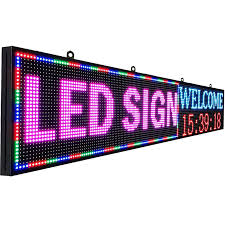
Advantages of LED Display Technology
LED displays offer several decisive advantages over alternative display technologies like LCD or projection:
1. High Brightness and Contrast: LEDs produce intense luminosity, making them ideal for both indoor and outdoor use under diverse lighting conditions. Typical indoor LED panels feature brightness levels from 800 to 1,200 nits, while outdoor units can peak beyond 6,000 nits, ensuring clarity in sunlight.
2. Energy Efficiency: Modern LED modules incorporate advancements such as COB (Chip-on-Board) and SMD (Surface Mount Device) technologies that reduce power consumption by up to 30% compared to earlier generations, enhancing sustainability and lowering operational costs.
3. Durability and Longevity: With lifespans exceeding 100,000 hours at 50% brightness (half-life), LED displays surpass many traditional display forms, supported by rugged designs resistant to environmental factors like moisture, temperature variances, and UV exposure. IP65-rated enclosures are standard for outdoor applications.
4. Wide Viewing Angles and Color Accuracy: Most LED panels achieve viewing angles up to 160° horizontally and vertically, with color gamuts that meet or exceed Rec. 709 standards, providing vibrant and uniform images from various perspectives.
Common Problems in LED Display Implementation
Despite the advantages, LED display technology faces several challenges:
- Pixel Failure and Color Uniformity: Over time, dead or stuck pixels can appear due to manufacturing defects or component degradation. Regular maintenance and calibration using advanced color management software are essential to maintain display quality.
- Heat Dissipation: High-density LED arrays generate significant heat, which, if not effectively managed through well-designed heat sinks and cooling mechanisms, can reduce lifespan and performance.
- Signal Interference and Latency: Large-scale LED video walls require synchronized data transmission with minimal latency. Complex driving circuits and robust data interfaces (e.g., HDBaseT or fiber optics) mitigate signal degradation, but improper installation can lead to synchronization errors.
- Installation and Maintenance Costs: Initial investment, including infrastructure preparation, power supply configuration, and mounting hardware, can be substantial. However, these costs are offset by the longevity and reduced replacement frequency of LED panels.
Latest Trends in LED Display Technology
Emerging innovation in LED technology continues to address previous limitations and expand application scopes:
- MicroLED and MiniLED: These newer technologies offer ultra-fine pixel pitches down to 0.4 mm and improved contrast ratios (up to 1,000,000:1), rivaling OLED displays in color reproduction and black levels while offering superior brightness and lifespan.
- Flexible and Transparent LED Displays: Industry advancements have introduced curved, bendable, and transparent LED panels that integrate seamlessly into architectural designs, enabling immersive digital facades and innovative retail displays.
- AI-Driven Content Optimization: Artificial intelligence now plays a vital role in content scaling, predictive maintenance, and dynamic color calibration, enhancing user experience and reducing downtime.
- Sustainable Manufacturing: Eco-friendly materials and recycling protocols are gaining emphasis, aligning with global sustainability standards such as RoHS and WEEE directives, ensuring environmental responsibility.
Conclusion
The domain of LED display technology continues to expand, driven by remarkable improvements in pixel density, energy efficiency, and design flexibility. As its adoption grows across advertising, entertainment, transportation, and corporate sectors, understanding the technical nuances and operational challenges is critical for successful deployment. Coupled with emerging trends like MicroLED and AI integration, LED displays are poised to redefine digital interaction and visualization in the coming years.
For professionals and enterprises, embracing these advancements while mitigating common issues ensures optimized performance, longevity, and return on investment, solidifying LED technology’s position as a transformative medium in the digital age.













