

Advanced Practices and Technical Standards in LED Display Manufacturing for International Markets
In the rapidly evolving LED display industry, mastering the manufacturing process is critical to delivering high-quality products that meet international standards and diverse application demands. As a professional LED display engineer with extensive experience in design, production, and quality assurance, this article evaluates advanced manufacturing practices and key technical parameters that define excellence in LED display assembly and performance.
Material Selection and Substrate Quality
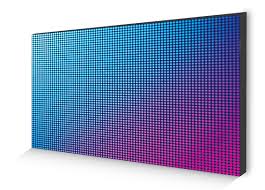
High-quality LED displays begin with superior material selection. The use of low thermal resistance printed circuit boards (PCBs) is fundamental to efficient heat dissipation, extending LED lifespan and maintaining consistent brightness. FR4 boards with enhanced copper thickness (2 oz or above) are commonly used for standard outdoor displays, while aluminium-based substrates provide improved thermal conductivity essential in high-density modules.
LED Chip and Packaging Technologies
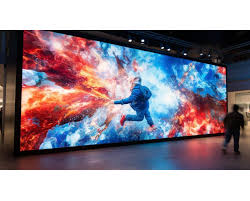
Industry-leading manufacturers deploy SMD (Surface-Mount Device) LEDs with precise binning processes to ensure color uniformity and brightness stability within tolerances specified by standards such as IEC 62630. Typically, LED chips featuring luminous intensity in the range of 800-1500 millicandela and correlated color temperature (CCT) between 6000K and 7000K are preferred for balanced white light output in commercial displays. Advanced packaging techniques including chip-on-board (COB) technology enhance pixel density and durability, reducing light decay and improving viewing angles exceeding 160° horizontally and vertically.
Assembly Automation and Quality Control
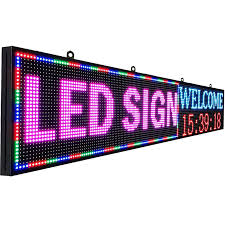
Automation in pick-and-place assembly machines enables high throughput and uniform soldering quality, which reduces electrical failures and improves module reliability. The integration of AOI (Automated Optical Inspection) systems aligned with IPC-A-610 Class 2 and Class 3 standards ensures criteria adherence regarding solder joint integrity and component placement accuracy. Furthermore, environmental stress screening (ESS) tests, such as thermal cycling from -40°C to +85°C and moisture resistance assessments, are critical to validating long-term durability for outdoor and indoor installations.
Calibration and Color Management
Achieving consistent color calibration across large-scale displays is paramount. Professional calibration systems employ spectroradiometer-based feedback loops and gamma correction curves fine-tuned to a target gamma level of approximately 2.2, complying with sRGB color space requirements. This process minimizes color deviation to within ΔE values of less than 3, ensuring visually seamless content presentation across display panels.
Control Systems and Software Integration
Modern LED displays demand sophisticated control units capable of handling high data transmission rates, supporting refresh rates of 3840Hz or more for flicker-free imaging suitable for broadcast environments. Advances include FPGA-based controllers with 16-bit grayscale depth per color channel, enhancing image fidelity and smooth video reproduction. Network protocols such as Gigabit Ethernet and synchronization with servers via UDP guarantee stable real-time content delivery for dynamic advertising and event applications.
Industry Standards and Compliance
Conformity to international certifications such as CE, RoHS, and UL is mandatory for market acceptance in Europe, North America, and beyond. Compliance ensures safety, environmental responsibility, and electromagnetic compatibility (EMC), which is validated through rigorous testing documented in standards like IEC 61000-4 and EN 55032.
Sustainability and Future Trends
LED display manufacturing is progressively incorporating eco-friendly materials and energy-efficient components, aligning with global sustainability goals. Innovations such as MicroLED and Mini LED promise higher pixel densities and reduced power consumption, reshaping future production methodologies. Manufacturers adopting Industry 4.0 principles enhance traceability and predictive maintenance capabilities through IoT-enabled sensors, thereby elevating product quality and operational efficiency.
In conclusion, meticulous attention to material quality, advanced chip technology, stringent assembly protocols, precise calibration, and compliance with international standards collectively ensure LED displays deliver outstanding performance and durability. Leveraging these best practices empowers manufacturers to meet the nuanced requirements of global clients and maintain competitive advantages in a dynamic marketplace.













