

MIP LED Technology: Revolutionizing High-Resolution LED Displays for Outdoor and Indoor Applications
Micro Indoor Pixel (MIP) LED technology has become a pivotal innovation in the LED display industry, delivering exceptional performance and versatility for both indoor and outdoor screens. As the demand for ultra-high-resolution displays grows across advertising, events, control rooms, and retail environments, MIP LED screens offer an unparalleled combination of fine pixel pitch, brightness, and durability.
Understanding MIP LED Technology
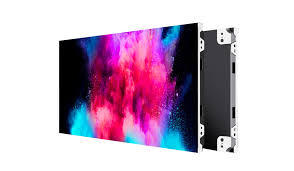
MIP LED refers to a type of LED display module featuring a very fine pixel pitch—commonly ranging from 0.9 mm to 1.9 mm—that allows for incredibly detailed and crisp image reproduction. Unlike traditional LED panels, MIP LEDs integrate micro-sized SMD (Surface-Mounted Device) LEDs, enabling close pixel placement for high pixel density. This technological advancement aligns with the growing trend toward more precise visuals, enabling displays to rival LCD and OLED screens in image clarity.
Technical Specifications and Industry Standards
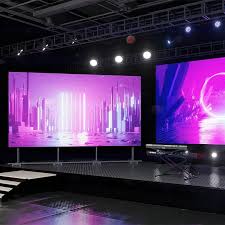
Key technical parameters highlight why MIP LED technology is gaining widespread industry acceptance:
- Pixel Pitch: Typically 0.9 mm to 1.9 mm, supporting ultra-high resolutions ideal for use cases requiring fine detail.
- Brightness: Can achieve peak brightness levels of 800 to 1500 nits, ensuring excellent visibility even under direct sunlight for outdoor variants while maintaining eye-comfort levels indoors.
- Color Accuracy: Supports wide color gamut with 16-bit color depth, meeting Rec. 709 and DCI-P3 color standards for vivid, true-to-life images.
- Refresh Rate: High refresh rates above 3840 Hz reduce flicker and motion blur, suitable for broadcast and live event environments.
- Viewing Angle: 160° or wider, enabling uniform image quality from multiple viewer positions.
MIP LED displays are typically compliant with international standards such as IEC 62471 for photobiological safety, ensuring low blue light emissions and reduced eye strain. Moreover, adherence to IP65 or higher ratings on outdoor modules guarantees dust and water resistance, critical for public installations.
Advantages Across Sectors
One of the strongest appeals of MIP LED technology is its versatility:
- Indoor Applications: Control rooms, conference halls, retail displays, and museums benefit from MIP’s fine pixel pitch, delivering sharp images even at close viewing distances without pixelation.
- Outdoor Applications: MIP LED screens equipped with weatherproof coatings and high brightness are suitable for digital billboards, stadiums, and transportation hubs, offering durability and excellent image quality even under harsh environmental conditions.
- Energy Efficiency: Compared to traditional LED setups, MIP LED panels typically use low power components and are engineered for heat dissipation, resulting in longer lifespan and reduced operational costs.
Case Studies Highlighting MIP LED Impact
A prominent global retail chain recently replaced its indoor advertising panels with MIP LED displays featuring a 1.2 mm pixel pitch. The transition enabled the display of intricate promotional content with vibrant colors, driving a measurable increase in customer engagement. Simultaneously, a large metropolitan stadium deployed customized MIP LED screens for perimeter advertising, where high brightness and weather resistance improved visibility and durability in all weather conditions.
Challenges and Future Prospects
Despite the high performance, MIP LED technology does come with challenges. Production costs remain relatively high due to precision manufacturing processes. Additionally, installation demands detailed calibration to ensure uniform color and brightness, requiring experienced engineering teams.
However, ongoing advancements in miniaturization, semiconductor materials (such as InGaN and GaN-based LEDs), and intelligent module design are set to reduce costs and expand applications. The upcoming integration of AI-powered calibration and adaptive brightness control promises to enhance MIP LED performance further.
Conclusion
MIP LED technology stands at the forefront of LED display innovation, merging fine pixel density with durable, energy-efficient designs. For industries pursuing high-resolution, reliable visual communication, MIP LEDs offer a compelling solution backed by robust technical standards and proven performance. As the technology matures, its adoption across diverse applications will only accelerate, driving new possibilities in digital signage, public displays, and beyond.
Understanding the nuances of MIP LED design, from pixel pitch to environmental resistance, equips engineers and decision-makers to make informed choices that maximize visual impact and operational excellence.













