

Advanced LED LCD Display Manufacturing: Technical Insights and Industry Best Practices
In the rapidly evolving landscape of display technologies, LED LCD screens continue to dominate due to their superior brightness, energy efficiency, and color accuracy compared to conventional LCDs. As a seasoned engineer with extensive experience in LED display manufacturing, this article delves into the fundamental technical parameters, manufacturing processes, and industry best practices that shape high-quality LED LCD displays in today’s market.
Technical Foundations of LED LCD Displays
LED LCD displays integrate Light Emitting Diode (LED) backlighting with Liquid Crystal Display (LCD) panels. Unlike traditional Cold Cathode Fluorescent Lamp (CCFL) backlighting, LED backlights provide enhanced brightness control, improved color gamut, and lower power consumption. According to the International Display Manufacturing Standards (IDMS), modern LED LCDs typically feature a backlight luminance ranging from 300 to 1500 cd/m², depending on intended use cases such as indoor or outdoor applications.
The core performance parameters to consider include:
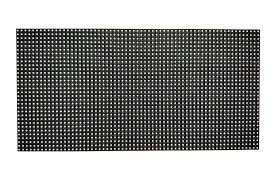
- Pixel Pitch and Resolution: Pixel pitch, the distance between individual pixels, commonly ranges between 0.5 mm to 1.5 mm for indoor LED LCDs, achieving resolutions upwards of 4K UHD (3840×2160). Smaller pixel pitch increases pixel density and image sharpness but raises manufacturing complexity and cost.
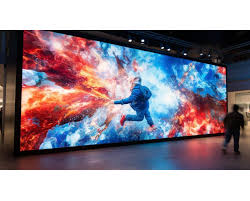
- Refresh Rate: To maintain motion clarity and reduce flicker, industry standards, including those from the Video Electronics Standards Association (VESA), recommend refresh rates of at least 60 Hz for static signage and upwards of 120 Hz for dynamic content displays.
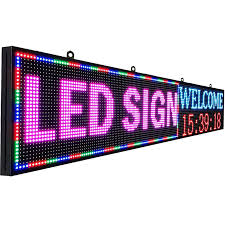
- Color Gamut and Accuracy: High-end LED LCD displays support color gamuts that cover 99% or more of the sRGB spectrum, with some achieving close to 90% Adobe RGB, essential for accurate color reproduction in professional environments such as medical imaging or digital signage.
- Contrast Ratio: Typical LED LCD contrast ratios range from 1000:1 to 5000:1. Enhanced local dimming capabilities leverage LED zones to improve contrast ratios further, critical for deep blacks and high dynamic range (HDR) content.
Manufacturing Process and Quality Control
The manufacturing process involves several critical steps: substrate preparation, liquid crystal alignment, LED backlight assembly, and final panel bonding. Each phase demands precision to minimize optical defects such as mura, crosstalk, and uneven backlighting.
1. Substrate Preparation and Alignment: Using ultra-flat glass or flexible substrate materials, manufacturers apply alignment layers to orient the liquid crystals uniformly. Photolithography and rubbing techniques are essential here, with tolerances often below 1 micron to ensure image uniformity.
2. Backlight Module Integration: LED arrays are configured behind the LCD panel. The choice of LEDs—whether white, full-color RGB, or quantum dot-enhanced—affects color performance and longevity. High reliability LED bins with tight chromaticity tolerances (e.g., ±0.003 on the CIE 1931 scale) are standard to ensure consistent backlighting.
3. Optical Enhancement Films: Multiple films such as brightness enhancement films (BEF) and diffuser layers optimize light uniformity and viewing angles. The film stack design follows Optical Society standards for maximizing luminance while preserving color accuracy.
4. Panel Bonding and Sealing: Lamination techniques bond the LCD panel with the backlight unit, using optically clear adhesives to reduce interface reflections. Precision robotic systems control pressure and curing conditions, ensuring bubble-free, durable panels.
Challenges in LED LCD Manufacturing
A key challenge lies in balancing brightness, color fidelity, and power consumption while maintaining production scalability. For instance, ultra-fine pitch panels (<0.8mm pixel pitch) require micro-LED backlighting and refined driver ICs to minimize electrical noise and thermal issues. Industry leaders, including Samsung and LG Display, are pioneering advanced driver architectures with integrated temperature sensors and adaptive dimming to extend panel lifetime beyond 50,000 hours under high brightness operation.
Environmental considerations are also critical. Compliance with RoHS directives and conflict mineral-free sourcing frameworks is mandatory for reputable manufacturers. Additionally, display engineers are adopting low blue light emission strategies and flicker-free technologies to address user eye strain, especially for prolonged usage scenarios.
Case Study: High-Performance LED LCD for Professional Use
A notable example involves the development of a 55-inch 4K LED LCD monitor tailored for medical imaging centers. The design incorporated a 1000-nit peak luminance, 99% sRGB coverage, and a 10-bit color depth panel, meeting DICOM Part 14 standards for grayscale display functions. By integrating a mini-LED backlight with 576 zones of local dimming, the monitor delivered exceptional contrast, crucial for diagnostic accuracy. The manufacturer implemented ISO 13485-compliant quality management to ensure reliability and repeatability in clinical environments.
Future Trends and Innovations
The LED LCD industry is trending toward hybrid technologies such as quantum dot enhancement films (QDEF) and mini-LED backlighting to achieve near-OLED contrast and color performance with improved lifespan and cost structure. Additionally, direct-view LED LCD displays are gaining traction in commercial signage markets due to their scalability and vivid outdoor visibility.
In conclusion, mastering LED LCD screen manufacturing requires a rigorous understanding of optical physics, precision engineering, and material science. Innovations in LED technology, process automation, and quality standards are continually pushing the frontier of display performance. By adhering to industry benchmarks and adopting emerging advances, manufacturers can deliver LED LCDs that meet the demanding requirements of international markets and specialized applications.













