

Advanced Technologies and Best Practices in LED Display Manufacturing for Superior Performance
The LED display industry has witnessed significant advancements over the past decade, driven by innovations in semiconductor manufacturing, materials science, and system integration. As a professional LED display engineer with extensive experience, I aim to provide a comprehensive overview of current best practices and cutting-edge technologies that optimize LED display manufacturing, ensuring outstanding performance, reliability, and cost-effectiveness. This article will delve into essential technical parameters, manufacturing standards, and quality control methodologies, appealing to an international audience ranging from industry professionals to engineering enthusiasts.
Core Components of LED Display Manufacturing
LED displays primarily consist of LED packages or modules, driving circuitry, control systems, and mechanical fixtures. The performance and longevity of the final product depend heavily on the quality and integration of these components.
1. LED Chip and Package Selection
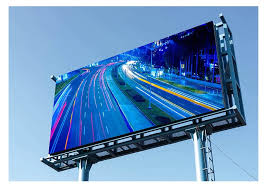
High-brightness InGaN (Indium Gallium Nitride) LEDs underpin modern displays, offering superior luminous efficacy over 150 lm/W and extended lifespan exceeding 100,000 hours (per IEC 62717 standards). Selecting LEDs with consistent chromaticity coordinates (e.g., within MacAdam ellipse 3-step tolerance) is critical for uniform visual appearance. Additionally, the choice between surface-mount device (SMD) and through-hole LEDs affects pixel pitch and viewing angle – SMD is standard for small pixel pitches (≤2mm), ideal for high-resolution indoor displays.
2. Pixel Pitch and Resolution Optimization
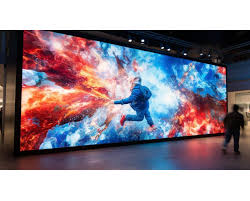
Pixel pitch—the center-to-center distance between adjacent LEDs—directly influences resolution and viewing distance. For indoor use, pixel pitches range from 0.8mm to 3mm, offering fine image detail at close range. Outdoor LED displays usually adopt larger pitches (10mm to 20mm) to balance cost and brightness requirements. Choosing the appropriate pitch must also consider human visual acuity, ambient illumination, and content type.
Manufacturing Best Practices
Achieving superior LED display quality is not solely about component selection but demands rigorous manufacturing protocols.
3. Precision PCB Design and Assembly
Printed Circuit Boards (PCBs) form the backbone supporting LED packages and driving ICs. Utilizing high-quality FR-4 material with controlled impedance, thermal vias, and multi-layer configurations ensures signal integrity and heat dissipation. Automated pick-and-place machines and reflow soldering techniques guarantee positional accuracy and solder joint reliability, minimizing failures such as cold joints and bridge shorts.
4. Thermal Management
Effective heat dissipation extends LED lifespan and maintains luminous efficiency. Employing aluminum backing plates, thermal interface materials (TIM), and active cooling (when necessary) are mainstream approaches. The junction temperature of a typical high-power LED should remain below 85°C under operating conditions, as per JEDEC standards.
5. Driving Electronics and Software Control
Driving circuits regulate current to LEDs, maintaining uniform brightness. Constant current drivers with pulse-width modulation (PWM) dimming capabilities support realistic color rendering and dynamic range. Control systems must incorporate high refresh rates (≥3840 Hz) to prevent flicker, comply with video broadcast standards (such as Rec. 709 for color accuracy), and allow for remote diagnostics and real-time calibration.
Quality Assurance and Testing
Deploying comprehensive testing regimes is vital to uphold global industry standards.
6. Optical and Electrical Testing
Advanced electro-optical testing validates luminance, color accuracy, viewing angle, and contrast ratio. Optical integrating spheres and spectroradiometers ensure compliance with CIE color spaces. Electrical assessments guarantee correct forward voltage and current characteristics, in line with ANSI standards.
7. Environmental and Reliability Testing
Durability is verified through temperature cycling, UV exposure, humidity stress testing, and vibration analysis, following MIL-STD-810G or IEC 60068 standards. These protocols simulate real-world conditions, ensuring the display maintains performance in diverse environments.
Case Studies in Industry Application
Several leading manufacturers now implement these integrated approaches. For instance, Samsung’s “The Wall” microLED displays employ fine pixel pitches (~0.8mm) combined with novel LED transfer technology to achieve unmatched resolution and brightness uniformity. Similarly, Leyard’s modular designs focus on scalable outdoor displays capable of withstanding harsh weather through IP65/IP67 rating adherence.
Future Trends and Innovations
The LED display industry is exploring microLED and miniLED technologies to transcend traditional LCD and OLED limitations. MicroLEDs offer higher brightness, improved energy efficiency, and pixel-level control, promising a new era of displays. Furthermore, advancements in Quantum Dot enhancement layers and AI-driven calibration software will refine color precision and power management.
Conclusion
Manufacturing cutting-edge LED displays requires a holistic approach—from precise component selection and advanced PCB design to comprehensive testing aligned with stringent international standards. Adherence to these principles ensures products with outstanding brightness, color fidelity, longevity, and environmental resilience. Professionals in the LED display market should prioritize these best practices to meet the evolving demands of end-users across diverse applications such as digital signage, broadcast studios, and immersive visualization.
References:
- IEC 62717: LED modules for general lighting – Performance requirements
- JEDEC JESD51: Thermal Measurement Standards for Semiconductor Devices
- CIE 1931 Color Space and MacAdam Ellipses
- MIL-STD-810G: Environmental Engineering Considerations and Laboratory Tests
- Samsung Display Technologies White Paper, 2023
- Leyard Visual and Leyard Case Studies, 2024













