

Advanced Insights into LED Display Technology: Applications, Advantages, and Emerging Trends
In the rapidly evolving field of visual display technology, Light Emitting Diode (LED) displays have emerged as the cornerstone for a broad spectrum of applications worldwide. Their versatility, energy efficiency, high brightness, and durability make them indispensable in industries ranging from advertising and entertainment to transportation and medical diagnostics. This article provides an authoritative examination of LED display technology, integrating industry standards, practical applications, inherent advantages, common challenges, and cutting-edge trends shaping the future of LED manufacturing and deployment.
Understanding LED Display Technology
LED displays consist of numerous tiny light sources known as diodes, which emit light when an electric current passes through them. Unlike LCD displays that rely on backlighting, LED panels are emissive, meaning each diode produces its own light. This fundamental difference contributes to their superior brightness and contrast ratios. Modern LED displays can be categorized into two main types: Direct View LED (DVLED) and LED-backlit LCDs. DVLEDs are increasingly favored for large-scale outdoor and indoor installations due to their high luminance and scalable design.
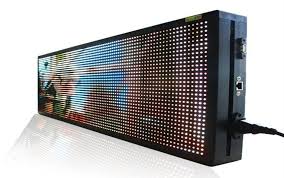
Technically, LED displays cover a wide range of pixel pitches, typically measured in millimeters from 0.8mm (fine pitch) suitable for indoor close-viewing applications, to over 10mm for outdoor billboards. These pixel pitches directly affect image resolution and viewing distance, with finer pitches offering enhanced detail at shorter distances.
Practical Applications
1. Outdoor Advertising and Sports Arenas: LED billboards and digital signage dominate these sectors because of their superior visibility under direct sunlight, often boasting brightness levels between 5,000 and 8,000 nits (cd/m²), complying with industry standards like IES TM-33 for luminance.
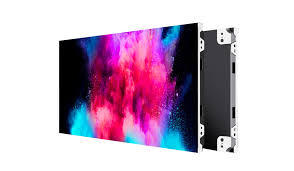
2. Retail and Commercial Environments: Indoor DVLED walls facilitate dynamic branding and engaging customer experiences. Pixel pitches from 0.9mm to 3mm provide crisp textures and colors that attract foot traffic.
3. Transportation Systems: Airports and train stations utilize LED displays for real-time information updates. These displays operate effectively across temperature ranges from -30°C to +50°C, adhering to IEC 60529 standards for ingress protection.
4. Medical Imaging and Command Centers: High-resolution, color-accurate LED displays support diagnostic imaging and data visualization, requiring color gamut adherence to standards such as Rec. 709 or DCI-P3.
5. Entertainment and Events: Concerts and exhibitions deploy flexible and transparent LED displays, advancing immersive experiences through curved and see-through installations.
Key Advantages of LED Displays
- Energy Efficiency: Modern LED modules consume significantly less power than traditional display technologies, with energy savings ranging from 30% to 50%, making them environmentally sustainable solutions aligned with global energy directives like the Energy Star program.
- Longevity and Durability: Most commercial LED panels have lifespans exceeding 100,000 hours at typical operating brightness levels, surpassing traditional lighting technologies and reducing total cost of ownership.
- High Brightness and Contrast: LEDs deliver crisp images even in bright environments, providing contrast ratios up to 5,000:1, ensuring visibility and eye comfort.
- Flexible Form Factors: Advances in miniaturization allow for curved, transparent, and flexible displays, enabling innovative architectural integrations.
- Fast Refresh Rates and Wide Viewing Angles: Refresh rates commonly exceed 1920Hz, preventing flicker in video capture and broadcasting. Typical viewing angles are 140° horizontally and 120° vertically, offering broad audience reach.
Common Challenges
Despite their advantages, LED displays face challenges such as:
- Heat Management: High luminance levels generate significant heat; efficient thermal dissipation systems, including passive and active cooling, are crucial to maintain performance and reliability.
- Calibration and Uniformity: Achieving uniform brightness and color homogeneity across large panels requires sophisticated calibration techniques and software.
- Initial Investment: While operational costs are lower, upfront costs for high-resolution LED displays can be considerable, potentially limiting use in budget-restricted projects.
- Environmental Resistances: Outdoor displays must be ruggedized to withstand moisture, dust (commonly rated IP65 or higher), and UV exposure to prevent degradation.
- Pixel Failure and Maintenance: Long-term operation may lead to pixel burnout. Modular design approaches facilitate quick and efficient replacement.
Latest Trends and Innovations
1. MicroLED Technology: This emerging technology uses microscopic LEDs to offer unmatched brightness, contrast levels, and energy efficiency. MicroLEDs promise ultra-high resolution with minimal pixel size, ideal for next-generation smartphones, augmented reality (AR), and virtual reality (VR) devices.
2. AI-Driven Calibration: Artificial intelligence algorithms now optimize real-time calibration for varying lighting conditions and content types, significantly improving image quality and reducing manual maintenance.
3. Sustainability and Eco-design: Manufacturers integrate recyclable materials and pursue eco-friendly designs to minimize environmental impact, aligning with global sustainability frameworks like the EU’s Circular Economy Action Plan.
4. Flexible and Transparent LED Displays: New substrate materials and nanotechnology have made possible displays that bend or offer transparency without degrading image quality, extending applications to automotive windshields and retail windows.
5. Interactive LED Walls: Integration with sensors and IoT devices enables gesture control, proximity sensing, and personalized content delivery, enhancing user engagement.
Conclusion
LED display technology represents a cornerstone of modern visualization innovation, continually evolving to meet diverse industrial requirements and user expectations. With their superior brightness, energy efficiency, and versatility, LED displays are redefining the visual experience across multiple sectors. Addressing challenges via improved engineering, material science, and AI-enabled calibration ensures reliability and performance. Keeping pace with emerging trends such as MicroLED and flexible displays will position manufacturers and end-users alike to capitalize on the next wave of LED innovations. Industry professionals should follow standards such as IEC 62368 for safety, IES TM-33 for luminance, and IEC 60529 for environmental protection while monitoring global eco-design regulations to maintain competitive and compliant products.
References:
- Illuminating Engineering Society, IES TM-33-18: Lighting Measurement Standards
- International Electrotechnical Commission (IEC) standards IEC 62368-1 and IEC 60529
- Energy Star Program for Display Devices
- SID (Society for Information Display) Journal, Latest Research on MicroLED Technology, 2023
- IEEE Transactions on Semiconductor Manufacturing, Reviews on Thermal Management in LED Displays













