

Advanced Techniques and Standards in LED LCD Display Manufacturing for Superior Performance
In the rapidly evolving field of display technologies, LED LCD screens remain a cornerstone for both consumer and industrial applications due to their exceptional brightness, contrast, and energy efficiency. As a professional LED display engineer with over a decade of expertise, this article delves into the critical technical parameters, manufacturing processes, and industry best practices that ensure the production of high-quality LED LCD displays. Emphasizing established standards and real-world case studies, the following insights aim to guide manufacturers and designers towards achieving superior performance and reliability.
LED LCD technology integrates Light Emitting Diodes (LEDs) as the backlighting source for Liquid Crystal Display (LCD) panels. Unlike Cold Cathode Fluorescent Lamps (CCFL), LEDs offer thinner profiles, longer lifespan, and better color uniformity. Key technical parameters that influence display quality include brightness (measured in cd/m² or nits), contrast ratio, color gamut coverage, refresh rate, response time, and viewing angle.
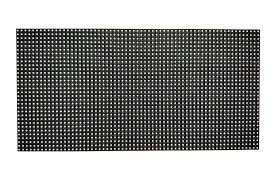
Brightness levels typically range from 250 nits for indoor environments to over 1000 nits in high ambient light conditions like outdoor signage. Achieving consistent brightness across large panel sizes requires precision in LED bin selection and uniform backlight diffusion layers. For instance, selecting LEDs in a narrow luminance bin ±5% significantly reduces luminance variation, improving visual uniformity.
Contrast ratio, another critical parameter, describes the ratio between the brightest white and the darkest black on the screen. Higher contrast ratios, ideally above 1000:1 for standard applications and up to 5000:1 or more for premium displays, enhance image depth and detail. Manufacturers optimize this through advanced liquid crystal materials and precise geometry of polarizing filters.
Color accuracy depends on the LED backlight’s spectral power distribution. Modern LED LCDs often adopt Quantum Dot enhancement films to expand color gamut coverage, achieving up to 90% DCI-P3 or 100% AdobeRGB standards. According to the International Commission on Illumination (CIE) 1931 color space specifications, this results in vivid and true-to-life images, critical for professional photography monitors and medical applications.
The refresh rate and response time influence the display’s ability to render fast-moving images without motion blur or ghosting. Standard LCD panels operate at 60 Hz with response times around 8-12 ms. However, gaming-specific or industrial displays often reach refresh rates of 120 Hz or more and ultra-fast response times below 5 ms, facilitated by technologies like Overdrive or Adaptive Sync.
Manufacturing LED LCD panels requires precise control over multiple steps: substrate cleaning, thin-film transistor (TFT) deposition, liquid crystal cell assembly, LED backlight integration, and final calibration. Cleanroom environments (Class 10,000 or better) minimize particulate contamination which can cause defects like dark spots or mura effects.
Case studies from leading manufacturers reveal that the integration of automated optical inspection (AOI) systems significantly improves quality assurance. For example, Samsung’s implementation of AOI early in the manufacturing line reduces panel defects by up to 30%, lowering waste and boosting yield rates.
Environmental regulations and sustainability are becoming increasingly critical. Complying with RoHS (Restriction of Hazardous Substances) directives ensures reduced environmental impact, while initiatives like the Energy Star certification promote energy-efficient backlighting solutions. The shift towards mini-LED and micro-LED backlighting further enhances power efficiency and contrast ratio, signaling the industry's direction towards next-generation display technologies.
In conclusion, mastering LED LCD manufacturing demands deep expertise in materials science, electronic engineering, and process control. By adhering to international standards such as ISO 9241 for ergonomic requirements and CIE colorimetric recommendations, manufacturers can produce displays that meet rigorous performance and reliability benchmarks. The continual advancements in LED backlighting, quantum dot technology, and precision manufacturing pave the way for displays that set new standards in clarity, vividness, and durability.













