

Advancements and Applications of Fine Pitch LED Video Walls in Modern Display Technology
Fine pitch LED video walls have emerged as a transformative technology in the display industry, revolutionizing how visual information is presented across various environments. Characterized by their exceptionally small pixel pitch—typically ranging from 0.8mm to 2.5mm—these displays enable ultra-high resolution and remarkable image clarity even at close viewing distances. Their adoption spans diverse sectors, including control rooms, broadcast studios, retail, corporate settings, and immersive environments.
Technical Parameters and Specifications
The core advantage of fine pitch LED video walls lies in pixel pitch—the distance from the center of one LED cluster to the next. Smaller pixel pitches correspond to higher pixel density, allowing for extreme detail and smooth gradients. For instance, a 1.2mm pixel pitch LED video wall can achieve resolutions upwards of 4K within a relatively compact footprint, making it suitable for indoor applications demanding superior image quality. Contrast ratios commonly exceed 4000:1, and brightness levels can reach 800-1200 nits, balancing vivid visuals with comfortable indoor viewing.
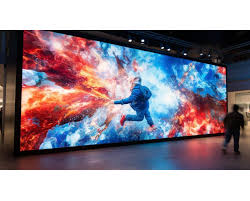
Display calibration is pivotal in these systems to ensure color uniformity and consistent luminance across seamless panels. Advanced calibration systems utilize colorimeters and uniformity compensation algorithms to achieve Delta E color accuracy below 2, meeting stringent broadcast and professional standards such as Rec. 709 and DCI-P3.
Manufacturing Challenges and Quality Control
The production of fine pitch LED video walls requires rigorous manufacturing precision. The use of surface-mount device (SMD) LEDs with micro-LED arrays demands exacting placement accuracy to maintain uniformity. Thermal management is another critical parameter; effective heat dissipation methods—including aluminum backplanes and modular design—are implemented to sustain long-term reliability and minimize brightness degradation.
Industry standards like IEC 61347 and TCO Certified Display standards guide the safety, energy efficiency, and quality benchmarks for these products. Quality control protocols incorporate multi-stage inspections, including in-line optical and electrical tests, to detect failures like dead pixels, color shifts, or power inconsistencies.
Applications and Advantages
Fine pitch LED video walls offer unparalleled advantages where visual fidelity and seamless displays are paramount. In broadcast studios, they provide dynamic backgrounds and real-time content with no moiré effects or scan lines, unlike traditional LCD panels. Corporate environments utilize these walls in conference rooms and digital signage for impactful presentations and brand messaging.
Retail sectors benefit from the immersive experience fine pitch LED video walls create, captivating shopper attention with vibrant colors and sharp images. Additionally, control centers deploy these walls for detailed situational awareness, offering operators clear and comprehensive data visualization critical for decision-making.
Future Trends and Innovations
Advancements in micro-LED technology hint at even smaller pixel pitches below 0.5mm, promising near-retina display quality. Integration with AI-driven content management systems will enable adaptive brightness and content optimized per ambient conditions. Furthermore, modular architectures enable scalable solutions, facilitating easy installation, maintenance, and upgrades.
Emerging standards such as HDMI 2.1 and DisplayHDR 1000 compatibility are becoming critical for fine pitch LED video walls to support high dynamic range content and faster refresh rates, enhancing both image realism and motion clarity.
In conclusion, fine pitch LED video walls represent the pinnacle of visual display innovation, combining meticulous engineering, advanced manufacturing, and intelligent design. Their role is rapidly expanding across industries that demand the highest visual performance, making them indispensable tools for both communication and immersive experiences.













