

Advances and Best Practices in LED LCD Display Manufacturing for Enhanced Performance and Reliability
The LED LCD display industry has witnessed rapid technological advances over the past decade, driven by increasing demand for high-performance, energy-efficient, and durable screens across diverse applications—from consumer electronics to commercial signage and industrial systems. As a professional LED display engineer, I bring in-depth expertise and practical insights into the manufacturing processes, key technical parameters, and quality standards essential for producing state-of-the-art LED LCD displays that meet evolving market needs.
At the core of LED LCD technology lies the integration of a liquid crystal display (LCD) panel with an LED backlighting system. This synergy enhances luminance, color accuracy, and energy efficiency compared to traditional cold cathode fluorescent lamp (CCFL) backlit LCDs. Modern LED backlighting typically employs edge-lit or direct-lit configurations, with Mini-LED and Micro-LED innovations pushing the boundaries of local dimming, contrast ratio, and viewing angle.
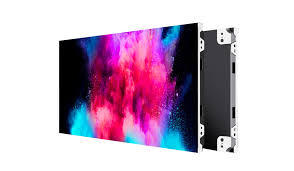
Key Technical Parameters
1. Resolution and Pixel Density: High-definition user experiences are driven by pixel densities ranging from 300 PPI (pixels per inch) in smartphones to around 100 PPI for large commercial displays. Recent 4K and 8K LCD panels facilitated by LED backlighting ensure ultra-fine detail and sharpness, essential for medical imaging, broadcasting, and professional design.
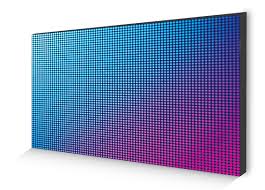
2. Brightness and Contrast: Typical LED LCD panels deliver brightness levels between 300 to 1000 nits, with HDR-capable displays reaching over 1500 nits. Contrast ratios often exceed 1000:1, enhanced by local dimming zones that control LED brightness individually, minimizing backlight bleed, and improving black levels.
3. Color Gamut and Accuracy: Utilizing wide color gamut LEDs (such as those using quantum dot enhancement films or QDEF) supports standards like DCI-P3 and Rec. 2020, critical for accurate color reproduction in film production and digital signage. Color calibration during production is key, adhering to international standards such as ISO 12646.
4. Response Time and Refresh Rate: For gaming and interactive applications, LED LCD displays now achieve response times as low as 1 ms and refresh rates up to 240 Hz, minimizing motion blur and enhancing user experience.
5. Durability and Reliability: The LED components and LCD layers undergo rigorous reliability testing—thermal cycling, humidity, shock resistance, and longevity tests according to industry standards like IEC 62368-1—to ensure consistent performance over extended operational lifetimes.
Manufacturing Best Practices
Manufacturing precision is critical to achieving high yields and consistent product quality. The process begins with raw material inspection, including LED wafers and liquid crystal compounds, followed by photolithography and TFT (thin-film transistor) array fabrication on glass substrates. Advanced cleanroom environments minimize particulate contamination during panel assembly.
Backlight unit (BLU) design involves selecting proper LED placement, diffuser sheets, and optical films to maximize uniformity and reduce hotspots. Emerging trends involve adopting Mini-LED arrays with thousands of dimming zones, significantly improving HDR and contrast performance without compromising energy efficiency.
Automated optical inspection (AOI) and electro-optical testing at multiple production stages help detect pixel defects, dead LEDs, or color inconsistencies early. This reduces scrap and rework, improving throughput and lowering costs.
Incorporating vibration and drop tests, along with accelerated aging procedures, ensures durable displays suitable for rugged environments such as automotive dashboards or outdoor digital signage.
Industry Standards and Compliance
Adhering to established industry standards such as IEC 62087 for power measurement, ISO 9241 for ergonomics of visual displays, and TCO Certified criteria for sustainability is vital. Compliance with RoHS and REACH regulations protects against hazardous substances and supports environmental responsibility in production.
Future Trends and Innovation
The shift towards flexible and transparent LED LCD displays is gaining momentum, leveraging novel substrates and encapsulation technologies. Integration of AI-powered calibration and predictive maintenance systems via IoT connectivity promises to revolutionize serviceability and lifespan management.
From an engineering perspective, continuous optimization of LED chip efficiency, LCD layer alignment, and thermal management will remain pivotal. Collaboration with material scientists to explore perovskite-based LEDs or OLED hybrid solutions is underway to combine the advantages of both LED and OLED technologies.
In conclusion, manufacturing LED LCD displays today demands a harmonious blend of advanced material science, precision engineering, and stringent quality assurance. The capability to deliver displays with superior brightness, color fidelity, and reliability is essential for meeting the performance expectations of a global market that increasingly relies on visual communication. Staying abreast of technical standards and emerging innovations ensures manufacturers maintain a competitive edge in this dynamic ecosystem.













