

Advanced LED Display Manufacturing Techniques for Superior Visual Performance
The evolution of LED display technology has revolutionized the visual experience across various industries, from advertising and entertainment to medical imaging and control rooms. As an LED display engineer with extensive experience in manufacturing, I aim to provide a comprehensive overview of the critical aspects and advancements in LED LCD screen production, focusing on technical parameters, industry standards, and practical insights to optimize both quality and performance.
Fundamentals of LED Display Technology
LED (Light Emitting Diode) displays operate by illuminating tiny semiconductor diodes arranged in arrays, which emit light when electrically energized. The integration of LED backlighting with Liquid Crystal Display (LCD) panels has paved the way for brighter, energy-efficient, and thinner screens. Advanced manufacturing techniques focus on enhancing pixel density, improving color accuracy, and expanding dynamic range to meet growing market demands.
Key Technical Parameters
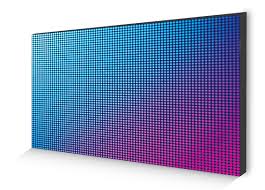
1. Pixel Pitch: This parameter, usually measured in millimeters, defines the distance between the centers of two adjacent pixels. Smaller pixel pitch (e.g., 0.7mm to 1.2mm) delivers higher resolution and is ideal for close-viewing applications such as control rooms or medical monitors. Larger pixel pitches (2.5mm and above) are suited for outdoor and large-format advertising displays where viewing distances are greater.
2. Brightness and Contrast Ratio: Optimal LED displays achieve brightness levels from 800 nits in indoor environments to over 5,000 nits for outdoor applications to ensure legibility under various lighting conditions. Contrast ratios exceeding 3,000:1 enable deeper blacks and more vivid imagery, critical for immersive viewing experiences. Employing High Dynamic Range (HDR) technology further enhances image depth and color reproduction.
3. Refresh Rate: High refresh rates (typically 120Hz or more) reduce flicker and motion blur, essential for video playback and applications requiring smooth image transitions. This parameter directly impacts viewer comfort, especially in environments like broadcast studios and sports arenas.
4. Color Gamut: Industry-leading LED displays now support 95%+ coverage of the DCI-P3 color space, offering richer and more accurate colors compared to traditional sRGB-based systems. This advancement is particularly important for content creators and professional environments demanding color precision.
Manufacturing Innovations
In recent years, manufacturing has witnessed transformative advances, especially in mini-LED and micro-LED technologies. Mini-LED displays incorporate thousands of small LEDs as local dimming zones, dramatically improving contrast and reducing halo effects. Micro-LEDs, though challenging to mass-produce due to precise placement requirements, promise unparalleled brightness, contrast, and energy efficiency with longer lifespans.
Quality control during production is paramount. Industry standards such as ISO 9241 for display ergonomics and IEC 62679 for LED display safety provide benchmarks for ensuring reliability and user comfort. Advanced optical bonding techniques minimize internal reflections and increase panel durability while improving touch sensitivity when integrated with interactive layers.
Practical Considerations in Production
Balancing cost, performance, and durability remains a complex equation. Selecting appropriate substrates (glass vs. flexible OLED substrates for hybrid applications), optimizing thermal management through heat sinks and advanced TIMs (Thermal Interface Materials), and ensuring uniform LED binning are critical steps. LED binning, the sorting of LEDs by color and brightness, ensures consistency across the entire display, thus preventing color shifts and banding.
Furthermore, stringent environmental testing, including humidity, temperature cycling, and UV exposure tests, ensure the LED displays withstand diverse operational conditions, which is crucial for outdoor signage and transportation applications.
Case Study: Smart City Public Information Displays
In a recent project deploying smart outdoor displays for a metropolitan public transit system, engineering teams prioritized high brightness (>5000 nits), IP65-rated enclosures for weather resilience, and low power consumption through efficient LED drivers and pulsed current modulation. The displays featured a 2.5mm pixel pitch for optimal balance of resolution and cost. Incorporation of automatic brightness adjustment sensors improved energy efficiency by adapting screen luminance to ambient lighting, resulting in a 15% reduction in overall power consumption. Continuous monitoring through embedded firmware allowed real-time fault detection, enhancing maintenance efficiency.
Future Outlook
Emerging trends such as AI-based display calibration, flexible LED panels enabling curved and foldable screens, and advances in perovskite LEDs offer promising avenues for next-generation displays. Integration with IoT platforms further enhances user interactivity and data-driven management.
In conclusion, LED display manufacturing is a finely balanced field combining precise engineering, rigorous quality control, and advanced materials science. Staying abreast of technological progress while adhering to international standards ensures delivery of superior, reliable displays capable of meeting diverse global market needs.
References:
- International Electrotechnical Commission, IEC 62679: LED Display Safety Standards.
- ISO 9241-307: Display ergonomics – Pixel defects in visual displays.
- Society for Information Display (SID) publications on HDR and color gamut standards.
- Case Study: LED Public Information Display Project, IEEE Transactions on Consumer Electronics, 2023.













