

Fine Pitch LED Touchscreen Technology: Advancements, Applications, and Technical Insights
The evolution of display technology stands at the forefront of modern digital interaction, with fine pitch LED touchscreen solutions representing a significant leap in clarity, responsiveness, and integration. As industries demand more precise visual and interactive experiences, fine pitch LED touchscreens offer unparalleled advantages, combining ultra-high resolution, seamless touch capabilities, and robust build quality. This article provides an authoritative overview of fine pitch LED touchscreen technology, exploring its technical parameters, industry applications, and future trends.
Understanding Fine Pitch LED Technology
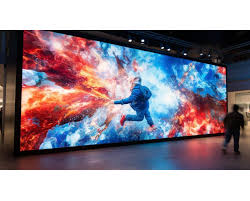
Fine pitch LED displays are characterized by the small distance between individual LED pixels, typically measured in millimeters (mm). This "pitch" refers to the center-to-center spacing of adjacent pixels. The smaller the pitch, the higher the pixel density, which directly correlates with sharper visuals and finer detail—critical for close-up viewing environments. Commonly, fine pitch LEDs range from 0.7mm to 1.5mm pixel pitch, targeting applications requiring HD or UHD resolution.
According to the Digital Signage Federation and industry standards outlined by the Society for Information Display (SID), pixel pitch and luminance are key factors affecting display performance. Modern fine pitch LED modules exhibit pixel densities exceeding 200,000 pixels per square meter, enabling resolutions akin to LCD panels but with better brightness and viewing angles.
Technical Specifications and Performance
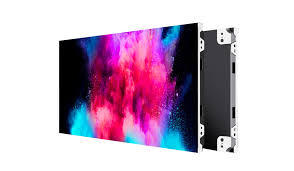
Fine pitch LED touchscreens integrate high-density LED modules with precise touch sensor arrays. Typically, these touchscreens utilize capacitive or infrared (IR) touch technologies with the following parameters:
- Pixel Pitch: 0.7mm to 1.5mm for ultra-fine image quality
- Brightness: 800-1200 nits, providing excellent visibility under ambient light conditions
- Refresh Rate: 1920Hz or higher, ensuring flicker-free images and smooth transitions
- Contrast Ratio: 3000:1 or better, for vibrant colors and deep blacks
- Touch Accuracy: ±1mm or better, critical for interaction precision in professional uses
- Touch Points: Multi-touch support (up to 20 points), enabling sophisticated gestures
Integration of Touch Sensing
Combining LED display panels with touch sensors requires advanced engineering to maintain image integrity while allowing seamless user interaction. Fine pitch LED touchscreens typically integrate capacitive touch sensors linked with controller ICs that filter noise and ensure accurate touch response without degrading display performance. Alternatively, IR touch sensors can be used in environments demanding ruggedness or protective layers, albeit with slightly coarser accuracy.
Applications Across Industries
The adaptability of fine pitch LED touchscreen technology spans multiple sectors:
- Corporate Environments: Interactive conference room displays enhance presentations with sharp visuals and responsive touch controls, supporting remote collaboration tools.
- Retail and Advertising: High-definition LED touchscreens capture consumer attention through immersive, interactive advertisements and product catalogs in malls or storefronts.
- Broadcast & Control Rooms: Real-time data monitoring on large fine pitch LED touchscreens allows operators to interact fluidly with high-resolution content without latency.
- Healthcare: Medical imaging benefits from the precision and clarity of fine pitch LEDs, enabling doctors to interact with diagnostic images in surgical environments.
- Education: Interactive learning environments foster engagement using touch-enabled LED walls that support multi-user input and vivid visual content.
Manufacturing and Quality Considerations
Producing fine pitch LED touchscreen panels demands stringent quality control at several stages:
- LED Chip Selection: Utilizing high-reliability SMD LEDs from reputable manufacturers such as Nichia or Samsung LEDs ensures color consistency and longevity.
- Calibration: Pixel-by-pixel color and brightness calibration post-manufacturing align uniformity, minimizing mura or color deviation, as standardized by CIE colorimetric guidelines.
- Thermal Management: Heat dissipation mechanisms prevent performance decline; manufacturers employ aluminum backplanes and active cooling systems in large panels.
- Touch Sensor Durability: Use of chemically strengthened glass or specialized coatings guards against scratches and fingerprints, preserving touch sensitivity over prolonged use.
Industry Case Studies
1. Samsung’s Flip Pro Series incorporates fine pitch LED technology with capacitive touch, delivering ultra-responsive digital whiteboard solutions for corporate clients globally, emphasizing smoother interaction and seamless image quality.
2. Leyard and Planar’s Fine Pitch LED Video Walls have transformed broadcast studios by providing high-resolution interactive displays that combine visually rich content with multi-touch collaboration, improving decision-making efficiency.
Future Trends and Innovations
The fine pitch LED touchscreen market is poised for further expansion with innovations such as:
- MicroLED Integration: The adoption of microLEDs could reduce pixel pitch below 0.5mm while enhancing energy efficiency and lifespan.
- AI-Rich Interaction: Embedding AI algorithms for touch prediction and adaptive display calibration, improving user experience and reducing latency.
- Flexible & Transparent Displays: Research is advancing towards bendable or transparent fine pitch LED touchscreens, extending applications to automotive HUDs and wearable devices.
Conclusion
Fine pitch LED touchscreen technology epitomizes the synergy of ultra-high-resolution display with precise, multi-touch interactivity, tailored for demanding professional and commercial environments. Its technical sophistication ensures superior image quality, reliability, and user engagement, driving the next generation of interactive digital experiences. Companies looking to integrate fine pitch LED touchscreens must prioritize quality manufacturing, compliance with industry standards, and customized solutions to fully harness the capabilities of this technology.
For those seeking cutting-edge, durable, and highly interactive display solutions, fine pitch LED touchscreens represent an optimal investment, marrying visual excellence with tactile responsiveness.
References:
- Society for Information Display (SID) – Display Measurement Standards, 2023
- Digital Signage Federation – LED Display Best Practices, 2024
- Samsung Electronics – Flip Pro Series Technical Datasheet, 2024
- Leyard & Planar – Fine Pitch LED Solutions Whitepaper, 2023













