

Advanced Technologies and Best Practices in LED Display Manufacturing
In the rapidly evolving field of LED display manufacturing, delivering superior quality, reliability, and performance requires a deep understanding of both technical parameters and industry standards. As global demand for LED displays continues to surge—driven by applications ranging from digital signage to large-scale video walls and consumer electronics—manufacturers must integrate cutting-edge technologies with proven engineering practices to maintain competitive advantage.
Material Selection and LED Chip Performance
The foundation of any LED display lies in the semiconductor chips used. High-quality LEDs, typically based on gallium nitride (GaN) technology, offer excellent brightness, color fidelity, and lifespan. Typical operating forward voltages range between 2.8V and 3.5V depending on the color (e.g., blue and green), with luminous efficacy often exceeding 150 lm/W at standard test conditions. To maximize longevity, manufacturers adhere to stringent binning processes, selecting chips with consistent luminous flux and chromaticity coordinates to ensure uniformity across the display.
Pixel Pitch and Resolution Considerations
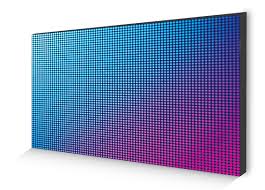
One of the most critical parameters in LED display design is pixel pitch—the center-to-center distance between adjacent pixels. Smaller pixel pitches enable higher resolution and finer image detail, critical for close-viewing environments such as indoor retail or broadcast studios. For example, fine-pitch LED displays with pixel pitches under 1.5 mm can surpass full HD resolution even at modest screen sizes. Industry-leading displays today offer pitches as low as 0.9 mm. However, such precision requires advanced manufacturing techniques, including laser cutting, SMT placement accuracy within ±10 microns, and meticulous drive circuit design.
Driving Methods and Calibration Techniques
LED matrices typically utilize either static or dynamic driving methods. Dynamic (scanning) driving is prevalent in large displays due to greater energy efficiency, though it demands careful synchronization to minimize flicker. Current driving intensity is another critical factor; driving currents usually range from 10 to 30 mA per LED depending on desired brightness and thermal management. To maintain consistent color and brightness over time, robust calibration is essential. Technologies like real-time luminance uniformity correction and temperature compensation—guided by standards such as IEC 62717—are extensively implemented.
Manufacturing Process and Quality Control
The assembly process involves multiple stages: substrate preparation, LED die attach, wire bonding, encapsulation, and testing. Substrates often use high-quality flexible PCB materials (e.g., polyimide-based) or aluminum for enhanced heat dissipation. Advanced automated pick-and-place machines improve throughput and accuracy, while in-situ optical inspection systems detect misaligned or defective LEDs promptly. Quality assurance follows international standards including ISO 9001 for process management and IPC-A-610 Class 2 or Class 3 criteria for electronics assembly quality.
Thermal Management and Reliability
Thermal dissipation is a pivotal challenge. Excess heat directly affects LED lifespan and color stability. Effective designs often incorporate heat sinks with optimized fin geometries, thermally conductive adhesives, and sometimes integrated fans or liquid cooling in high-power installations. Accelerated aging tests (around 85°C/85% RH for 1000 hours) validate the robustness of the final product. Mean Time Between Failure (MTBF) rates for well-engineered LED displays can exceed 100,000 hours under nominal operating conditions.
Emerging Trends and the Future Outlook
Emerging advancements such as Mini-LED and MicroLED technologies are setting new benchmarks for resolution and contrast, blending advantages of OLED and traditional LED displays. Additionally, integration of AI-driven calibration and diagnostic systems improve maintenance and reduce downtime for large-scale deployments. Environmental sustainability is also gaining focus, with manufacturers emphasizing lead-free soldering, recyclable packaging, and energy-efficient operation consistent with RoHS and WEEE directives.
In summary, producing high-quality LED displays involves a harmonious blend of semiconductor innovation, precision manufacturing, stringent quality control, and advanced calibration methods. As the industry moves forward, adherence to established standards combined with flexible adoption of new technologies will remain the cornerstone of success in delivering superior LED display solutions across all market segments.













