

Comprehensive Insights into LED LCD Screen Manufacturing: Technology, Parameters, and Industry Standards
In the rapidly evolving display technology landscape, LED LCD screens stand as a crucial pillar bridging traditional liquid crystal display technologies with modern, energy-efficient lighting solutions. This article delves deep into the manufacturing processes of LED LCD screens, technical parameters essential for industry professionals, and adherence to global standards, providing engineers and manufacturers with authoritative guidance grounded in extensive industry experience and technical expertise.
Understanding LED LCD Screen Technology
LED LCDs combine the liquid crystal display panel with light-emitting diodes (LEDs) as the backlighting source. Unlike traditional cold cathode fluorescent lamp (CCFL) backlights, LEDs offer superior brightness, color accuracy, and longer lifespan while consuming less power. This transition has become predominant in monitors, TVs, mobile devices, and large-scale digital signages.
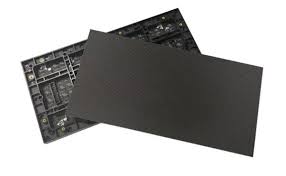
At the core, the LCD panel controls light modulation via liquid crystals that adjust polarization states on a pixel-by-pixel basis. The LED backlight, arranged either as edge-lit or direct-lit arrays, provides uniform illumination. Edge-lit designs place LEDs along the edges allowing thin form factors, whereas direct-lit configurations utilize arrays behind the panel facilitating higher brightness and local dimming capabilities for improved contrast.
Key Technical Parameters in LED LCD Manufacturing
Manufacturers must optimize several critical parameters to ensure high performance and product longevity:
- Brightness: Typically ranging from 250 to 1000 nits for consumer-grade displays, professional-grade and outdoor displays may reach 1500 nits or higher. Higher brightness requires precise LED current control and thermal management to prevent efficiency loss and degradation.
- Contrast Ratio: Modern LED LCDs achieve static contrast ratios of 1000:1 to 5000:1. Implementing local dimming zones further enhances dynamic contrast ratios, often exceeding 100,000:1, crucial for deep blacks and vivid imagery.
- Color Gamut and Accuracy: Utilizing LEDs with tailored spectral peaks (commonly in blue and red wavelengths) enables wider color gamuts such as DCI-P3 or AdobeRGB, surpassing traditional sRGB gamuts. Accurate color calibration during manufacturing, often verified against CIE 1931 color space standards, ensures fidelity demanded by professional use cases.
- Response Time and Refresh Rate: For smooth image reproduction, especially in gaming or broadcast displays, response times below 5 ms and refresh rates from 60 Hz to 240 Hz are targeted. This requires optimization of both liquid crystal materials and LED driving circuits.
- Viewing Angles: Advanced LCD panel designs incorporate technologies like In-Plane Switching (IPS) to achieve wide viewing angles—up to 178 degrees horizontally and vertically—while maintaining color integrity and contrast levels.
- Power Efficiency: Transitioning from CCFL to LEDs reduces power consumption by approximately 30%-50%, a key factor in portable devices. Efficiency further hinges on LED driver circuitry and backlight dimming algorithms adjusting illumination dynamically based on displayed content.
Manufacturing Process Highlights
The manufacturing ecosystem of LED LCD screens encompasses several critical stages:
1. Panel Fabrication: In a cleanroom environment, photolithography and etching define thin-film transistor (TFT) arrays on glass substrates, essential for pixel-level driving capability. Precision is paramount; even microscopic misalignments can degrade display uniformity.
2. Liquid Crystal Layering: The liquid crystal material is carefully deposited and aligned between the TFT array and color filter glass using alignment layers facilitating uniform molecular orientation. This step dictates the electro-optical response and eventual display quality.
3. LED Backlight Assembly: LED chips are assembled into arrays with optimized spacing and optical films, such as diffuser plates and light guides, to create uniform backlight output. Thermal interfaces and heatsinks are integrated to maintain LED junction temperatures within safe operating ranges, preserving lifespan and efficiency.
4. Module Integration and Testing: Electronic driver boards are integrated, followed by rigorous testing protocols adhering to standards such as IEC 62368-1 for safety, ANSI/IES LM-79 for luminous efficacy, and ISO 9241 for ergonomic display performance. Automated inspection systems verify pixel defects, brightness uniformity, color accuracy, and response parameters to meet stringent quality assurance benchmarks.
Industry Standards and Quality Control
Compliance with international standards ensures product reliability and market acceptance. Notably:
- IEC 62368-1: Addresses electrical safety in audio/video and information technology equipment, critical for minimizing fire hazards and electrical shock risks.
- RoHS (Restriction of Hazardous Substances): Mandates the exclusion of hazardous materials such as lead and mercury during manufacturing, safeguarding environmental and human health.
- ISO 9241-307: Specifies ergonomic requirements for electronic visual displays, emphasizing luminance, glare reduction, and chromaticity to enhance viewer comfort.
Manufacturers incorporate calibration and burn-in processes before shipment, significantly reducing early-life failures and ensuring display performance stability over time.
Emerging Trends and Future Directions
The LED LCD market continues to evolve, influenced by innovations such as mini-LED and micro-LED backlighting, enabling thousands of local dimming zones for near-OLED contrast ratios without sacrificing brightness. Advances in quantum dot enhancement films (QDEF) augment color performance, extending the gamut and energy efficiency.
Additionally, the integration of AI-driven calibration tools allows automated adjustment for ambient light conditions and content optimization, further enhancing user experience and display longevity.
Conclusion
The manufacturing of LED LCD screens demands a harmonious blend of material science, precision engineering, and compliance with global standards. Optimizing key technical parameters—brightness, contrast, color accuracy, response times—and rigorous quality control practices ensures delivery of high-performance and reliable displays catering to diverse applications from consumer electronics to professional and outdoor signage.
Staying abreast of technological advancements, such as mini-LED backlighting and quantum dot enhancements, remains essential for industry leaders aiming to provide next-generation visual experiences. The future trajectory of LED LCD manufacturing promises continued improvements in efficiency, image quality, and sustainability, grounded in proven engineering principles and rigorous standards adherence.













