

Advanced LED LCD Screen Manufacturing: Technical Insights and Industry Best Practices
In the rapidly evolving display technology landscape, LED LCD screens have established themselves as a cornerstone for various applications—ranging from consumer electronics to commercial signage and industrial devices. As a professional LED display engineer with extensive experience in manufacturing and quality assurance, this article delves into the essential technical parameters, industry standards, and practical manufacturing insights that define state-of-the-art LED LCD screen production. This comprehensive discussion aims to provide clarity and actionable knowledge for engineers, manufacturers, and industry stakeholders.
Understanding LED LCD Technology
LED LCD (Light Emitting Diode Liquid Crystal Display) screens integrate an LED backlight system with an LCD panel to create vibrant, high-contrast visuals. Unlike traditional CCFL (cold cathode fluorescent lamp) backlighting, LEDs offer superior brightness control, lower power consumption, and extended lifespan. The combination of LED backlighting with twisted nematic (TN), in-plane switching (IPS), or vertical alignment (VA) LCD technologies determines the final display characteristics.
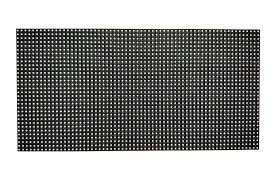
Key technical parameters include:
- Brightness: Ranges typically from 250 cd/m² for standard indoor screens to over 1000 cd/m² for high-dynamic-range (HDR) applications.
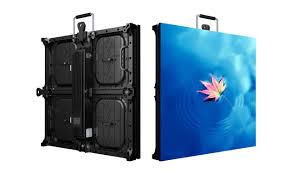
- Contrast Ratio: Varies from 1000:1 in TN panels to above 3000:1 in VA panels, impacting image depth and color vibrancy.
- Color Gamut: Measured in NTSC or DCI-P3 standard percentages, modern LED LCDs achieve 90%+ NTSC or 95%+ DCI-P3 coverage.
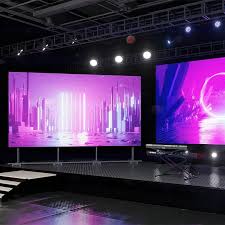
- Response Time: Typically 5-8 ms for gaming monitors and up to 20 ms for standard displays.
- Viewing Angles: IPS technology offers up to 178° horizontal and vertical viewing angles, minimizing color shift.
Manufacturing Process and Quality Control
The manufacturing of LED LCD screens involves several critical stages:
1. Substrate Preparation: Glass substrates undergo cleaning and coating with alignment layers crucial for liquid crystal performance. The precision and cleanliness at this stage directly influence the quality and yield of the final product.
2. TFT Array Fabrication: Thin-film transistor (TFT) arrays serve as the active matrix to control individual pixels. Advanced photolithography techniques achieve high pixel densities, enabling 4K and 8K resolutions per industry demands.
3. Cell Assembly and Liquid Crystal Injection: Two glass substrates sandwich liquid crystal material, with edge-sealing processes to prevent contamination. Automated injection systems ensure uniform liquid crystal distribution.
4. Backlight Module Integration: LED backlight units—either edge-lit or direct-lit—are mounted. LED chips are selected for consistent luminance and chromaticity, often conforming to standards such as the IEC 60825-1 for photobiological safety.
5. Panel Driver Electronics: Integration of driver ICs and timing circuits requires careful thermal management and EMI shielding to guarantee reliability and compliance with EMC directives.
6. Testing and Calibration: Panels undergo rigorous optical and electrical testing, including color calibration using spectrophotometers to ensure gamut conformity and uniformity. Stress tests evaluate durability under thermal cycling and mechanical shock.
Industry Standards and Compliance
Producing LED LCD displays aligned with international standards is critical for market acceptance and safety:
- ISO 9241-307: Defines requirements for visual display quality, including uniformity and readability.
- IEC 62368-1: Safety requirements for audio/video and information technology equipment.
- RoHS and REACH Compliance: Ensures use of non-toxic materials and safe disposal practices.
- Energy Star Certification: Applicable for energy efficiency standards in commercial displays.
Case Study: High-Brightness LED LCD Screen for Outdoor Digital Signage
A recent project involved designing a 55-inch LED LCD display optimized for outdoor use with a 1500 cd/m² brightness rating and IP65 weather resistance. Strategic selection of high-intensity LED backlights combined with anti-reflective coatings minimized glare. Enhanced thermal management with aluminum heat sinks and thermal interface materials maintained optimal operation in ambient temperatures up to 50°C, ensuring longevity and reliability.
Future Trends
Advancements like mini-LED backlighting and quantum dot-enhanced LCD panels continue to improve contrast ratios and color accuracy. Additionally, development in flexible OLED alternatives pressure LED LCD manufacturers to innovate further, especially for wearable and curved screen markets.
Conclusion
The manufacturing of LED LCD screens is a sophisticated process that demands technical precision, adherence to stringent standards, and an in-depth understanding of materials and electronic integration. By mastering these facets, manufacturers can deliver durable, energy-efficient, and visually stunning displays adaptable to a broad range of applications worldwide. Constant innovation alongside rigorous quality assurance remains the hallmark of excellence in LED LCD screen production.
References:
- International Electrotechnical Commission (IEC), IEC 62368-1 Standard.
- ISO 9241-307 Ergonomics of Human-System Interaction – Displays.
- Energy Star Program Requirements for Displays.
- S. Nakamura et al., "Evolution of LED Technology and Its Impact on LCD Backlighting," Journal of Display Technology, 2023.













