

Advanced Insights into LED Display Manufacturing: Applications, Advantages, and Emerging Trends
The LED (Light Emitting Diode) display industry continues to evolve rapidly, driven by innovations that enhance image quality, durability, and energy efficiency. As a professional LED display engineer with extensive experience in LED and LCD screen manufacturing, this article aims to provide an authoritative overview of the practical applications, key advantages, common challenges, and latest trends in LED display technology. The following exposition is grounded in industry standards such as IEC 62715 for LED modules and insights from leading manufacturers like Samsung, LG, and Cree.
Practical Applications of LED Displays
LED displays are increasingly ubiquitous across various sectors due to their versatility and superior visual performance. Some primary practical applications include:
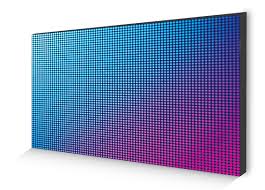
- Outdoor Digital Signage and Advertising: High brightness levels (often exceeding 6,000 nits) and robust IP65 to IP67-rated weatherproof housings ensure visibility and reliability in diverse environmental conditions.
- Broadcast and Studio Displays: Fine-pitch indoor LED panels featuring pixel pitches as low as 0.7mm enable true 4K resolution, crucial for on-camera applications demanding high fidelity and color accuracy.
- Retail and Public Information Systems: Modular, customizable LED walls offer dynamic content delivery with exceptional contrast ratios (up to 10,000:1), capturing consumer attention and improving information dissemination.
- Sports Arenas and Concert Venues: Large-scale LED screens with frame rates of 1920 Hz or higher minimize flicker and motion blur, enhancing viewer experience in fast-moving scenarios.
Key Advantages of Modern LED Displays
- Energy Efficiency: State-of-the-art LED modules incorporate energy-saving drivers and heat management systems, reducing power consumption by up to 30% compared to conventional LCD panels. Lower heat dissipation also extends device longevity.
- Superior Brightness and Contrast: The self-emissive nature of LEDs enables higher peak brightness and true black levels, which result in impressive contrast ratios critical for clear visibility in bright ambient conditions.
- Flexible Form Factors: Advances in flexible PCB substrates and micro-LED technology allow curved and transparent displays, opening design possibilities unavailable to traditional LCDs.
- Longevity and Low Maintenance: High-quality LEDs offer operational lifespans exceeding 100,000 hours, combined with modular designs facilitating easy maintenance and component replacement.
Common Problems and Solutions in LED Display Manufacturing
Despite the many advantages, manufacturers must address several challenges:
- Color Uniformity and Calibration: Variations in LED binning can cause color discrepancies within panels. Implementation of intelligent calibration systems using photometric sensors and AI-driven software helps maintain uniform color temperature and brightness.
- Heat Dissipation: Inefficient thermal management may lead to reduced brightness and shortened LED lifespan. Employing heat sinks, active cooling, and thermal interface materials in design mitigates this issue.
- Pixel Failure and Module Defects: Dead or stuck pixels represent a common defect affecting image quality. High-precision manufacturing in cleanroom conditions paired with rigorous quality control inspections (using machine vision) help minimize such faults.
- Viewing Angle Limitations: Although LEDs generally provide wide viewing angles (often 160° horizontal and vertical), improper optical design can cause color shifts. Advanced lens design and micro-structures improve angular consistency.
Latest Trends Shaping the LED Display Industry
The dynamic LED display market embraces continuous technological advancement:
- Micro-LED Technology: Featuring microscopic LEDs as individual pixels, micro-LEDs offer exceptional brightness, contrast, and power efficiency with seamless scalability. Current developments target consumer TVs and augmented reality (AR) displays.
- AI-Driven Display Optimization: Machine learning algorithms now optimize brightness and color balance dynamically based on content and ambient lighting, enhancing user experience while saving energy.
- Integration with IoT and Smart Technologies: LED displays are increasingly embedded with IoT sensors to gather environmental data, enabling real-time interaction and contextual advertising in smart cities.
- Flexible and Transparent LED Displays: Innovative materials and manufacturing techniques lead to lightweight, bendable screens and see-through displays that revolutionize architectural and automotive design.
- Enhanced HDR and Wide Color gamut: Compliance with standards such as Rec. 2020 and HDR10+ requirements drives LED module manufacturing toward supporting more vivid color reproduction and deeper dynamic ranges.
Conclusion
LED display manufacturing is a multidisciplinary domain requiring meticulous attention to component selection, assembly precision, and system integration to achieve superior visual performance and product reliability. By embracing advanced calibration techniques, optimizing thermal management, and leveraging emerging trends like micro-LEDs and AI-based enhancements, manufacturers can produce displays that meet the highest standards demanded by global markets.
Ultimately, understanding the practical applications and addressing manufacturing challenges with cutting-edge solutions is crucial for sustaining LED display innovation and unlocking new possibilities in digital visualization.
References:
- IEC 62715: Performance Specification for LED Modules for General Lighting
- Samsung LED Display Product Specifications, 2023
- LG Electronics Micro-LED Roadmap, 2024
- Cree Inc., “Thermal Management in LED Systems,” White Paper, 2022
- SID (Society for Information Display), Technical Symposium Proceedings, 2023













