

Advanced LED Display Technology and Manufacturing: Insights and Best Practices for High-Performance Screens
In the rapidly evolving field of display technology, LED (Light Emitting Diode) displays have become the cornerstone of modern visual solutions across industries ranging from consumer electronics and digital signage to broadcast and medical imaging. Their superior brightness, energy efficiency, and design flexibility position them as the preferred technology for both indoor and outdoor applications. As a seasoned LED display engineer with extensive experience in manufacturing and system integration, this article delves into the technical nuances, manufacturing processes, performance parameters, and emerging trends that shape the development of professional-grade LED displays.
#Understanding LED Display Fundamentals
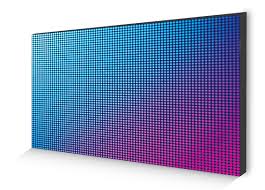
At their core, LED displays consist of arrays of microscopic semiconductor diodes that emit light when electrically energized. The two primary types of LED displays used commercially are direct-view LED (DV-LED) and LED-backlit LCDs. DV-LEDs involve individually addressable pixels composed of red, green, and blue diodes assembled to create vivid, self-emissive images without the need for backlighting. In contrast, LED-backlit LCDs use LEDs as a backlight source behind a liquid crystal panel that modulates light to generate images, balancing brightness with color accuracy and cost.
Pixel Pitch, defined as the center-to-center distance between two adjacent pixels, is a critical parameter influencing display resolution and viewing distance. For fine-pitch indoor applications, pixel pitches of 0.9 mm to 2.5 mm are common, providing high pixel density suitable for close-range viewing such as control rooms or retail storefronts. Outdoor and large-format LED billboards typically use pixel pitches from 4 mm to 20 mm, optimized for visibility at greater distances.
#Manufacturing Processes and Quality Control
The manufacturing of high-quality LED displays requires a multi-stage process integrating precision electronics assembly, optical engineering, and rigorous testing.
1. LED Chip Selection and Binning:
LEDs are sourced from top-tier manufacturers specializing in GaN (Gallium Nitride) and InGaN (Indium Gallium Nitride) compound semiconductors, offering high luminous efficiency and stable color reproduction. Chips undergo binning processes where they are classified according to brightness, color wavelength (measured in nanometers), and forward voltage to ensure uniformity – a vital factor in achieving consistent image quality across the display.
2. PCB and Module Fabrication:
Printed Circuit Boards form the backbone for LED modules, designed to support fine-pitch layouts with minimized electrical interference and effective heat dissipation. Multi-layer PCBs with copper planes and ceramic substrates are typical, enhancing thermal conductivity. Soldering processes employ automated, high-precision pick-and-place machinery and reflow ovens to secure LEDs and IC drivers onto the PCB.
3. Calibration and Optical Integration:
Post assembly, each LED module undergoes photometric calibration using spectroradiometers and colorimeters, ensuring precise color temperature adherence (commonly targeting the D65 standard of ~6500K for white point consistency). Light diffusion films and lenses are integrated to optimize viewing angles, typically aiming for a horizontal viewing angle over 140° and vertical angle exceeding 120°, enhancing usability in diverse environments.
4. Testing and Reliability Validation:
Adherence to industry standards such as IEC 62087 for luminance measurement and ANSI/IES LM-79 for photometric testing is essential. Environmental stress tests — including thermal shock, humidity, vibration, and lifespan projection (often exceeding 100,000 hours of continuous operation at 50% brightness) — are conducted to guarantee performance durability, particularly for outdoor and critical applications.
#Technical Parameters Defining Display Performance
Integral to professional LED display quality are several pivotal technical specifications:
- Brightness: Measured in cd/m² (nits), indoor LED displays generally offer 800 to 1500 nits, while outdoor models routinely surpass 5000 nits to combat sunlight washout. Enhanced brightness control with PWM (Pulse Width Modulation) dimming reduces flicker and eye strain.
- Contrast Ratio: Direct-view LEDs provide near-infinite contrast ratios due to self-emission, significantly outperforming LCDs reliant on backlighting. This leads to deeper blacks and vivid color ranges critical to applications like medical imaging and broadcast.
- Refresh Rate: Displays intended for video or rapid content change feature refresh rates upwards of 3840 Hz, minimizing flicker on camera capture and enhancing viewer comfort.
- Color Gamut and Accuracy: Modern LED displays target wide color gamuts exceeding Rec. 709 and move towards Rec. 2020 for UHD content. Color accuracy is typically quantified using Delta E metrics, with professional displays achieving ΔE less than 2 for visual indistinguishability from reference colors.
#Emerging Innovations and Industry Trends
The convergence of Mini and Micro LED technologies represents the frontier of LED advancements. By reducing pixel pitch to sub-millimeter scales (0.3 mm and below), micro LED displays offer unparalleled resolution, brightness, and longevity without the burn-in limitations of OLED. Leading manufacturers such as Samsung, Sony, and LG have pioneered commercial micro LED video walls, promising new vistas for immersive visualization.
Additionally, enhanced smart display integration with IoT capabilities and AI-driven calibration systems enable adaptive brightness and color correction in real-time based on ambient conditions and content type. This trend aligns with rising demands for energy-efficient, sustainable manufacturing adhering to standards like RoHS and WEEE.
#Case Study: High-Resolution Control Room LED Display Deployment
A prominent example of LED display expertise in action is the deployment of a fine-pitch LED video wall in an international air traffic control center. The facility required a seamless, ultra-high-resolution display that could facilitate real-time tracking of hundreds of aircraft with zero latency and exceptional color fidelity.
- Display size: 10 m x 3.5 m
- Pixel pitch: 1.2 mm
- Brightness: 1200 nits (adjustable)
- Refresh rate: 3840 Hz
- Color accuracy: Delta E< 1.5
- Viewing angle: 160° horizontal, 130° vertical
The system integrated automatic calibration sensors, enabling continuous luminance and color compensation, ensuring operational reliability 24/7. Rigorous environmental testing certified performance under fluctuating temperature and humidity levels, exemplifying best industry practices and compliance with IEC 60068 environmental testing standards.
#Conclusion
Mastering the complexities of LED display manufacturing involves a balance of cutting-edge semiconductor technology, precision engineering, and stringent quality assurance protocols. The insights provided herein encapsulate industry best practices and emerging innovations that drive the development of LED displays capable of supporting demanding applications worldwide. With continuous advancements in miniaturization, materials science, and smart integration, LED displays remain at the forefront of visual communication technologies.
For engineers, designers, and technology leaders, an in-depth understanding of these parameters and processes is vital to delivering reliable, high-performing LED display solutions that meet global standards and user expectations.
References:
1. IEC 62087:2011 – Methods of measurement for the power consumption of audio, video, and related equipment
2. ANSI/IES LM-79-08 – Electrical and Photometric Measurements of Solid-State Lighting Products
3. International Electrotechnical Commission (IEC) 60068 – Environmental Testing Standards
4. Samsung Micro LED Whitepapers, 2023
5. Sony Crystal LED Technical Documentation, 2024













