

Comprehensive Insights into LED LCD Screen Manufacturing: Technical Expertise and Industry Best Practices
The manufacturing of LED LCD screens represents a sophisticated intersection of advanced materials science, precision engineering, and cutting-edge electronics. With the increasing demand for high-resolution displays in diverse applications—from consumer electronics and automotive dashboards to large-scale digital signage—understanding the manufacturing process and technical parameters of LED LCD screens is essential for industry professionals and stakeholders worldwide.
Fundamentals of LED LCD Technology
LED LCD screens, commonly referred to as LED-backlit LCDs, integrate Liquid Crystal Display (LCD) panels with Light Emitting Diode (LED) backlighting. This hybrid technology combines the high contrast and color accuracy of LCDs with the energy efficiency and brightness uniformity provided by LED backlights.
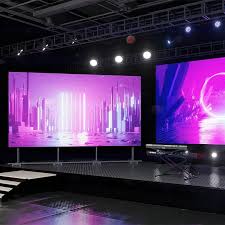
The core LCD panel utilizes twisted nematic (TN), in-plane switching (IPS), or vertical alignment (VA) liquid crystal technologies to modulate light passing through polarizing filters and color filters. The LED backlight system replaces traditional cold cathode fluorescent lamps (CCFLs), offering lower power consumption, slimmer designs, and better dimming capabilities.
Key Manufacturing Processes and Critical Parameters
1. Substrate Preparation and Thin Film Transistor (TFT) Fabrication:
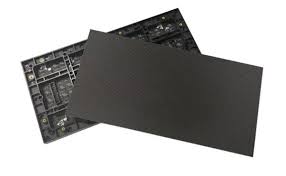
The process begins with the preparation of high-quality glass substrates, typically low-iron glass with thickness between 0.5mm to 1.1mm to ensure mechanical strength and minimal light distortion. Sophisticated photolithography and sputtering techniques deposit indium gallium zinc oxide (IGZO) or amorphous silicon (a-Si) thin-film transistors on the substrate, facilitating pixel-level control.
2. Liquid Crystal Material Injection and Cell Assembly:
Accurate dispensing of liquid crystal materials into the cell gap—usually between 3 to 6 microns—is critical. Uniformity in cell gap ensures optimal optical characteristics and reduces issues such as mura (uneven brightness).
3. Color Filter and Polarizer Application:
Color filters, generally fabricated using pigment-based or dye-based methods, define the RGB sub-pixels with a pixel pitch ranging from 0.18 to 0.3 mm for high-resolution displays. Polarizers, usually linear or circular, control the passage of polarized light, essential for contrast and viewing angles.
4. LED Backlight Module Integration:
LED backlights are arranged in either edge-lit or direct-lit configurations. Edge-lit modules utilize light guide plates (LGP) to uniformly diffuse light, while direct-lit configurations embed LEDs behind the panel for localized dimming capabilities, crucial for achieving higher dynamic contrast ratios exceeding 500,000:1 in advanced displays. LEDs selected are typically high-brightness SMD types (e.g., 2835 or 5050 package sizes) with color temperatures standardized between 5,500K and 6,500K for natural white light.
5. Module Assembly and Optical Enhancement Layers:
Diffuser sheets, prism films, and brightness enhancement films (BEF) form the optical stack that balances luminance uniformity and color consistency. Precision lamination techniques ensure no air gaps or misalignments, which could otherwise cause refraction losses or mura.
Quality Control and Industry Standards
Stringent quality control is mandatory to meet international certifications such as ISO 9241-307 for visual ergonomics and IEC 62368-1 for safety in audio/video equipment. Manufacturers apply automated optical inspection (AOI) systems and photometric measurements to detect defects such as dead pixels, mura, and color shift.
Additionally, compliance with RoHS (Restriction of Hazardous Substances Directive) and REACH regulations ensures environmental sustainability and health safety by limiting the use of harmful materials.
Recent Innovations and Future Trends
Advancements in LED LCD panels include mini-LED and micro-LED backlighting, offering localized dimming with thousands of zones for enhanced contrast and HDR performance, while maintaining the cost-effectiveness of conventional LCDs. Quantum dot enhancement layers (QDEF) are also increasingly integrated to expand color gamut up to Rec. 2020 standards, critical for ultra-high-definition content.
Furthermore, research into flexible OLED alternatives and hybrid technologies highlights a competitive landscape, pushing LED LCD manufacturers to continuously optimize performance parameters such as response time (sub-5ms), brightness (up to 1500 nits for outdoor display units), and power consumption efficiency.
Conclusion
The manufacturing of LED LCD screens is a complex, multi-disciplinary process governed by precise materials selection, engineering control, and quality compliance. Achieving superior display performance requires mastery over substrate preparation, TFT fabrication, liquid crystal alignment, LED backlighting, and optical layer assembly, underpinned by rigorous inspection and adherence to global standards. Emerging innovations in mini-LED technology and quantum dot enhancement promise to sustain the relevance of LED LCDs in a diversified display ecosystem, balancing performance, cost, and scalability for international markets.
For professionals and enterprises aiming to excel in display manufacturing, a thorough understanding of these technical dimensions and industry best practices is indispensable.













