

Advanced LED Display Technologies and Manufacturing Best Practices for High-Performance Screens
In the dynamic landscape of LED display technology, achieving high performance, durability, and visual excellence hinges on meticulous manufacturing processes and advanced material selection. As LED display engineers with extensive experience in international projects, understanding both the technical intricacies and optimization strategies is paramount to delivering cutting-edge products that meet diverse application needs.
Fundamentals of LED Display Technology
At the heart of any LED display is its ability to convert electrical signals into vivid images. The display consists primarily of an array of Light Emitting Diodes arranged to form pixels. These pixels are controlled to produce images with specific brightness, color accuracy, and refresh rates. Typical performance parameters include:
- Pixel pitch: Distance between the centers of two adjacent pixels, measured in millimeters. Lower pixel pitch (e.g., 0.9mm to 2mm) corresponds to higher resolution and is essential for close viewing environments such as control rooms or broadcast studios.
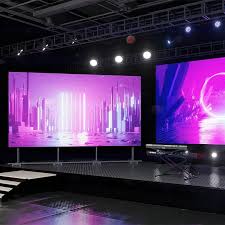
- Brightness: Measured in nits (cd/m²), with indoor LED displays commonly ranging between 800 - 1500 nits and outdoor versions exceeding 5000 nits for visibility under sunlight.
- Color gamut: Covers the range of colors the display can reproduce; modern LED panels target Rec. 709 or even Rec. 2020 for ultra-wide color reproduction.
- Refresh rate: Typically from 1920 Hz upwards to minimize flicker and deliver smooth motion, especially crucial in broadcast or interactive displays.
Material Selection and LED Chip Technology
High-performance LED displays rely on advanced LED chip technology. The latest generation employs SMD (Surface-Mounted Device) LEDs with chip sizes adapting from 1010 (1.0mm x 1.0mm) to even smaller sizes for ultra-fine pixel pitch modules. The choice between SMD and COB (Chip-On-Board) LED technologies impacts lifespan, heat dissipation, and visual fidelity.
Material quality is vital — employing low-defect semiconductor wafers, high-purity phosphors for white LEDs, and robust encapsulation materials is necessary to avoid color shift and brightness degradation over time. Technologies like Quantum Dot (QD) enhancement are increasingly integrated to improve color saturation and efficiency.
Manufacturing Precision and Quality Control
Manufacturing high-quality LED modules demands precision surface mount technology lines with automated optical inspection (AOI) and in-line electrical testing. Adhering to IPC-A-610 Class 3 standards ensures reliability, particularly for mission-critical applications.
Thermal management is another critical focus. Overheating leads to reduced LED lifespan and inconsistent luminance. Advanced heat dissipation designs include aluminum substrates, passive cooling structures, and in some cases, integrated micro-fans for indoor high-brightness displays.
Module uniformity is tested rigorously using spectrophotometers and luminance meters, with calibration processes employing color management systems based on CIE 1931 chromaticity standards. Uniformity values above 90% and color consistency within ΔE< 3 are typical industry targets for premium displays.
Industry Standards and Testing Protocols
Compliance with international industry standards such as IEC 62368-1 (safety requirements for electronic displays) and RoHS (Restriction of Hazardous Substances) is mandatory. Additionally, IP rating standards (e.g., IP65 or above) define ingress protection for outdoor screens, ensuring resistance against dust and water.
Environmental testing under thermal cycling, humidity, and UV exposure simulates real-life conditions to validate longevity. Lifetime expectancy for high-quality LED panels generally surpasses 100,000 operating hours at 50% brightness.
Case Studies and Practical Insights
A notable deployment involving a major global airport’s command center integrated a fine-pitch LED video wall with 0.9mm pixel pitch and 1200 nits brightness, facilitating real-time monitoring with unrivaled image clarity. The project underscored the importance of modular design for serviceability and minimized downtime, with on-site calibration tools ensuring sustained uniformity.
Similarly, large-scale outdoor advertising boards have seen breakthroughs with energy-efficient driver ICs and adaptive brightness control, reducing power consumption by up to 30% without compromising visual performance.
Future Trends and Innovations
Looking ahead, microLED technology promises even higher brightness, contrast ratios above 1,000,000:1, and lower power consumption, potentially revolutionizing indoor and outdoor LED displays. Integration with AI-driven calibration and IoT-enabled remote monitoring further enhances reliability and predictive maintenance capabilities.
In summary, crafting advanced LED displays demands not just technical expertise but also strict adherence to quality standards and innovative manufacturing techniques. By continuously refining chip selection, thermal management, and calibration methodologies, manufacturers can meet the growing global demand for versatile, high-performance LED screens across sectors including advertising, broadcasting, transportation, and control rooms.
References:
- International Electrotechnical Commission (IEC) 62368-1 Standard
- IPC-A-610 Acceptability of Electronic Assemblies
- Society of Motion Picture and Television Engineers (SMPTE) color standards
- LED professional (LEDp) journals and case studies
- Lumileds and Cree white papers on LED chip technology advancements
Through diligent application of these principles and ongoing technical evolution, LED display engineering achieves the synergy between vibrant visual impact and robust operational reliability.













