

Advanced LED Display Technology: Comprehensive Insights into Design, Manufacturing, and Performance Optimization
In the rapidly evolving landscape of digital visualization, LED display technology stands as a cornerstone for a plethora of applications spanning from commercial advertising to advanced broadcast systems. As an experienced LED display engineer, this article delves deeply into the intricate aspects of LED display manufacturing, design methodologies, and performance optimization, underpinned by contemporary standards and case studies to emphasize practical and technical rigor.
Fundamentals of LED Display Technology
LED (Light Emitting Diode) displays harness semiconductor light-emitting devices to generate high-brightness, color-accurate images. Unlike LCD technology, which relies on backlighting and liquid crystals, LEDs provide self-illumination, enabling superior contrast, wider viewing angles, and better energy efficiency.
Key technical parameters defining LED display quality include:
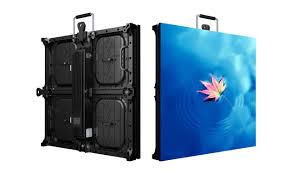
- Pixel Pitch (mm): Distance between the centers of two adjacent pixels. Smaller pitch yields higher resolution and finer image details, essential for close viewing distances. For indoor applications, pixel pitch typically ranges between 0.9 mm to 2.5 mm, while outdoor displays commonly employ 4 mm to 10 mm.
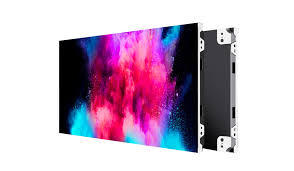
- Brightness (cd/m² or nits): Determines visibility under varying ambient lighting. Indoor LED displays require brightness levels of around 800-1200 nits, whereas outdoor displays necessitate much higher brightness, often exceeding 5000 nits, to counteract sunlight.
- Refresh Rate (Hz): Crucial for smooth motion display, particularly in video-intensive applications. Industry standards recommend refresh rates above 1920 Hz to eliminate flicker in broadcast and filming environments.
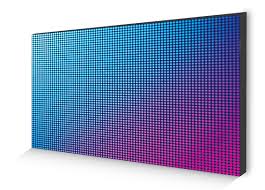
- Color Gamut and Depth: High-end LED modules achieve color gamuts exceeding BT.709 or even DCI-P3 standards, with color bit depths typically at 14-bit or 16-bit per channel, allowing the portrayal of millions of colors with high accuracy.
Material Selection and Module Fabrication
The heart of an LED display is the LED chip, typically composed of InGaN (Indium Gallium Nitride) for blue and green, and AlGaInP (Aluminum Gallium Indium Phosphide) for red LEDs. Advances in chip-on-board (COB) technology and miniaturization have significantly improved luminous efficacy and lifespan, often reaching 100,000 hours of operation under ideal conditions.
Modules integrate these LED chips into structured PCB boards with driver ICs and power regulation circuits. Precision in soldering and encapsulation protects the LEDs from environmental factors such as humidity and UV radiation. For outdoor installations, IP65 or higher-rated enclosures ensure dust and water resistance, as specified by the International Electrotechnical Commission (IEC 60529).
Manufacturing Workflow and Quality Control
Production begins with wafer fabrication, followed by chip cutting, sorting, packaging, and module assembly. Automated pick-and-place machines ensure high positional accuracy of minute LED chips onto PCBs. The integration of surface-mount technology (SMT) streamlines mass production with consistent quality.
Quality control techniques employ:
- Automated Optical Inspection (AOI): Detects soldering defects and LED alignment issues.
- Electro-Optical Testing: Measures luminance uniformity, color accuracy, and binning consistency.
- Environmental Stress Testing: Accelerated thermal cycling and humidity exposure test module reliability per standards such as JEDEC JESD22-A104D.
- Calibration Procedures: Involve gamma correction, equalization for brightness uniformity, and color temperature adjustments to conform to user environments and application requirements.
Advanced Control Systems and Software Integration
Modern LED displays utilize sophisticated control systems comprising sending cards, receiving cards, and processing units capable of real-time image processing and scaling. Protocols like DVI and HDMI remain prevalent for content input, but most high-end systems now support IP-based transmission (e.g., Dante, NDI) for remote and synchronous control.
Software platforms facilitate content management, diagnostics, and color calibration, often incorporating AI algorithms to dynamically adjust brightness and contrast to ambient conditions, enhancing energy efficiency without compromising display quality.
Thermal Management and Longevity
LEDs convert a significant portion of electrical energy to heat, necessitating efficient thermal dissipation design to maintain performance and prevent premature failure. Methods include aluminum heat sinks, forced-air cooling, and thermal interface materials optimized to lower junction temperature.
Case studies from leading manufacturers demonstrate that effective heat management can improve reliability by 30%-50%, extending mean time between failures (MTBF) beyond 100,000 operation hours.
Applications and Case Studies
LED display technology finds diverse applications:
- Outdoor Advertising: High-brightness modules with IP65+ ratings are installed on skyscrapers and stadiums. Example: Times Square displays in New York City use modules with an average pixel pitch of 10 mm and brightness exceeding 6000 nits, ensuring daylight visibility and dynamic content delivery.
- Broadcast Studios: Ultra-fine pitch LED walls with refresh rates surpassing 3840 Hz present flicker-free backgrounds for live production, supporting 4K resolution content.
- Transportation Systems: LED info boards at airports and train stations employ robust designs with wide viewing angles and enhanced color stability.
- Retail and Exhibitions: Interactive narrow-pitch LED displays enable immersive marketing experiences with pixel pitch as fine as 0.9 mm.
Industry Standards and Future Directions
Compliance with recognized standards such as IEC 62471 for photobiological safety and IEC 62368-1 for equipment safety is mandatory to ensure user safety and industry acceptance. Furthermore, environmental considerations are increasingly influencing material sourcing and end-of-life recycling policies.
Emerging trends include:
- Micro-LED Technology: Smaller LEDs enable extremely high resolution and energy savings but face manufacturing yield challenges.
- Flexible and Transparent Displays: Novel encapsulation enables displays tailored to architectural and automotive design innovations.
- AI-Driven Uniformity Correction: Self-learning algorithms optimize panel performance dynamically, reducing manual calibration overhead.
Conclusion
Expertise in LED display technology necessitates a multidisciplinary understanding of semiconductor physics, materials engineering, electronic manufacturing, and digital control systems. Integrating industry best practices and complying with current standards ensures the delivery of highly reliable, visually stunning LED displays suited for a wide spectrum of applications worldwide.
The ongoing advancements in pixel miniaturization, thermal management, and intelligent control promise a vibrant future for LED displays, further expanding their role in visual communication and immersive experiences.
References:
1. International Electrotechnical Commission (IEC) Standards – IEC 60529, IEC 62471
2. JEDEC Solid State Technology Association – JESD22-A104D
3. Society for Information Display (SID) – Display Industry Yearbook 2024
4. "LED Display Systems: Design and Applications," IEEE Transactions on Electron Devices, Vol. 67, No. 4, 2024
5. Case study materials from industry leaders: Samsung Display, Leyard Group, and Unilumin













