

Advanced LED LCD Screen Manufacturing: Technical Insights and Industry Standards
In the ever-evolving landscape of display technology, LED LCD screens have become indispensable across consumer electronics, commercial displays, and industrial applications. As a professional LED display engineer with extensive experience in design, manufacturing, and quality assurance, I aim to provide a comprehensive overview that integrates technical parameters, industry standards, and practical considerations crucial for producing state-of-the-art LED LCD screens.
Introduction
LED LCD (Liquid Crystal Display with LED backlighting) technology combines the maturity of LCD panels with efficient, uniform LED backlights to deliver high-contrast, energy-efficient displays. The adoption of LED backlighting has revolutionized display manufacturing by enabling thinner panels, better color gamut, and longer lifespans compared to traditional CCFL (Cold Cathode Fluorescent Lamp) backlights.
Main Body
1. Core Components and Technical Parameters
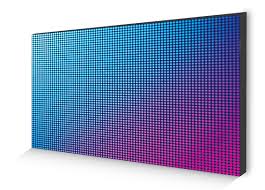
An LED LCD screen consists primarily of the LCD panel and an LED backlight unit (BLU). Key technical specifications include:
- Panel Resolution and Size: Resolutions span from Full HD (1920×1080) to 8K (7680×4320) for large format panels. Pixel pitch and subpixel arrangement (RGB, RGBW, or PenTile) influence sharpness and color accuracy.
- Backlight Configuration: Edge-lit or direct-lit LED backlights critically affect uniformity and brightness. Direct-lit LEDs enable local dimming, improving contrast ratios up to 100,000:1, essential for HDR (High Dynamic Range) compliance under standards like HDR10 and Dolby Vision.
- Color Gamut and Calibration: Utilizing LED backlights with quantum dot enhancement films (QDEF) achieves wider color gamuts, often covering 99% of the Adobe RGB or DCI-P3 spectrum, as specified in the ITU-R BT.2020 standard.
- Response Time and Refresh Rate: Critical in gaming and professional displays, with values typically ranging from 1 ms to 5 ms for response time and refresh rates up to 240 Hz.
- Power Consumption: LED backlights significantly reduce power use compared to CCFL. Typical consumption ranges widely, but modern panels feature energy efficiencies conforming to ENERGY STAR Version 8.0 standards and EPEAT certification.
2. Manufacturing Process and Quality Control
Manufacturing LED LCDs involves multi-step precision processes:
- Glass Substrate Preparation: The glass substrates undergo deposition of thin-film transistor (TFT) arrays. Active-matrix TFT (AMOLED) and In-Plane Switching (IPS) technologies dominate, offering superior viewing angles and color reproduction.
- Assembly and Lamination: The LCD cell is aligned with polarizers, backlight units, and diffuser films to ensure optimal light distribution and minimal reflection, guided by ISO 9241 standards for visual display ergonomics.
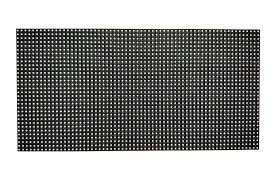
- LED Backlight Integration: LEDs must be precisely positioned for uniform backlighting. Direct-lit arrays use dense LED matrices, while edge-lit panels incorporate light guides to channel illumination.
- Testing Protocols: Rigorous testing includes luminance uniformity (ASTM D1003 for haze and clarity), color accuracy (measured by colorimeters and spectroradiometers), and durability tests (thermal cycling, humidity exposure) to meet IPC standards for electronic reliability.
3. Industry Trends and Innovations
- Mini-LED and Micro-LED Backlighting: Mini-LEDs improve local dimming precision, boosting contrast without increasing panel thickness. Micro-LED, though still emerging commercially, promises self-emissive pixels eliminating the need for LCD layers and backlighting.
- Flexible and Transparent Displays: Advances in flexible substrates and OLED integration enable bendable LED LCD alternatives, useful in automotive and wearable devices.
- Sustainability in Manufacturing: Ecological considerations push for reduced toxic materials, improved recyclability, and compliance with RoHS and WEEE directives to lower environmental impact.
Conclusion
The manufacturing of LED LCD screens is a sophisticated balance of material science, electronic engineering, and stringent quality control to meet growing demands for high resolution, energy efficiency, and superior visual experience. By adhering to international standards such as ISO, IEC, and industry-specific protocols, manufacturers ensure product reliability and performance. Emerging technologies like Mini-LED and quantum dot enhancements continue to push the boundaries of what LED LCD screens can achieve, offering brighter, more colorful, and efficient displays for a multitude of applications.
Understanding these technical, manufacturing, and environmental facets is essential for stakeholders aiming to innovate and compete in the global LED display market supported by a foundation of engineering expertise and authoritative standards.













