

Interactive LED Displays: Technology, Applications, and Industry Insights
Interactive LED displays represent a transformative evolution in visual communication technology, blending the high brightness and vivid color capabilities of LED screens with touch and gesture-responsive functionalities. As a seasoned LED display engineer with extensive experience in the design, manufacturing, and deployment of LED LCD screens, this article explores the technical foundations, application sectors, and best practices for interactive LED displays based on the latest industry standards and case studies up to 2024.
Technical Foundations of Interactive LED Displays
An interactive LED display integrates conventional LED modules with digital interactive technologies such as touch sensors (capacitive or infrared), motion detectors, and embedded computing units. The core LED display technology typically involves SMD (Surface-Mount Device) LEDs, with pixel pitch ranging from 0.8mm for fine-pitch indoor models to around 10mm for large-scale outdoor signage. Pixel pitch affects resolution and viewing distance, crucial for ensuring smooth interaction.
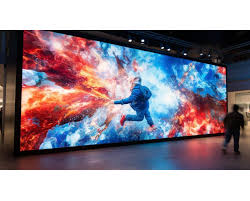
Interactive overlays use either capacitive touch technology, where conductive touch is detected on a glass panel, or infrared (IR) touch frames that map finger or object positions by IR light interruption. The integration challenges include ensuring uniform brightness and color consistency despite added layers and maintaining low latency (ideally under 10 milliseconds) to guarantee real-time responsiveness.
Standard parameters for interactive LED displays include:
- Brightness levels: Indoor displays typically range from 800 to 1200 nits, whereas outdoor displays can exceed 5000 nits for daylight visibility.
- Refresh rate: Minimum 1920 Hz to avoid flicker artifacts during interaction.
- Contrast ratio: High dynamic contrast ratios (3000:1 or greater) for vivid imagery.
- Viewing angle: 160° both horizontally and vertically for consistent user experience.
- Operating temperature: Between -20°C to 50°C, with robust environmental protections for outdoor models.
Applications and Industry Use Cases
Interactive LED displays have found widespread adoption across multiple sectors due to their engaging user experience. Key applications include:
1. Retail and Advertising
Interactive displays deployed in shopping malls, storefronts, and airports engage consumers by blending digital signage with interactive catalogs, wayfinding, and personalized promotions. For example, major brands use interactive LED walls as immersive marketing tools, leveraging touch capabilities to allow customers to explore product information.
2. Education and Corporate Environments
In classrooms and conference rooms, interactive LED display boards replace traditional whiteboards, offering multi-touch functionality with collaborative software platforms. Enhanced resolution and touch accuracy enable clear annotations and real-time data manipulation.
3. Control Rooms and Public Information Systems
Government and utility control centers utilize large-scale interactive LED video walls for monitoring and incident response. High brightness and ultra-low latency touch systems allow operators to interact seamlessly with live data feeds and maps.
4. Entertainment and Events
Concerts, exhibitions, and museums deploy interactive LED walls and floors enabling dynamic content controlled by user gestures or physical presence, creating immersive experiences.
Manufacturing and Quality Control Considerations
From a production standpoint, ensuring reliability and durability is critical. The integration of interactive layers adds complexity during lamination and requires precision calibration to preserve color gamut and brightness uniformity. Industry standards such as IEC 62116 (for touch panel safety) and ANSI/CEA-861.3 (for display interface) guide manufacturing processes. In addition, IEC 62368-1 standards address safety for consumer electronics components in these systems.
Rigorous testing for optical performance (using spectroradiometers), touch response latency (measured through standard motion tracking tools), and environmental endurance (e.g., salt spray, humidity) is required to meet automotive or outdoor-grade certification, depending on targeted applications.
Trends and Future Directions
Technological advancements continue, with micro-LED development enabling ultra-fine pixel pitch interactive displays that combine power efficiency with high performance. Integration with AI-driven gesture recognition and edge computing enhances user interactivity without relying on external processing units.
Moreover, flexible and transparent interactive LED displays are emerging, broadening application possibilities toward automotive HUDs (Heads-Up Displays) and augmented reality environments. The adoption of standardized communication protocols like HDMI 2.1 and USB-C also facilitates seamless connectivity and content management.
Conclusion
Interactive LED displays stand at the convergence of visual excellence and intuitive user engagement, underpinned by precise engineering and robust manufacturing practices. Their versatility across retail, education, public safety, and entertainment demonstrates the broad impact of combining LED display technology with interactive interfaces. For manufacturers and integrators, adherence to rigorous technical parameters and industry standards ensures high-quality, reliable products capable of delivering rich, responsive experiences.
As demand grows for interactive digital signage solutions worldwide, staying current with emerging technologies and implementing best practices is vital for competitive advantage and long-term success in the LED display industry.
References:
- International Electrotechnical Commission (IEC) Standards: IEC 62116, IEC 62368-1
- Consumer Electronics Association: ANSI/CEA-861.3
- InfoComm International: “Interactive Displays – Technologies & Applications,” 2023
- SID (Society for Information Display): “Micro-LED Technology Roadmap,” 2024
- Case study: Samsung Electronics, Interactive LED Wall Deployments, 2023













