

Indoor Digital Display Screen: Comprehensive Guide to Technology, Applications, and Performance Standards
Indoor digital display screens have become an essential technology in modern commercial, educational, and entertainment environments. As a professional LED display engineer with years of expertise in LED LCD screen manufacturing, this article provides an authoritative overview of indoor digital display screen technologies, their critical technical parameters, applications, and industry benchmarks.
Understanding Indoor Digital Display Screens
An indoor digital display screen is an electronic visual display designed for use in controlled lighting environments, primarily indoors. These displays are widely applied in retail stores, corporate offices, conference rooms, museums, airports, and public transport hubs. Indoor displays must ensure high resolution, color accuracy, brightness, and energy efficiency within an environment free from direct sunlight’s intense brightness.
Core Technologies
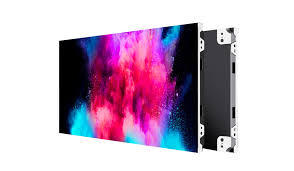
Indoor digital displays predominantly rely on two technologies:
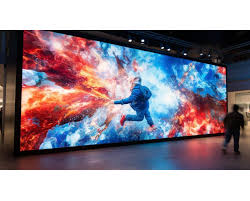
1. LED Video Walls (Light Emitting Diode)
Modern indoor LED display screens utilize fine-pitch LED panels, where the pitch refers to the distance between the centers of adjacent pixels, typically measured in millimeters (mm). For indoor use, a pixel pitch between 0.9mm and 2.5mm is common, delivering high pixel density for crisp, detailed images at close viewing distances.
Advantages include excellent brightness control (typically 800 to 1,200 nits for indoor), superior contrast ratios, and long operational life (50,000 to 100,000 hours). Furthermore, LED displays offer superior color uniformity and faster refresh rates (above 3,840 Hz), which eliminate flicker on camera recordings, essential for live broadcasts.
2. LCD Video Walls (Liquid Crystal Display)
LCD panels generally use direct-view thin-bezel monitors configured into seamless video walls. They offer high native resolution (4K or higher), consistent color representation, and static image clarity. Typical brightness ranges from 350 to 700 nits, less compared to LED but adequate for indoor ambient light. LCD panels are favored where high pixel resolution and color fidelity are paramount.
Key Technical Specifications
When selecting an indoor digital display screen, several parameters warrant scrutiny:
- Pixel Pitch: Smaller pitch ensures sharper images. For general indoor settings, 1.2mm to 1.9mm is optimal for balancing cost and clarity.
- Brightness: Indoor displays must adequately counter ambient lighting. Ideal brightness levels range 800–1,200 nits for LED and 350–700 nits for LCD video walls.
- Contrast Ratio: High contrast improves readability and color depth; advanced LED displays exceed 5,000:1 contrast ratio.
- Refresh Rate: Minimum 3,840 Hz refresh rate avoids flicker on video recordings, critical for broadcast/live streaming scenarios.
- Color Gamut: Wide color gamut (REC.709 or DCI-P3) supports vivid, lifelike images.
- Viewing Angle: For indoor digital signage, viewing angles typically exceed 160° horizontally and vertically, ensuring visibility from multiple positions.
- Lifetime and Maintenance: LED display lifetime typically spans 50K–100K hours under standard operational environments, with modular design enabling straightforward maintenance.
Industry Standards and Certifications
Adherence to industry standards guarantees display quality and safety. The International Electrotechnical Commission (IEC) standards like IEC 62087 govern measurement methods for TV receiver power, while IEC 62368 certifies electronic safety. Additionally, ENERGY STAR certifications indicate energy efficiency in display devices. The Digital Signage Federation (DSF) provides best practices and compliance guidelines for digital display deployments.
Applications
The versatility of indoor digital display screens is evident across many sectors:
- Retail and Advertising: Interactive kiosks and large-format video walls enhance customer engagement with dynamic content.
- Corporate Environments: Conference room LCD video walls improve presentations and collaborate effectively.
- Education: Digital screens facilitate distance learning with vivid, detailed imagery.
- Transportation Hubs: Real-time flight/train updates delivered via high-visibility indoor LED screens improve passenger experience.
- Entertainment and Events: Concerts and exhibitions employ large LED video walls for immersive visual effects.
Case Study: Deploying Fine-Pitch LED in a Corporate Setting
A recent project involved deploying a 1.5mm pixel pitch indoor LED video wall covering 20 square meters for a global financial enterprise’s headquarters. The objective was to create a seamless, high-resolution display for live data visualization. The LED panels delivered 1,000 nits brightness, 5,000:1 contrast, and perfect color calibration across the entire surface, ensuring readability under office lighting. The modular LED design simplified maintenance and repair, reducing downtime to under 1% annually. This deployment demonstrated the advantages of fine-pitch LED in high-expectation corporate environments.
Best Practices for Installation and Maintenance
- Ensure environment-controlled humidity and temperature (typically 20°C to 25°C, RH 40%-60%) to prolong lifespan.
- Calibrate color and brightness uniformly across panels to avoid image discrepancies.
- Regular cleaning of modules prevents dust accumulation which affects brightness and uniformity.
- Use professional-grade processors and content management systems (CMS) to optimize display content and scheduling.
Conclusion
Indoor digital display screens embody a sophisticated intersection of electronic engineering, material science, and software technology. Selecting the right screen technology—whether fine-pitch LED or LCD video walls—depends on application, viewing distance, ambient light, and budget constraints. Adhering to established technical standards and maintenance best practices ensures reliable performance and longevity, making indoor digital displays a cornerstone of modern communication and advertising.
References:
- International Electrotechnical Commission (IEC), www.iec.ch
- Digital Signage Federation, www.digitalsignagefederation.org
- ENERGY STAR Product Specifications, www.energystar.gov
- Leyard Group Technical Whitepaper on Fine Pitch LED, 2023
- Display Week Conference Proceedings, Society for Information Display, 2024













