

Advancements and Practical Insights in LED LCD Screen Manufacturing for Modern Display Solutions
In the rapidly evolving landscape of display technologies, LED LCD screens have emerged as a dominant standard, driving innovations across consumer electronics, commercial advertising, and industrial applications. Combining Liquid Crystal Display (LCD) technology with Light Emitting Diode (LED) backlighting, these screens offer unmatched benefits in brightness, energy efficiency, and color accuracy. This article provides an in-depth analysis of the manufacturing process of LED LCD screens, emphasizing practical applications, key advantages, common challenges, and cutting-edge trends that shape today’s display industry.
Technical Foundations and Manufacturing Essentials
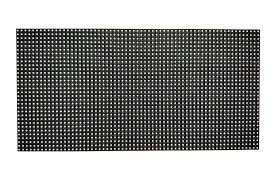
LED LCD screens use a liquid crystal panel sandwiched between polarizers, relying on precise control of liquid crystal orientation to modulate light passage. The LED backlight serves as the illumination source, replacing older fluorescent tubes and significantly improving both energy consumption and screen thickness. Modern units typically employ Edge LED (where LEDs are positioned at the panel edge) or Direct LED (where LEDs are distributed behind the entire screen) configurations.
The manufacturing process involves several critical stages: substrate preparation, thin-film transistor (TFT) array lithography, liquid crystal injection, LED backlight module assembly, and module integration with driver electronics. Strict quality controls, including ISO 9241 for ergonomics and ISO 13485 for manufacturing quality management, ensure reliable performance and user safety. Panel resolutions vary from 1080p Full HD to 8K standards, with pixel densities reaching upwards of 400 ppi in specialized applications.
Practical Applications Across Industries
LED LCD screens are ubiquitous due to their versatile characteristics and customizable form factors. In consumer electronics, they power smartphones, tablets, laptops, and televisions, benefiting from superior color gamut (often covering 95-110% of DCI-P3 color space) and high refresh rates (up to 240Hz in gaming monitors). Industrial control rooms and medical diagnostics employ specialized variants with enhanced brightness (up to 1000 nits) and color accuracy to yield critical real-time data visualization.
Retail and advertising utilize large-format LED LCD displays for digital signage, leveraging durability and excellent outdoor visibility. The automotive industry integrates curved, high-brightness LED LCD screens into dashboards and infotainment systems, meeting the stringent automotive-grade standards ISO 26262 for functional safety and AEC-Q100 for component reliability.
Advantages of LED LCD Technology
Compared to traditional LCD displays with CCFL backlighting, LED LCDs offer multiple advantages:
- Energy Efficiency: LEDs consume up to 30-50% less power, reducing environmental footprint without sacrificing display quality.
- Slim Profiles and Flexibility: LED backlighting supports much thinner device designs, facilitating ultrabooks and bezel-less displays.
- Enhanced Brightness and Contrast: Local dimming and HDR (High Dynamic Range) capabilities improve dynamic range up to 1,000,000:1, delivering vibrant contrasts and deeper blacks.
- Improved Color Reproduction: Adoption of quantum-dot enhancement films (QDEF) further expands color gamut, meeting premium industry standards such as Rec. 2020.
- Longer Lifespan: LEDs generally feature lifespans exceeding 50,000 hours, outperforming CCFL by a significant margin, which guarantees longer-lasting panels with consistent performance.
Common Challenges and Solutions
Despite many benefits, LED LCD manufacturing confronts persistent technical challenges. Uniform backlight distribution remains critical to avoid issues such as “clouding” or “mura” – non-uniform brightness that affects image consistency. Manufacturers employ advanced optical films and diffuser designs to mitigate these imperfections.
Another challenge is response time and motion blur, particularly for fast-paced video playback or gaming. While LCD pixels inherently switch slower than OLED counterparts, developments in faster TFT materials and overdrive circuit technologies have reduced response times to under 1 millisecond in high-end displays.
Additionally, thermal management is a concern as compact designs integrate higher brightness LEDs, requiring efficient heat dissipation through materials engineering and miniaturized heat sinks. The incorporation of low thermal resistance substrates and advanced cooling solutions helps maintain optimal in-use temperatures to avoid premature degradation.
Emerging Trends and Future Outlook
The LED LCD industry continues to innovate with key trends shaping future display solutions:
- Mini-LED and Micro-LED Hybridization: Mini-LED technology uses significantly smaller LEDs (around 200 microns) to achieve thousands of dimming zones, enabling near-OLED contrast ratios with improved brightness and lifespan. Hybrid screens combining LCD panels with Micro-LED elements are under development, promising ultra-high brightness and color purity with lower power consumption.
- Flexible and Transparent Displays: Advancements in LED backlighting arrays and flexible TFT substrates enable curved, foldable, and transparent LED LCD displays, expanding application scenarios from wearable tech to automotive heads-up displays.
- Integration with AI and Smart Sensors: Intelligent displays adapt brightness and color temperature in real-time based on ambient conditions and user preferences, leveraging AI algorithms for improved user experience.
- Sustainability and Recyclability: Efforts toward eco-friendly manufacturing using lead-free soldering, reduced hazardous materials, and modular designs facilitate easier component recycling, aligning with global environmental standards like RoHS and WEEE directives.
Conclusion
The integration of LED backlighting with LCD technology has revolutionized display manufacturing by delivering brighter, slimmer, more energy-efficient, and visually compelling screens. Through continuous improvement in materials science, manufacturing precision, and innovative engineering solutions, LED LCD screens maintain their relevance in a competitive market dominated by emerging technologies such as OLED and Micro-LED. Manufacturers facing challenges such as uniformity and thermal management have developed effective strategies that uphold high-quality standards and extend the operational longevity of these displays.
For industry stakeholders, keeping abreast of emerging mini-LED implementations, flexible form factors, and sustainable production practices is critical to leveraging LED LCD technology’s full potential in diverse applications, from consumer devices to professional workstations and expansive digital signage solutions.
References:
- International Electrotechnical Commission (IEC) Standards: IEC 61747 series on LCD panels
- Society for Information Display (SID) Annual Technical Digest
- ISO 9241-307: Ergonomics of human-system interaction – Electronic visual displays
- AEC-Q100 Automotive Electronics Qualification Standard
- Research articles from Journal of Display Technology (IEEE)
- Display industry white papers from Samsung Display and LG Display













