

Advancements and Practical Insights in LED Display Technology: Applications, Advantages, and Emerging Trends
The evolution of LED display technology has profoundly transformed various industries ranging from advertising to transportation and entertainment. As a seasoned LED display engineer, I aim to provide a comprehensive overview grounded in industry experience, backed by technical parameters, and oriented towards practical applications, advantages, common challenges, and recent innovations shaping this dynamic sector.
Practical Applications of LED Displays
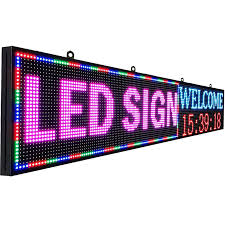
LED displays are ubiquitous due to their versatility and superior performance. They are employed extensively in the following areas:
1. Outdoor Advertising and Digital Signage: Utilizing high-brightness LEDs (typically 5,000 to 7,000 nits), outdoor displays maintain visibility even under direct sunlight. Modular designs enable scalability from small kiosks to massive billboards, often featuring pixel pitches from 1.5 mm to 20 mm depending on viewing distance requirements.
2. Sports Arenas and Event Screenings: Large stadium screens employ fine-pitch LEDs with pixel spacing as close as 1.2 mm to enable high-resolution close-up viewing by audiences. Refresh rates exceeding 3,840 Hz ensure flicker-free broadcast-quality video capture, critical for live broadcast integration.
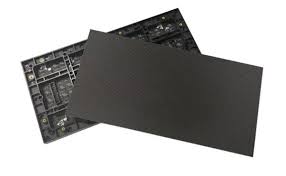
3. Control Rooms and Command Centers: Here, LED video walls prioritize ultra-high resolution, uniform brightness, and color calibration to provide comprehensive situational awareness. Small pixel pitch cabinets (around 0.9 to 1.5 mm) provide detailed images over large surfaces.
4. Transportation Hubs and Public Spaces: LED displays integrated into airports, railways, and metro stations deliver dynamic information efficiently. IP65 or higher ingress protection ratings and temperature control systems ensure functionality in harsh environments.
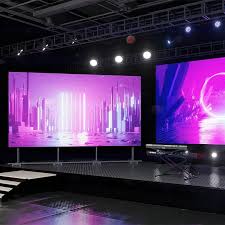
Advantages of LED Technology
LED displays possess several intrinsic advantages that have established them as the preferred display technology:
- Superior Brightness and Contrast: Unlike LCD or projection systems, LEDs offer brightness levels up to 10,000 nits and contrast ratios exceeding 5,000:1, delivering vibrant images even under ambient light conditions.
- Wide Viewing Angles and Color Gamut: Modern LED modules achieve viewing angles of up to 160° horizontally and vertically, with 95%+ NTSC or Rec. 709 color gamut reproduction, essential for accurate color representation.
- Energy Efficiency and Longevity: LED displays consume significantly less power compared to traditional signage solutions, with typical panel consumption around 200-400 W/m² and lifespans exceeding 100,000 hours under optimal operating conditions.
- Flexibility and Scalability: Modular panel designs and various pixel pitches offer customizability for diverse applications, from curved and flexible screens to ultra-fine pitch indoor video walls.
Common Problems and Engineering Solutions
Despite their benefits, LED displays present engineering challenges that manufacturers and installers address through advanced techniques:
- Thermal Management: Heat generated by dense LED arrays can affect lifespan and performance. State-of-the-art passive and active cooling solutions, including heat sinks and temperature monitoring systems, are standard best practices.
- Uniformity and Calibration: Variations in LED brightness and color can degrade image quality. Calibration tools using spectrometers and colorimeters routinely adjust output to achieve homogeneous display.
- Moisture and Dust Resistance: For outdoor installations, conformal coating and IP-rated enclosures prevent ingress damage, with IP65/67 considered industry standards for weather durability.
- Pixel Failure and Maintenance: Redundant driver circuits and hot-swap modules simplify maintenance and minimize downtime in critical applications, supported by predictive diagnostics facilitated by embedded IoT sensors.
Emerging Trends in LED Display Technology
The following trends highlight the innovative trajectory of LED displays in 2024:
- Mini-LED and Micro-LED Integration: These technologies offer higher pixel densities, deeper contrast, and improved energy efficiency, making them ideal for specialized applications like augmented reality and ultra-high-definition displays.
- AI-Driven Calibration and Content Optimization: Machine learning algorithms can dynamically enhance image quality based on ambient light and viewer distance, optimizing user experience.
- Flexible and Transparent LED Displays: Innovations in substrate materials allow for seamless integration into architecture, automotive glass, and wearable devices, broadening use cases significantly.
- Sustainability and Eco-Friendly Manufacturing: Industry-leading firms adopt recycling programs, low-toxicity materials, and energy-efficient production methods to comply with global environmental standards like RoHS and REACH.
Conclusion
The LED display industry stands at a confluence of advanced engineering, cutting-edge material science, and real-world requirements driving continuous improvement. Practitioners must consider technical parameters—such as pixel pitch, brightness, refresh rate, and ingress protection—to tailor solutions precisely to application needs. As emerging technologies like Micro-LED mature and AI integration deepens, LED displays will offer unprecedented levels of performance, versatility, and sustainability, further cementing their role in global visual communication.
For detailed industry specifications, refer to standards such as IEC 62602 for LED display performance and ANSI C12 for energy consumption measurement. Continued innovation aligned with practical challenges will define the next decade of LED display excellence.













