

Advanced Insights into LED Display Technology: Applications, Advantages, Common Issues, and Emerging Trends
LED display technology has become a cornerstone of modern visual communication, enabling high-impact visual experiences across diverse industries. With its origins rooted in semiconductor light emission principles, Light Emitting Diode (LED) displays have evolved significantly in both scale and sophistication, bringing about revolutionary changes in digital signage, broadcast media, entertainment, and industrial applications.
Practical Applications
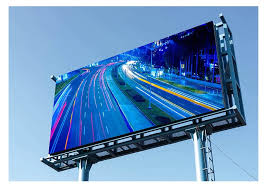
LED displays are widely employed in outdoor advertising due to their high brightness and visibility under direct sunlight, ensuring messages remain vivid and compelling. Stadiums and large venues utilize LED screens for real-time event broadcasting, enhancing the spectator experience with life-size, high-resolution visuals. In transportation hubs such as airports and railway stations, LED screens provide crucial passenger information, aided by fast refresh rates and dynamic content capabilities. Industrial sectors leverage LED displays for process monitoring and control interfaces, where critical data must be displayed clearly and reliably.
Indoor applications are equally varied, including corporate environments where LED video walls serve dynamic presentations, and retail spaces where interactive displays engage consumers effectively. The rise of fine-pitch LED technology (pixel pitches below 1.5 mm) now allows for close-proximity viewing, rivaling traditional LCD and OLED displays in clarity and color accuracy. According to SID (Society for Information Display) studies, fine-pitch LEDs are poised to replace many LCD video walls in conference rooms and broadcast studios.
Advantages of LED Displays
The primary advantage of LED displays lies in their luminous efficacy and durability. Typical LED brightness ranges from 600 to over 10,000 nits, depending on application, far exceeding LCD backlight capabilities. This makes them especially suited for high ambient light environments.
LEDs offer superior color gamut and contrast ratios, often reaching around 120% of the NTSC color space and contrast ratios exceeding 10,000:1. Additionally, LED modules maintain consistent color uniformity over long lifespans, often rated at 100,000 hours of operation before brightness degradation becomes significant (based on IESNA LM-80 testing standards).
Energy efficiency is another critical benefit. LEDs consume less power per unit of luminance compared to LCD and plasma displays, contributing to lower operational expenses and smaller environmental footprints. Their modular construction allows for scalable and customized sizes, facilitating everything from billboard installations to wearable displays.
Common Problems and Mitigation Strategies
Despite their robustness, LED displays can encounter several technical challenges. One common issue is the occurrence of dead pixels or pixel clusters due to LED chip failures or soldering defects. Adhering to IPC-A-610 standards during assembly and implementing rigorous quality control protocols greatly reduce these defects.
Thermal management is crucial, as excessive heat can accelerate LED degradation and cause color shifts. Integrating heat sinks, forced-air cooling, or even liquid cooling in large-scale installations helps maintain optimal junction temperatures, typically aiming below 85°C.
Color calibration drift over time can lead to visual inconsistencies. Regular recalibration using spectroradiometers ensures color accuracy, especially important in broadcast and retail applications where brand fidelity is paramount.
Environmental factors such as moisture ingress and UV exposure necessitate protective measures like IP-rated enclosures and specialized conformal coatings to ensure reliability in harsh outdoor settings.
Latest Trends in LED Display Technology
The LED industry continues to innovate rapidly. Micro-LED displays, which utilize microscopic LEDs with pixel pitches under 100 micrometers, promise ultra-high resolution, exceptional brightness, and energy efficiency for emerging applications such as augmented reality (AR) devices and ultra-thin TVs. This technology is projected to disrupt both consumer and professional markets within the next 3 to 5 years, as reported by IHS Markit.
Another trend is the integration of intelligent control systems powered by AI algorithms to optimize brightness and color dynamically based on ambient lighting and content type, reducing power consumption and enhancing visual comfort.
Flexible and transparent LED panels are gaining traction, enabling novel design possibilities in architecture and automotive industries. These displays can conform to curved surfaces or windows without compromising transparency or visibility.
Moreover, mini-LED backlighting—where thousands of tiny LEDs backlight LCD panels—combines the cost advantages of LCD with many of the dynamic contrast and color benefits of LED direct displays. This hybrid approach is prevalent in high-end televisions and laptops.
Conclusion
As LED display technology continues to mature, its applications will expand further into new sectors, driven by advancements in resolution, energy efficiency, and intelligent integration. Professionals in display engineering must remain cognizant of intricate technical specifications—such as pixel pitch, brightness (nits), refresh rates (>1920 Hz for flicker-free video), and color gamut standards (Rec. 2020)—to optimize system performance aligned with specific application requirements. Pursuing meticulous quality standards and embracing cutting-edge trends will ensure LED displays maintain their position as industry-leading visual communication tools.
References:
- Society for Information Display (SID) Technical Digest, 2023
- Illuminating Engineering Society of North America (IESNA) LM-80 Testing Standards
- IHS Markit Display Innovation Report, 2024
- IPC-A-610 Acceptability of Electronic Assemblies Standard
- Rec. 2020 and NTSC Color Gamut Specifications













