

Advanced Technical Insights into LED LCD Screen Manufacturing for High-Quality Displays
In the realm of display technology, LED LCD screens stand as a pivotal innovation, merging the brilliance of Light Emitting Diodes (LED) with the precision of Liquid Crystal Display (LCD) panels. As a professional LED display engineer with comprehensive experience and industry expertise, this article delves into the nuanced technical parameters, manufacturing processes, and quality standards essential for producing top-tier LED LCD screens that meet global demands.
Understanding LED LCD Display Technology
LED LCD displays utilize an array of LEDs as a backlighting system for the LCD panel. Unlike traditional CCFL (Cold Cathode Fluorescent Lamp) backlighting, LEDs offer superior luminance uniformity, energy efficiency, and longer lifespan. The backlight enhances the LCD’s ability to render images with higher brightness levels and wider color gamuts, critical factors in deploying displays for applications ranging from consumer electronics to professional signage.
Core Manufacturing Processes
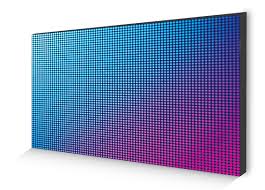
1. LED Backlight Module Fabrication
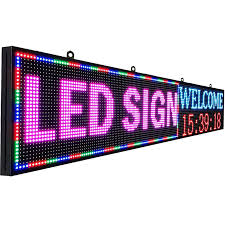
The LED backlight module’s quality directly impacts brightness uniformity and color accuracy. Key parameters include LED chip type (typically InGaN for blue and green LEDs, and AlGaInP for red LEDs), LED binning for color consistency, and thermal management design. Industry standards such as IEC 62087 specify measurement procedures to determine backlight power consumption and luminance, providing benchmarks to optimize efficiency.
2. Liquid Crystal Panel Assembly
The LCD panel consists of glass substrates laminated with polarizers, liquid crystals, and thin-film transistors (TFT). The alignment of liquid crystals, driven by TFTs, modulates light transmission to produce images. Precision in processes like photolithography and vacuum deposition ensures high aperture ratios and pixel uniformity, crucial for achieving resolutions such as 4K (3840x2160 pixels) with minimal response times under 8 milliseconds.
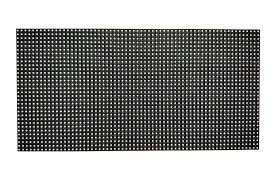
3. Optical Film Integration
To maximize contrast and viewing angles, manufacturers integrate optical films such as diffuser sheets, brightness enhancement films (BEFs), and retarders. Each layer undergoes strict quality control to maintain haze below 3% and achieve luminance gains exceeding 1.5x. This process, governed by standards like ISO 13406-2 for pixel defects and uniformity, is essential to eliminate mura (uneven brightness) and mura lines.
Technical Parameters Critical to Performance
- Brightness: LED LCDs typically range between 250 to 1000 nits in brightness, with specialized commercial displays reaching 1500 nits for ambient light resistance.
- Contrast Ratio: Standard contrast ratios lie between 1000:1 to 3000:1, influenced heavily by the quality of the polarizers and liquid crystal cell design. Advanced local dimming LED backlights can elevate effective contrast beyond 5000:1.
- Color Gamut: Utilizing LED backlights allows coverage of approximately 95% of the DCI-P3 color space and upwards of 130% sRGB, supporting vivid color reproduction vital for content creators.
- Response Time: Critical for motion clarity in video and gaming, response times vary from 2 ms in TN-type LCDs to around 8 ms in IPS panels, which offer improved color fidelity and viewing angles.
Challenges in Manufacturing and Solutions
One persistent challenge in LED LCD screen production is managing thermal dissipation. LEDs generate heat, which, if unmitigated, shortens component lifespan and degrades color stability. Incorporating heat sinks, thermally conductive adhesives, and advanced PCB designs with thermal vias improves heat dispersion significantly.
Another challenge is achieving pixel-level defect minimization. Employing Inline AOI (Automated Optical Inspection) systems alongside software-driven damage assessment assists manufacturers in maintaining defect rates below the industry threshold of 0.25% pixel defects per the ISO 13406-2 standard.
Industry Case Study: Samsung’s Quantum Dot LED LCD Displays
Samsung Electronics’ recent generation of QLED LCD TVs embodies the fusion of LED backlighting with quantum dot technology, enhancing color volume and peak brightness. Utilizing quantum dots improves spectral purity beyond traditional LEDs, allowing certified DCI-P3 coverage of 98-100% with peak luminance levels nearing 2000 nits. According to the Society for Information Display (SID) reports, such displays have set benchmarks for energy efficiency and dynamic range in the LED LCD sector.
Quality Assurance and Certification
Adherence to standards such as IEC 60068 for environmental testing underpins product durability, ensuring resistance to temperature cycling, vibration, and humidity. Backlight lifetime is commonly rated over 50,000 hours at 50% brightness, while advanced LED LCD screens undergo color calibration cycles to maintain Delta E values below 2, guaranteeing color accuracy perceptible to professional users.
Future Trends and Innovations
The LED LCD sector is evolving with hybrid solutions integrating mini-LED and micro-LED technologies. Mini-LED backlighting improves local dimming with thousands of zones, enhancing contrast without the high cost of OLED displays. Industry roadmaps forecast the adoption of these technologies in mainstream monitors and displays by the late 2020s, driven by consumer demand for higher dynamic ranges and superior viewing experiences.
In conclusion, the manufacture of LED LCD screens is a highly specialized process governed by strict technical standards and demanding quality controls. Through innovations in LED technology, optical engineering, and thermal management, manufacturers continue to push the boundaries of performance, delivering displays that cater to diverse international markets with reliability and stunning visual quality.













