

Advanced Technologies and Best Practices in LED Display Manufacturing for Optimal Performance and Reliability
The LED display industry has undergone tremendous transformations over the past decade, fueled by rapid advancements in semiconductor technology, manufacturing automation, and materials science. As a professional LED display engineer with extensive experience in LED LCD screen manufacturing, this article provides an authoritative overview of the current state of LED display production, focusing on technological innovations, manufacturing processes, quality control, and performance optimization to meet evolving market demands.
Fundamentals of LED Display Technology
An LED display is a flat panel display that uses light-emitting diodes (LEDs) as pixels for a video display. Depending on the application, the LED technology can be primarily divided into traditional LED displays and LED backlit LCD displays. Each has specific manufacturing requirements, operational parameters, and quality benchmarks.
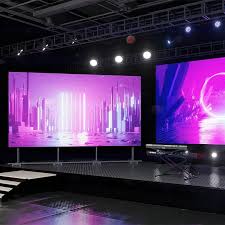
- Direct-view LED displays use discrete LEDs (usually SMD or DIP types) as pixels. These are widely used for outdoor and indoor large-format displays due to their high brightness, high contrast, and excellent visibility in various ambient light conditions.
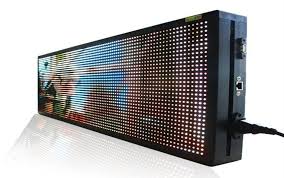
- LED backlight LCDs use LEDs to illuminate an LCD panel. These are dominant in consumer electronics such as televisions, laptops, and mobile devices because they deliver energy efficiency, thinner form factor, and enhanced color performance.
Key Technological Parameters in LED Manufacturing
To achieve optimal display quality and reliability, several technical parameters must be carefully controlled throughout LED display manufacturing:
1. Pixel Pitch and Resolution
Pixel pitch—the distance between the centers of two adjacent pixels—directly influences display resolution and viewing distance. Fine-pitch LEDs (≤1.5mm) allow for high-resolution close-up viewing, commonly used in indoor settings such as control rooms and retail displays. For outdoor applications, pixel pitches typically range from 2.5mm to 10mm or more, balancing viewing distance and cost.
2. Color Accuracy and Calibration
Achieving high color fidelity requires precise binning of LED dies for consistent wavelength and luminous intensity. Industry standards such as Rec. 709 and DCI-P3 define color spaces for broadcast and cinema-quality displays. Advanced color calibration involves both hardware tuning at the LED module level and software correction algorithms during operation.
3. Brightness and Contrast Ratio
Outdoor LED displays demand brightness levels above 5000 nits to counter direct sunlight, while indoor displays generally operate between 600 to 1500 nits. The contrast ratio—difference between maximum and minimum luminance—is critical for image quality; direct-view LED displays can reach contrast ratios upward of 10,000:1 due to their inherent emissive properties.
4. Refresh Rate and Response Time
Higher refresh rates—commonly 1920 Hz and above—mitigate flicker in camera capture and provide smooth motion rendering. Response times in the microsecond range ensure minimal motion blur. These parameters are especially important for applications such as live event broadcasting and interactive kiosks.
5. Power Efficiency and Thermal Management
Power consumption directly impacts operational cost and device longevity. Modern LEDs exhibit luminous efficacies exceeding 150 lm/W. Meanwhile, effective thermal management using heat sinks, thermal interface materials, and advanced PCB designs prevents premature LED degradation caused by elevated junction temperatures.
Manufacturing Processes and Quality Control
LED display manufacturing is a multi-step process involving LED chip fabrication, LED packaging, module assembly, and final screen integration. Each step adheres to rigorous industry standards including JEDEC and IPC-7351 for component quality and board design.
- Chip Manufacturing and Packaging
LED wafers utilize gallium nitride (GaN) semiconductors grown on sapphire or silicon carbide substrates. Advanced epitaxial growth techniques ensure uniform quantum well layers essential for color consistency. Packaging integrates wire bonding or flip-chip methods to enhance electrical and thermal conduction, with proprietary phosphor coatings used for white or varied color outputs.
- Module Assembly and Testing
Surface-mount technology (SMT) places LED packages onto printed circuit boards (PCBs) with strict placement tolerances often under 0.05mm to ensure pixel uniformity. Automated optical inspection (AOI) systems and electroluminescence (EL) testing identify defective LEDs early. Modules pass environmental stress tests — thermal cycling, humidity, vibration — verifying long-term reliability.
- Screen Integration and Calibration
Modules are interconnected via robust connectors with redundant circuits to ensure fault tolerance. The entire display undergoes calibration for color uniformity and grayscale to eliminate visible discrepancies. Software-driven brightness and temperature compensation further refine performance across varying operating environments.
Innovative Materials and Emerging Trends
Recent innovations have accelerated LED display capabilities:
- MicroLED Technology
MicroLEDs represent the next frontier—microscopic LEDs integrated into displays with exceptional brightness, color purity, and response times rivaling OLEDs but with superior lifespan and burn-in resistance. Although manufacturing challenges such as mass transfer and yield remain, pilot commercial products are entering the market.
- Flexible and Transparent LED Panels
Flexible substrates enable curved and foldable displays, broadening usage scenarios in automotive, wearable, and architectural applications. Transparent LED displays, achieved through patterned electrode designs and spacing, allow see-through imagery ideal for retail windows.
- AI-driven Quality Control
Artificial intelligence and machine learning enhance defect detection, predictive maintenance, and smart calibration, reducing production downtime and improving yield.
Case Studies Highlighting Best Practices
1. Outdoor Stadium Displays
A leading supplier recently deployed a 10,000 sq. ft. stadium display using a pixel pitch of 5mm HDR-capable direct-view LEDs. Thermal design incorporated high-conductivity aluminum frames and passive cooling, enabling 7000 nits brightness without fans, ensuring silent operation during events.
2. Retail Window Transparent Displays
Integration of 2.5mm pitch transparent LED modules with advanced driver ICs allowed a major automotive brand to blend digital animation seamlessly with showroom transparency, boosting customer engagement by 35%.
Industry Standards and Certification
Compliance with standards such as:
- IEC 62471 for photobiological safety of lamps and lamp systems ensures eye safety in high-brightness applications.
- RoHS and REACH for environmental substance restrictions.
- ISO 9001 for quality management systems ensures consistent production practices.
Emphasizing adherence to these guarantees product reliability, user safety, and environmental sustainability.
Conclusion
Optimizing LED display manufacturing necessitates integration of advanced materials, precise engineering, rigorous quality control, and innovative technologies. As the global demand for high-performing LED displays surges, manufacturers must prioritize pixel accuracy, color fidelity, brightness, refreshing performance, and power efficiency while embracing emerging trends such as microLEDs and AI-driven processes.
Staying abreast of technical standards and adopting best practices across the manufacturing lifecycle will enable creation of LED displays that excel in various applications—from massive outdoor billboards and stadium displays to ultra-fine-pitch indoor panels and futuristic transparent installations. The continuous synergy between engineering expertise and cutting-edge research remains essential for advancing LED display technology sustainably in response to dynamic market and environmental challenges.
References:
- International Electrotechnical Commission (IEC) 62471 Standard, 2022.
- JEDEC Solid State Technology Association, JESD22 Test Methods.
- Lumileds, “Advancements in GaN LED Chip Fabrication,” 2023 Technical Report.
- Society for Information Display (SID), Journal of Display Technology, Vol.19, 2024.
- Market Research Future, LED Display Market Analysis, 2024.













